How has Mizoram managed to register biometric data for nearly 70% of Myanmar refugees?

Synopsis
Mizoram has registered biometric data for 70% of the Myanmar refugees, a significant achievement amidst challenges. This enrollment process highlights the state's efforts to aid those who fled their homeland due to turmoil. Discover the details of this initiative and its implications for refugee management in the region.
Key Takeaways
Mizoram has registered biometric data for approximately 70% of 30,900 Myanmar refugees.
Challenges include technical issues and poor internet connectivity.
Collaboration with local councils aids in the registration process.
A substantial number of Bangladeshi refugees have also been recorded.
Refugees are accommodated in camps, as well as with relatives and in rented houses.
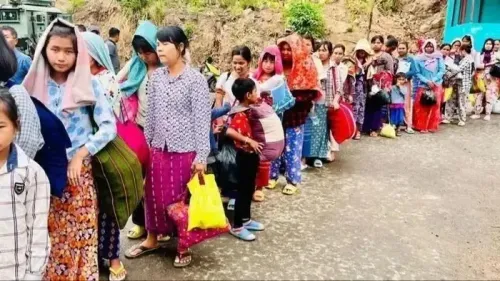
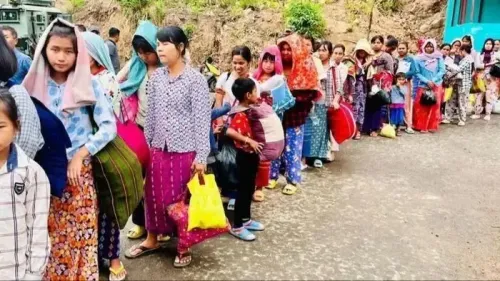
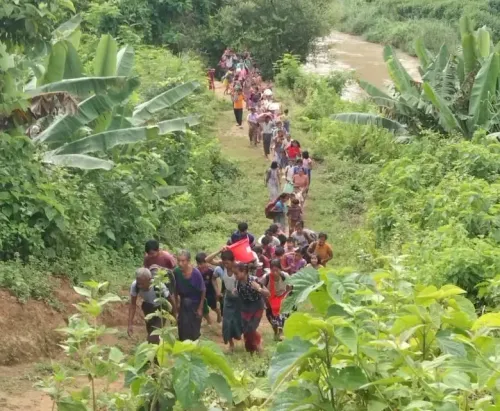
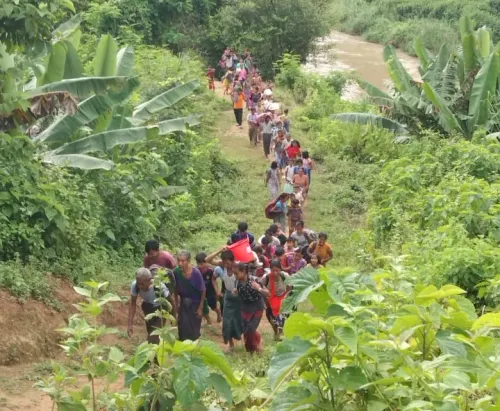
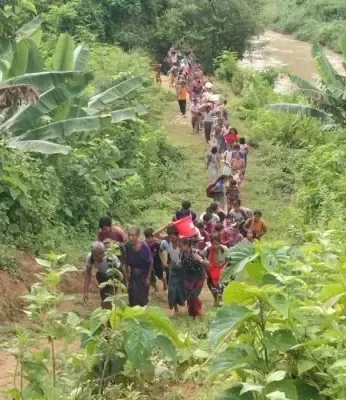
Aizawl, Dec 22 (NationPress) Officials in Mizoram have successfully recorded the biometric information of nearly 70 percent of approximately 30,900 Myanmar refugees who fled their homeland in various phases after the military coup in February 2021. According to reports, 21,330 individuals have completed the biometric enrollment process, representing about 70 percent of the total migrant population.
Furthermore, 14 percent of the 2,375 Bangladeshi refugees have also had their biometric details documented across different districts.
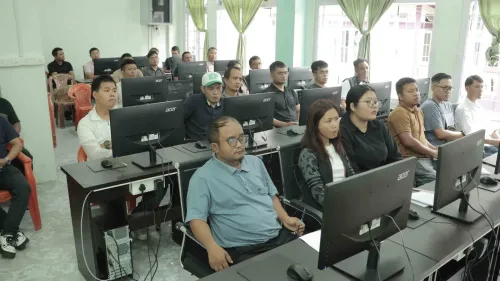
The enrollment initiative is being conducted through the Foreigners Identification Portal and the Biometric Enrollment system, following a request from the Ministry of Home Affairs (MHA).
Serchhip district in central Mizoram was the first to initiate the biometric enrollment on July 30, followed by the other ten districts.
Aizawl district, housing 4,160 Myanmar refugees, and Lunglei district, which shelters 1,590 refugees, have both achieved 100 percent enrollment completion.
Serchhip district has recorded 97.16 percent completion, while Khawzawl district stands at 94.19 percent.
Kolasib district, adjacent to Assam, has completed 91.40 percent of the enrollment process. In contrast, Champhai district, with the highest number of Myanmar refugees totaling 13,527, has completed 63.48 percent of enrollment, while Lawngtlai district, which borders both Myanmar and Bangladesh and hosts 6,017 refugees, has registered only 53.20 percent so far.
The official noted that the electronic registration has encountered several challenges, including technical issues and inadequate internet access in remote areas. Despite these hurdles, district authorities have persevered with the enrollment efforts, although progress has been slow.
In addition to the Myanmar refugees, approximately 2,375 migrants from the Bawm tribal community in southeastern Bangladesh have sought refuge in three districts of Mizoram over the past two years due to ethnic tensions exacerbated by actions from the Bangladesh Army.
The majority of these Bangladeshi refugees, around 2,000, are residing in Lawngtlai district, while others are in Lunglei and Serchhip districts.
Both Myanmar and Bangladeshi refugees are accommodated in designated camps, as well as with relatives and in rented dwellings throughout all eleven districts of Mizoram.
The official emphasized that it is simpler to gather biometric information from refugees living in camps, but it proves more difficult for those residing with relatives or in rented homes scattered across numerous remote villages.
To address this issue, district authorities have enlisted the assistance of village councils and civil society organizations, particularly the Young Mizo Association.
The enrollment procedure also entails collecting biographical details, including names, addresses, parental information, and employment history, both in Myanmar and Mizoram.
Prior to commencing biometric data collection, the Mizoram government provided extensive training for district-level officials to ensure effective data gathering from the refugees.
Since the military coup in February 2021, refugees—including women, children, and the elderly—have sought refuge in Mizoram. The Myanmar refugees primarily hail from the Chin state, while the Bangladeshi Bawm community shares strong ethnic and cultural ties with the majority Mizo population of Mizoram.
Mizoram's Champhai, Siaha, Lawngtlai, Hnahthial, Saitual, and Serchhip districts share an unfenced 510 km mountainous border with Myanmar's Chin state, while the Mamit, Lunglei, and Lawngtlai districts have a 318 km unfenced border with Bangladesh.
Additionally, Mizoram has provided refuge to several thousand displaced tribal individuals following ethnic violence between the Meitei and Kuki-Zo communities in neighboring Manipur in May 2023.
Point of View
The ongoing biometric registration of Myanmar refugees in Mizoram reflects a significant humanitarian response to regional instability. It showcases India's commitment to providing shelter and support for those in dire need while navigating the complexities of border management and community integration.
NationPress
19 Sept 2026
Frequently Asked Questions
What is the current status of biometric registration for Myanmar refugees in Mizoram?
As of now, Mizoram has registered biometric data for around 70% of the approximately 30,900 Myanmar refugees living in the state.
What challenges are faced during the biometric enrollment process?
Challenges include technical glitches and poor internet connectivity in remote areas, making it difficult to register those living outside camps.
How many Bangladeshi refugees are recorded in Mizoram?
Around 2,375 Bangladeshi refugees have also been registered, primarily from the Bawm tribal community.
Which district in Mizoram has the highest refugee population?
Champhai district currently shelters the largest number of Myanmar refugees, totaling 13,527 individuals.
What measures are being taken to assist the registration process?
Local authorities are collaborating with village councils and civil society organizations to facilitate the enrollment of refugees living in remote areas.