PM Modi: Buddha's Teachings Most Vital Amid Global Conflicts

Synopsis
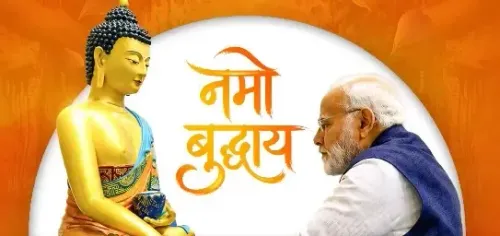
During Mann Ki Baat Episode 133, PM Modi invoked Lord Buddha's teachings on peace and compassion as urgently relevant amid today's global conflicts — spotlighting a Ladakh monk's Stupa in Chile and Karnataka's 100-acre Karma Monastery as living proof of India's ancient wisdom reshaping the modern world.
Key Takeaways
PM Modi highlighted Lord Buddha's teachings during Mann Ki Baat Episode 133 on April 26, 2025 , calling them vital amid global conflicts.
Buddha Purnima 2025 falls in May ; PM Modi extended advance greetings to all citizens.
Drubpon Otzer Rinpoche , born in Drepung, Ladakh , is running a Buddhist organisation in Chile, South America , with a Stupa in the Cochiguaz Valley .
Karnataka's Karma Monastery is a 100-acre living forest preserving over 700 native trees , cited as a model blending Buddhism with ecology.
PM Modi stated that Buddha's teachings were relevant in the past, are relevant today, and will remain important for the future.
The address reflects India's growing use of Buddhist diplomacy as a strategic soft power tool in global foreign policy.
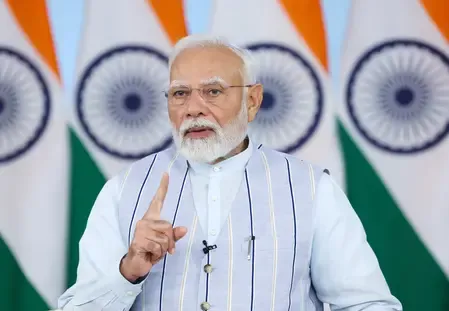
New Delhi, April 27, 2025 — Prime Minister Narendra Modi on Sunday, April 26, underscored the enduring relevance of Lord Gautam Buddha's teachings amid escalating global tensions and conflicts, asserting that Buddhist philosophy offers humanity a timeless roadmap for inner peace, compassion, and equilibrium. Speaking during the 133rd episode of Mann Ki Baat, his monthly radio address broadcast nationally, PM Modi extended advance greetings to citizens on the occasion of Buddha Purnima, which falls in May 2025.
Buddha's Message of Peace in a Fractured World
PM Modi opened his address by drawing a sharp connection between Lord Buddha's core philosophy and the turbulent geopolitical landscape of today. He reminded listeners that Buddha taught that peace originates from within the individual — a principle he described as more urgent now than ever before.
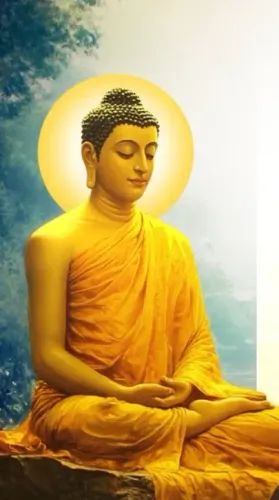
"Lord Gautam Buddha's life message remains relevant even today. He taught us that peace begins from within. He stated that victory over oneself is the greatest victory," PM Modi said during Mann Ki Baat Episode 133.
"The kind of tensions and conflicts the world is going through today, Buddha's thoughts are even more relevant in such times," he added, without naming specific conflicts but speaking in the context of ongoing global unrest across multiple regions.
This statement carries significant weight at a time when the world is witnessing armed conflicts, diplomatic breakdowns, and rising nationalism across continents — circumstances that many scholars and peace advocates argue are precisely the environment Buddha's teachings of ahimsa (non-violence) and karuna (compassion) were designed to address.
India's Spiritual Influence Reaches South America
PM Modi highlighted a remarkable example of India's ancient traditions transcending geographical boundaries. He spoke about Drubpon Otzer Rinpoche, a monk born in Drepung, Ladakh, who is now based in Chile, South America, running an organisation dedicated to propagating Lord Buddha's teachings.
"This organisation is connecting meditation and compassion to people's lives. The Stupa built in the Cochiguaz Valley helps people experience peace. It truly makes you feel proud. India's ancient traditions are reaching the world," PM Modi said.
The Cochiguaz Valley in Chile is known as a spiritual and mystical destination, making it a symbolically fitting location for a Buddhist Stupa. The fact that a Ladakh-born monk is spearheading this initiative reflects the growing global appetite for mindfulness-based traditions rooted in Indian philosophy — a soft power dimension that India has been strategically nurturing through initiatives like the International Day of Yoga and global Buddhist diplomacy.
Karnataka's Karma Monastery: Buddhism Meets Conservation
Turning to a domestic example, PM Modi spotlighted Karnataka's Karma Monastery as a model that beautifully integrates Buddhist teachings with environmental stewardship. He noted that Lord Buddha attained enlightenment under a tree, making nature inseparable from Buddhist thought.
"Karnataka's Karma Monastery is a living forest spread across 100 acres. Over 700 native trees are being preserved in this forest," he said, framing the monastery as a living embodiment of Buddha's reverence for nature.
This convergence of ecology and spirituality is increasingly relevant in an era of climate crisis. The monastery's model — preserving 700+ indigenous trees across 100 acres — offers a template that blends cultural heritage with biodiversity conservation, aligning with India's broader commitments under international climate agreements.
Buddha Purnima 2025: Significance and National Sentiment
Buddha Purnima 2025 will be observed in May, marking the birth, enlightenment, and mahaparinirvana of Lord Gautam Buddha. PM Modi described the occasion as one that "inspires to bring peace into lives, adopt compassion, and move forward with balance."
Notably, India has been increasingly leveraging Buddhist diplomacy as a foreign policy tool, particularly with nations in Southeast Asia, East Asia, and beyond. The Modi government has invested significantly in the restoration of Buddhist heritage sites such as Nalanda, Bodh Gaya, and Kushinagar International Airport — the latter inaugurated specifically to boost Buddhist pilgrimage tourism.
This comes amid India's growing engagement with ASEAN nations and its Act East Policy, where Buddhist cultural ties serve as a bridge for deeper diplomatic and economic partnerships. PM Modi's consistent invocation of Buddhist values in public discourse also reflects a deliberate positioning of India as the spiritual homeland of Buddhism on the world stage.
Mann Ki Baat Episode 133: Key Themes
The 133rd Mann Ki Baat episode, broadcast on April 26, 2025, covered multiple themes of national and cultural importance. PM Modi's focus on Buddha's teachings was one of the central threads, woven together with examples from both domestic and international contexts to illustrate India's civilisational contributions to global well-being.
The programme, which PM Modi has been conducting since October 2014, has become a significant platform for communicating directly with citizens on issues ranging from governance and social initiatives to culture and spirituality. Episode 133 reinforces the programme's role as a bridge between the government's philosophical outlook and public consciousness.
As Buddha Purnima 2025 approaches, PM Modi's message is expected to resonate not just domestically but also among the global Buddhist community, with India likely to host high-profile events and diplomatic engagements centred around the occasion.
Point of View
Consistently amplifying Buddhist philosophy serves India's diplomatic interests in Southeast Asia, East Asia, and beyond. What's notable is the deliberate pairing of international examples — a Ladakh monk in Chile — with domestic ones like Karnataka's Karma Monastery, signalling that India's civilisational export is both grassroots and global. The mainstream narrative often misses how Buddhist diplomacy quietly underpins India's Act East Policy and its bid for permanent UNSC membership.
NationPress
18 Sept 2026
Frequently Asked Questions
What did PM Modi say about Buddha's teachings on Mann Ki Baat?
PM Modi, during Mann Ki Baat Episode 133 on April 26, 2025, said Lord Buddha's teachings are more relevant than ever given today's global tensions and conflicts. He emphasised that Buddha taught peace begins from within and that victory over oneself is the greatest victory.
When is Buddha Purnima 2025?
Buddha Purnima 2025 falls in May 2025, marking the birth, enlightenment, and mahaparinirvana of Lord Gautam Buddha. PM Modi extended advance greetings to citizens during his Mann Ki Baat address on April 26.
Who is Drubpon Otzer Rinpoche and what is his connection to India?
Drubpon Otzer Rinpoche is a monk born in Drepung, Ladakh, India, who is currently based in Chile, South America. He runs an organisation promoting Lord Buddha's teachings and has built a Stupa in Chile's Cochiguaz Valley to help people experience peace and meditation.
What is Karnataka's Karma Monastery?
Karnataka's Karma Monastery is a living forest monastery spread across 100 acres, preserving over 700 native trees. PM Modi cited it as an example of Buddhist teachings connecting spirituality with nature conservation.
Why does PM Modi frequently reference Buddhism in his speeches?
PM Modi's references to Buddhism align with India's broader Buddhist diplomacy strategy, particularly its Act East Policy targeting Southeast and East Asian nations. India is positioning itself as the spiritual homeland of Buddhism, leveraging it as cultural soft power in international relations.