PM Modi on Northeast millet revival: Youth linking tradition with new economic opportunity
Synopsis
In his 139th Mann Ki Baat, Modi didn't just celebrate millets — he presented Northeast India's grassroots millet revival as a template for rural prosperity. From muffins and baby food in Meghalaya to Nagaland's first-ever millet festival after a decade-long farming gap, the stories signal that India's 'Shree Anna' push is finding genuine roots beyond policy rhetoric.
Key Takeaways
PM Modi addressed the 139th episode of Mann Ki Baat on 25 October 2026 , spotlighting Northeast India's millet revival.
Two women entrepreneurs in Khanduli village, West Jaintia Hills, Meghalaya , developed millet-based cookies, cakes, muffins, and baby food , spurring fresh farmer demand.
Farmer Chekjing Sangma of Sadolpara village, West Garo Hills, Meghalaya , adopted modern millet cultivation methods, boosting income and village awareness.
Kezoma village, Kohima district, Nagaland resumed millet cultivation in 2024 after a decade-long gap and held its first-ever millet festival in 2025 .
Modi framed the revival as proof that youth-led entrepreneurship can link 'Shree Anna' — traditional millet crops — with modern rural prosperity.
Prime Minister Narendra Modi on Sunday, 25 October 2026, spotlighted the resurgence of millet cultivation across parts of Northeast India, crediting local communities, farmers, and young entrepreneurs for reviving traditional crops while forging new livelihood pathways through innovative, value-added products.
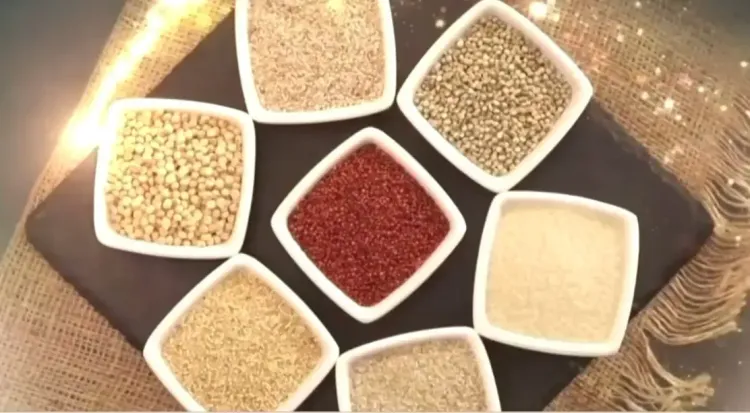
Addressing the 139th episode of his monthly radio programme 'Mann Ki Baat', Modi recalled how India's push to designate 2023 as the 'International Year of Millets' had triggered a global conversation around the cultural and nutritional depth of what he called 'Shree Anna' — the ancient superfood grain.
What PM Modi Said
'You may recall that, at India's call, 2023 was celebrated as the 'International Year of Millets.' It received a very positive response globally. Through this initiative, people discovered how deeply the superfood 'Shree Anna', i.e. millets, are rooted in our own culture. In the Northeast, too, there has long been a rich tradition of millet cultivation; however, over time, people had begun to drift away from it. Now, that situation is changing,' Modi said during the broadcast.
He framed the revival not merely as an agricultural trend but as a cultural reclamation — one being driven, significantly, by women and young people in rural communities.
Meghalaya: From Traditional Grain to Cookies and Baby Food
Modi highlighted Khanduli village in West Jaintia Hills district, Meghalaya, where two women friends took the initiative to develop consumer products from millets — including cookies, cakes, muffins, and baby food — rather than limiting the grain to traditional uses. The move, he said, sparked downstream demand: rising consumer interest led more farmers to resume millet cultivation.
He also referenced Sadolpara village in West Garo Hills district, Meghalaya, where a local farmer, Chekjing Sangma, adopted modern cultivation methods for millets. 'This has not only increased his income but has also fostered greater awareness within the village,' Modi said.
Nagaland: A Decade-Long Gap and a First-Ever Festival
Modi drew particular attention to Kezoma village in Kohima district, Nagaland, where millet cultivation had been completely abandoned for more than a decade. 'As a result, an entire generation grew up unfamiliar with this traditional crop. Imagine… a crop once grown by their own grandparents was being forgotten by the villagers themselves,' he said.
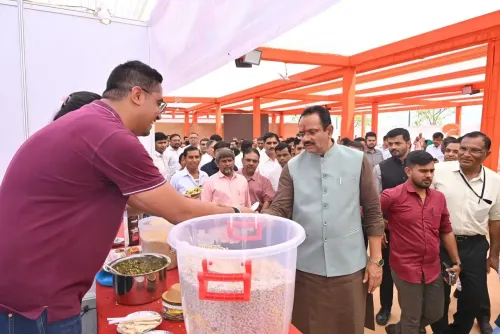
The community resumed cultivation in 2024, and by 2025, Kezoma had hosted its first-ever millet festival. Demand for millet-based products in the region is now reportedly growing rapidly.
Why the Revival Matters
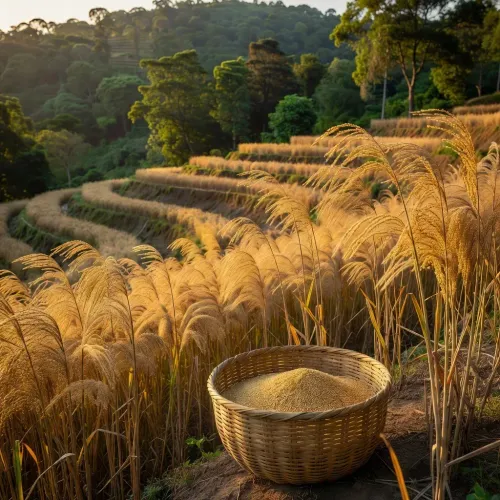
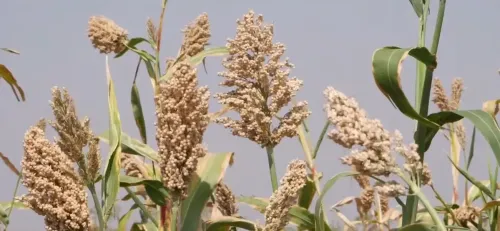
This comes amid a broader national push to rehabilitate coarse cereals within India's food and farming ecosystem. Millets are drought-resistant, nutritionally dense, and culturally significant across many indigenous communities in the Northeast — qualities that had been overshadowed by the spread of rice and wheat monocultures in recent decades.
Notably, the examples Modi cited are not government-led programmes but community- and individual-driven initiatives, which he used to argue that grassroots entrepreneurship can serve as the engine for rural agricultural revival. The intersection of heritage crops and modern product development — cookies and baby food from millet — represents a model of agri-value addition that aligns with broader schemes like the PM Formalisation of Micro Food Processing Enterprises (PM FME) scheme.
The Broader Message
'These examples demonstrate how our youth are linking traditional crops with new opportunities, and how our villages are advancing on the path to prosperity while preserving their heritage,' Modi said, summing up his remarks on the theme.
As millet-based startups and self-help groups continue to scale across the Northeast, the government's sustained narrative around Shree Anna could translate into policy prioritisation — including stronger procurement support and market linkages — in the months ahead.
Point of View
And a village in Nagaland that independently revived a lost crop, he implicitly distances the revival from top-down government programming and frames it as organic. The political utility is clear: millets allow the government to simultaneously claim cultural nationalism, nutritional advocacy, and rural empowerment. What the Mann Ki Baat spotlight does not address is whether procurement infrastructure, MSP coverage, and market linkages for Northeast millet farmers have kept pace with the storytelling — structural gaps that could limit how far grassroots enthusiasm actually travels.
NationPress
25 Oct 2026
Frequently Asked Questions
What did PM Modi say about millets in Mann Ki Baat on 25 October?
PM Modi used the 139th episode of Mann Ki Baat to highlight the revival of millet cultivation in Northeast India, citing examples from Meghalaya and Nagaland where communities and young entrepreneurs are reconnecting with traditional crops. He praised initiatives such as millet-based cookies, cakes, and baby food products that have created new demand and encouraged more farmers to resume cultivation.
What is happening in Kezoma village in Nagaland?
Kezoma village in Kohima district, Nagaland, had completely stopped millet cultivation for over a decade, causing an entire generation to grow up unfamiliar with the crop. The community resumed cultivation in 2024 and hosted its first-ever millet festival in 2025, with demand for millet products now reportedly growing rapidly in the region.
Which Meghalaya villages did PM Modi highlight for millet innovation?
Modi cited two villages in Meghalaya: Khanduli in West Jaintia Hills, where two women entrepreneurs developed millet-based cookies, cakes, muffins, and baby food; and Sadolpara in West Garo Hills, where farmer Chekjing Sangma adopted modern millet cultivation methods, increasing his income and raising local awareness.
What is 'Shree Anna' and why is the government promoting it?
'Shree Anna' is the term used by the Indian government to refer to millets — a group of drought-resistant, nutritionally rich coarse cereals. India championed 2023 as the International Year of Millets at the United Nations, aiming to revive domestic cultivation and consumption while positioning millets as a global superfood rooted in Indian agricultural tradition.
What is Mann Ki Baat?
Mann Ki Baat is a monthly radio programme hosted by Prime Minister Narendra Modi, broadcast on All India Radio, in which he addresses the nation on social, cultural, and developmental themes. The 25 October episode was the 139th edition of the programme.