How Did PM Modi Celebrate the Rice Revolution and Revive Kerala Kumbh in 'Mann Ki Baat'?

Synopsis
Prime Minister Narendra Modi's latest 'Mann Ki Baat' episode celebrates India's agricultural achievements and cultural revivals, including the resurgence of the Kerala Kumbh festival. Discover how farmers are preserving heritage seeds and the significance of Indian rice production in the global market.
Key Takeaways
India is the world's largest rice producer , exceeding 150 million tonnes of output.
A nationwide campaign is underway to preserve heritage seeds .
Farmers in Kerala cultivate 570 rice varieties , showcasing biodiversity.
The revival of the Kerala Kumbh festival reflects cultural restoration.
Indian agricultural products are increasingly reaching international markets .
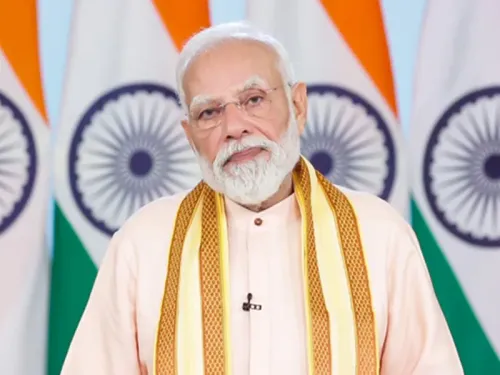
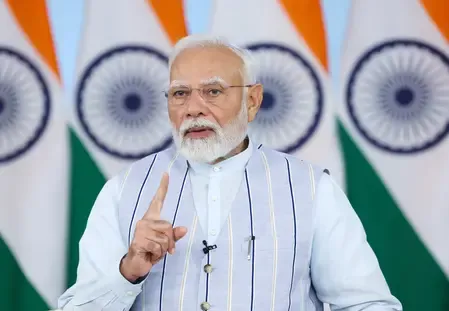
New Delhi, Feb 22 (NationPress) Prime Minister Narendra Modi on Sunday acknowledged India's impressive advancements in agriculture and the revival of rich cultural traditions, emphasizing the nation's expanding global presence and profound heritage.
In the 131st episode of his monthly radio program, 'Mann Ki Baat', the Prime Minister highlighted a nationwide initiative aimed at conserving heritage seeds, attributing the transformative outcomes to the tireless efforts of farmers.
Using Kerala's Thrissur district as an example, PM Modi remarked, "Farmers cultivate 570 varieties of rice, including local, herbal, and those sourced from other states. This endeavor is not just about farming; it’s a significant movement to safeguard our seed heritage. The statistics reflect the dedication of our farmers."
He proudly announced that India has become the world's leading rice producer, with an output surpassing 15 crore tonnes (150 million tonnes).
This achievement not only satisfies domestic requirements but also bolsters India's status in the global food supply. PM Modi noted that we are meeting our needs while also contributing to the world's food resources.
He pointed out how Indian agricultural products are now reaching international markets more effectively, including through air transport.
The Prime Minister cited the export of GI-tagged products from Karnataka - such as Ranjan jaggery, Nanjangud Rasabale bananas, Mysore betel leaves, and Indi limes - to the Maldives. These items, celebrated for their unique flavors and quality, have received Geographical Indication (GI) tags, reinforcing their origin-specific excellence. Today's farmer seeks quality, aims to increase quantity, and is crafting their own identity.
Shifting to cultural themes, the Prime Minister reminisced about last year's 'Mahakumbh' at Prayagraj, describing it as a significant awakening of India's Sanatani consciousness at the sacred confluence.
He drew a parallel to a similar tradition in Kerala, referred to as Kerala Kumbh or Mamangam, associated with the month of Maang/Marg and the Bharatappuzha River, also known as Maa Mang or Maa Marg.
This age-old festival, held at Tirunavaya, involves sacred dips and devotion but had diminished over time.
PM Modi expressed happiness that the 'Kerala Kumbh' was revived and recently organized successfully. The word-of-mouth drew devotees to the location, transforming it into a lively celebration.
He stressed that whether it's the 'Mahakumbh' in the north or its southern equivalent, these events go beyond mere rituals; they signify a revival of cultural memory and unity. Despite the differences in rivers and regions, the flow of devotion remains a constant, embodying the essence of India.
Point of View
It is evident that PM Modi's address resonates deeply with both agricultural advancements and cultural heritage. His acknowledgment of farmers' efforts and the revival of significant traditions reflects a commitment to preserving India's identity while embracing modernity. This approach fosters unity and pride among citizens, reinforcing the nation's historical legacy.
NationPress
19 Sept 2026
Frequently Asked Questions
What is 'Mann Ki Baat'?
Mann Ki Baat is a monthly radio program hosted by Prime Minister Narendra Modi, where he addresses various issues, celebrates achievements, and shares inspirational stories from across India.
What is the significance of Kerala Kumbh?
Kerala Kumbh, or Mamangam, is an ancient festival that symbolizes devotion and cultural heritage, involving sacred rituals and community gatherings along the Bharatappuzha River.
How is India contributing to global food security?
With a rice production exceeding 150 million tonnes, India plays a crucial role in the global food supply, ensuring food security not only for its citizens but also for other nations.
What are GI-tagged products?
GI-tagged products are goods that have been granted geographical indication status, affirming their unique qualities and origin, such as Karnataka's Ranjan jaggery and Nanjangud Rasabale bananas.
Why are heritage seeds important?
Heritage seeds play a vital role in preserving agricultural biodiversity, maintaining traditional farming practices, and enhancing food security.