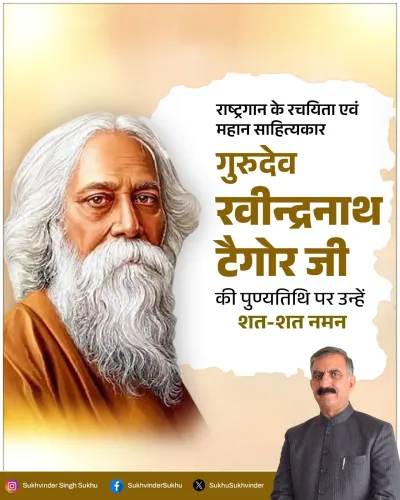
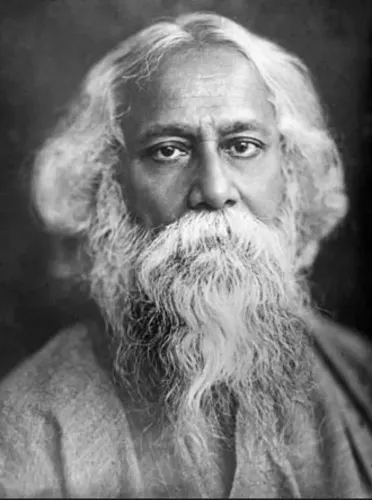
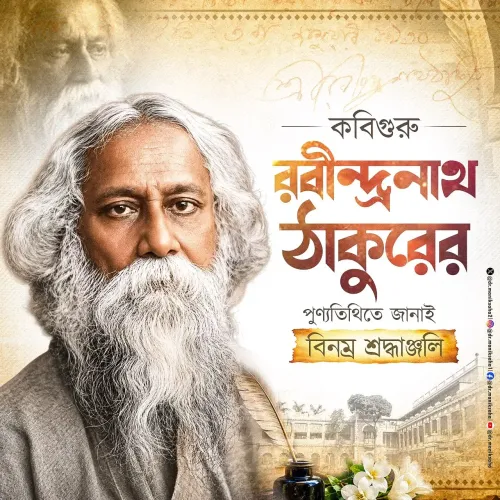
PM Modi Honors Rabindranath Tagore: 'Great Writer, Thinker & Institution Builder'
Synopsis
PM Modi used the 133rd Mann Ki Baat to honor Rabindranath Tagore as a 'multifaceted genius' ahead of his May 9 birth anniversary, spotlighting Shantiniketan and Rabindra Sangeet's global legacy — while analysts note the BJP's deepening cultural outreach in West Bengal through Tagore's iconic identity.
Key Takeaways
PM Narendra Modi paid tribute to Rabindranath Tagore on April 26, 2025 , during the 133rd episode of Mann Ki Baat , calling him a 'multifaceted personality.' Tagore's 164th birth anniversary falls on May 9, 2025 , celebrated as Pochishe Boishakh across Bengal and globally.
Rabindranath Tagore was the first Asian and non-European to win the Nobel Prize in Literature in 1913 for his collection Gitanjali .
Shantiniketan , founded by Tagore and home to Vishva-Bharati University , was designated a UNESCO World Heritage Site in 2023 .
PM Modi also invoked the First War of Independence of 1857 , saluting India's freedom fighters whose legacy is also commemorated in May .
The PM urged school children to use summer vacation productively and take care of their health during the summer season.
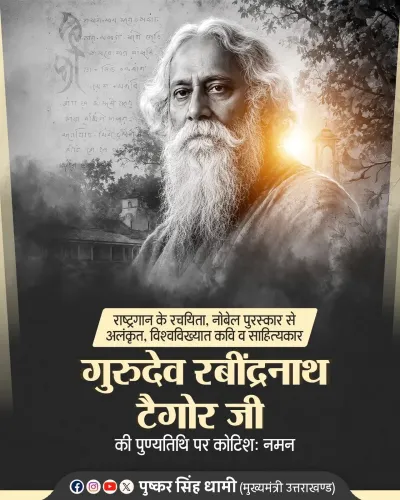
New Delhi, April 27: Prime Minister Narendra Modi on Sunday, April 26, paid a heartfelt tribute to Nobel laureate Rabindranath Tagore during the 133rd episode of Mann Ki Baat, describing him as a "multifaceted personality" whose writings, thoughts, and institutional vision continue to inspire millions across India and the world. The PM's remarks came ahead of Tagore's birth anniversary on May 9, observed as 'Pochishe Boishakh' — the 25th day of the Bengali month of Boishakh.
PM Modi's Tribute on Mann Ki Baat
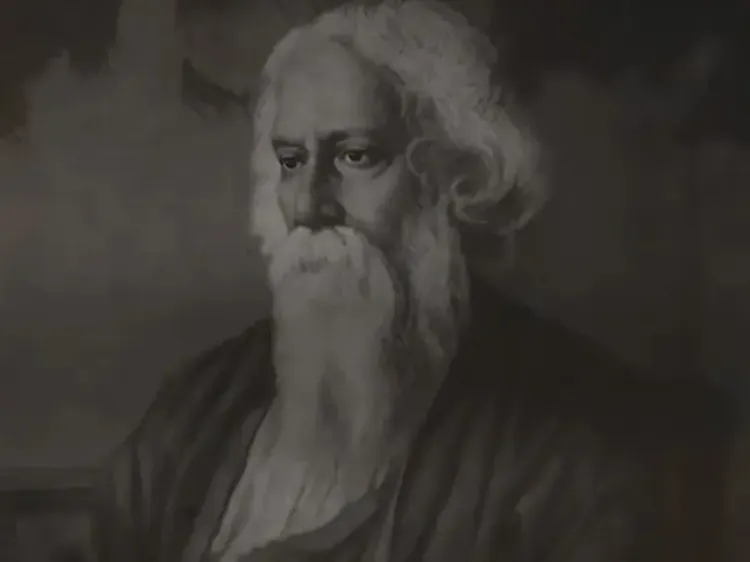
Addressing the nation through his monthly radio programme, PM Modi said, "Gurudev was a multifaceted personality. He was not only a great writer and thinker; he also shaped many renowned institutions." The Prime Minister emphasized that Rabindra Sangeet — Tagore's vast musical legacy — continues to resonate globally even today, transcending borders and generations.
Modi also reflected on his personal visits to Shantiniketan, the iconic institution founded by Tagore in West Bengal. "My visits to Shantiniketan will remain unforgettable for me. This is the very institution that he nurtured and shaped with unwavering dedication," the Prime Minister said, offering his "humble tribute" to Gurudev once again.
Tagore's Legacy: A Polymath Who Redefined Indian Renaissance
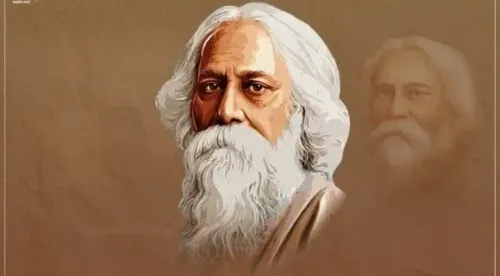
Rabindranath Tagore was a towering figure of the Bengal Renaissance — a poet, philosopher, composer, novelist, and educationist whose influence spanned continents. In 1913, he became the first Asian and first non-European to win the Nobel Prize in Literature, awarded for his celebrated collection Gitanjali.
Beyond literature, Tagore was a visionary who championed sustainable rural economies. As PM Modi noted, "Gurudev Tagore advocated for industries that provided sustainable employment and benefited villages" — a philosophy that resonates deeply with India's ongoing rural development agenda. His institution Vishva-Bharati University at Shantiniketan, founded in 1921, was declared a Central University and remains a living monument to his educational ideals.
Notably, Shantiniketan was inscribed as a UNESCO World Heritage Site in 2023 — a recognition that underscores the global stature of Tagore's vision. PM Modi had personally attended the UNESCO inscription ceremony, making his tribute on Mann Ki Baat a continuation of that cultural celebration.
May's Historical Significance: 1857 War of Independence
Concluding the episode, PM Modi drew attention to another significant historical milestone — the First War of Independence of 1857, which also falls in the month of May. "I salute all the brave children of Maa Bharati who awakened the spirit of patriotism among the people," he said, linking cultural heritage with national pride in a single narrative arc.
The Prime Minister also addressed school children during their summer vacation, urging them to enjoy their holidays while learning something new. "During this summer season, all of you should also take full care of your health," he added, reflecting the broader public health advisory tone of the season.
Deeper Context: Why Modi's Tagore Tribute Carries Political and Cultural Weight
This tribute is not merely ceremonial. West Bengal, Tagore's home state, is a key political battleground, and the BJP has consistently sought to deepen its cultural connect with Bengali identity — of which Tagore is the supreme symbol. By invoking Tagore's legacy on a national platform like Mann Ki Baat, PM Modi reinforces the ruling party's effort to present a pan-Indian cultural narrative that bridges regional pride with national unity.
Critics and political analysts have noted that Tagore himself was a complex figure who returned his knighthood in 1919 following the Jallianwala Bagh massacre — a deeply political act of conscience. His philosophy often emphasized individual freedom, universal humanism, and critique of narrow nationalism. Invoking Tagore's institutional legacy while selectively highlighting his rural economics advocacy reflects the political curation of a complex thinker's image.
This comes amid a broader government push to celebrate India's cultural icons ahead of key calendar events, with Pochishe Boishakh falling just weeks before the state's cultural calendar peaks. The 133rd Mann Ki Baat episode — a programme that has itself become a significant soft-power instrument since its launch in October 2014 — reaching an estimated 100 million+ listeners monthly, amplifies such tributes to a massive national audience.
What to Expect Next
The nation will officially observe Rabindranath Tagore's 164th birth anniversary on May 9, 2025, with cultural events expected across West Bengal, Bangladesh, and Indian diaspora communities worldwide. Vishva-Bharati University at Shantiniketan is expected to host its traditional Pochishe Boishakh celebrations, drawing scholars, artists, and dignitaries. PM Modi's tribute signals that the Central Government may also participate in or formally acknowledge these events at the national level.
Point of View
And Tagore is its most powerful symbol. What's worth noting is the selective framing: Tagore was also a fierce moral dissenter who returned his knighthood to protest colonial brutality — a dimension rarely surfaced in government tributes. Invoking his rural economics vision while sidestepping his universalist, often anti-nationalist philosophy reveals how complex legacies get politically curated. India's richest icons deserve the full picture, not just the convenient one.
NationPress
19 Sept 2026
Frequently Asked Questions
Why did PM Modi pay tribute to Rabindranath Tagore on Mann Ki Baat?
PM Modi paid tribute to Rabindranath Tagore during the 133rd episode of Mann Ki Baat ahead of Tagore's birth anniversary on May 9, observed as Pochishe Boishakh. He called Tagore a 'multifaceted personality' who shaped iconic institutions and whose music continues to inspire the world.
When is Rabindranath Tagore's birth anniversary in 2025?
Rabindranath Tagore's birth anniversary in 2025 falls on May 9, celebrated as Pochishe Boishakh — the 25th day of the Bengali month of Boishakh. It will mark his 164th birth anniversary.
What is Shantiniketan and why is it significant?
Shantiniketan is the iconic educational institution founded by Rabindranath Tagore in West Bengal, which later became Vishva-Bharati University in 1921. It was inscribed as a UNESCO World Heritage Site in 2023, recognizing its global cultural and architectural significance.
What was Rabindranath Tagore's Nobel Prize for?
Rabindranath Tagore won the Nobel Prize in Literature in 1913 for his celebrated poetry collection Gitanjali. He became the first Asian, first non-European, and first lyricist to receive this honor.
What else did PM Modi discuss in Mann Ki Baat Episode 133?
Besides honoring Tagore, PM Modi saluted the heroes of India's First War of Independence of 1857, which is commemorated in May. He also urged school children to enjoy their summer vacation, learn new things, and take care of their health during the summer season.