Article 370 abrogation: PM Modi marks 7 years with J&K, Ladakh pledge
Synopsis
Seven years after Article 370 was struck down, PM Modi used its anniversary to double down on the development narrative for J&K and Ladakh — and tied the occasion to the 125th birth anniversary of Syama Prasad Mookerjee, the ideological figure whose vision of a unified India the BJP credits with inspiring the 2019 move.
Key Takeaways
PM Modi marked the seventh anniversary of the abrogation of Article 370 on 5 August 2025 with a post on X.
Modi cited growth in infrastructure , education , healthcare , entrepreneurship , and sports in J&K and Ladakh since 2019.
The date also marks the 125th birth anniversary of Dr Syama Prasad Mookerjee , founder of the Bharatiya Jana Sangh .
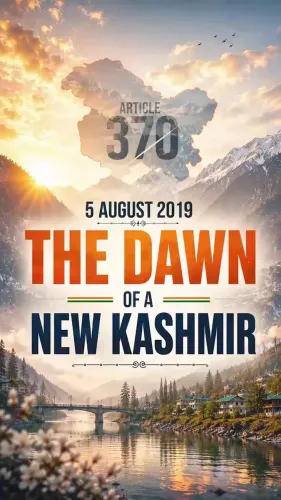
Article 370 was rendered inoperative on 5 August 2019 via a Presidential Order; J&K was split into two Union Territories.
Modi reaffirmed the Centre's commitment to a Viksit Bharat vision for every citizen of J&K and Ladakh.
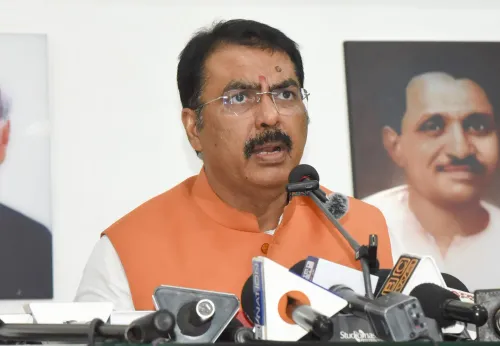
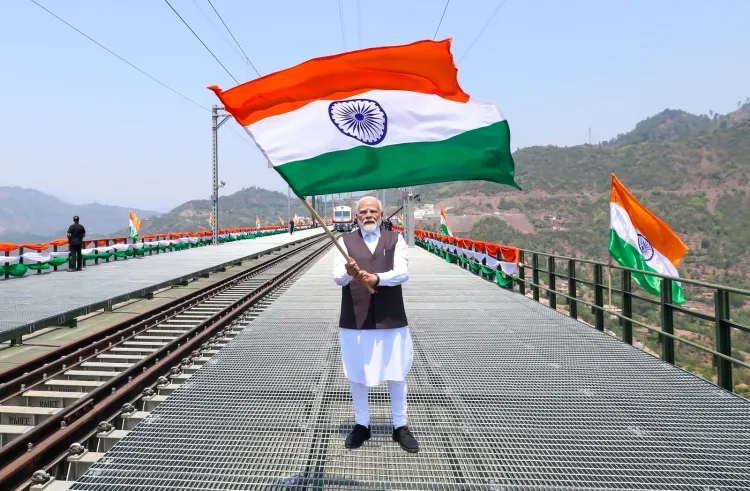
Prime Minister Narendra Modi on 5 August 2025 marked the seventh anniversary of the abrogation of Article 370, reaffirming the Centre's commitment to the continued development of Jammu and Kashmir and Ladakh. In a post on X, Modi said the two Union Territories have undergone 'wide-ranging transformation' across sectors since the constitutional change took effect in 2019.
What Modi Said
'Seven years ago, on this day, Articles 370 and 35(A) became history, marking a decisive new chapter in the journey of Jammu and Kashmir as well as Ladakh,' the Prime Minister wrote. He credited the full application of the Constitution of India with empowering women and marginalised communities who, he said, had been 'denied their basic constitutional rights for decades.'
Modi further cited expansion in infrastructure and growth in opportunities across education, healthcare, entrepreneurship, and sports as evidence of the transformation. 'We reaffirm our commitment to the progress of Jammu and Kashmir as well as Ladakh and to ensure that every citizen has the opportunity to dream big, achieve and contribute to the making of a Viksit Bharat,' he added.
The Syama Prasad Mookerjee Connection
This year's anniversary carries additional symbolic weight, according to Modi, as 5 August 2025 also marks the 125th birth anniversary of Dr Syama Prasad Mookerjee, founder of the Bharatiya Jana Sangh — the ideological precursor to the Bharatiya Janata Party (BJP). Modi described Mookerjee's lifelong commitment to national unity as an inspiration and said 'what he envisioned decades ago found historic fulfilment on 5th August 2019.'
Background: What Article 370 Was
Article 370 entered the Constitution of India when it came into force in 1950, granting the erstwhile state of Jammu and Kashmir special autonomous status. It remained among the most debated constitutional provisions for nearly seven decades. On 5 August 2019, the Centre under Prime Minister Modi rendered it inoperative through a Presidential Order, simultaneously reorganising Jammu and Kashmir into two separate Union Territories — Jammu and Kashmir (with a legislature) and Ladakh (without one).
Significance and What Comes Next
The anniversary arrives as Jammu and Kashmir functions under an elected government for the first time since the reorganisation, following assembly elections held in 2024. The Centre's development narrative — centred on infrastructure investment, tourism growth, and extension of central welfare schemes — continues to be the BJP's primary political argument for the move. Critics, however, have raised concerns about press freedom, political detentions, and the pace of economic recovery in the region, though Modi's statement did not address those points. How the Union Territory's governance evolves over the next few years will be the real measure of the transformation the Prime Minister described.
Point of View
Education, healthcare — remain largely unverified in aggregate, and independent assessments of J&K's economic recovery post-reorganisation have been mixed. Tying the occasion to Syama Prasad Mookerjee's 125th birth anniversary is deliberate ideological framing, reinforcing the BJP's long-held position that 370's removal was a civilisational correction rather than a policy decision. What the statement does not address — press freedom rankings, the pace of political normalisation, or the status of long-pending land reform concerns — is as telling as what it does. The next benchmark will be whether J&K's elected government and the Centre align on development priorities, or whether the Union Territory framework keeps real power centralised.
NationPress
19 Sept 2026
Frequently Asked Questions
What is the seventh anniversary of Article 370 abrogation?
It marks seven years since 5 August 2019, when the Centre revoked Article 370 and Article 35(A), stripping Jammu and Kashmir of its special constitutional status and reorganising it into two Union Territories — Jammu and Kashmir, and Ladakh.
What did PM Modi say on the Article 370 anniversary?
PM Modi posted on X that J&K and Ladakh have witnessed 'wide-ranging transformation' since 2019, citing infrastructure expansion and growth in education, healthcare, entrepreneurship, and sports. He also reaffirmed the Centre's commitment to the region's progress and to Viksit Bharat.
Why is 5 August 2025 especially significant according to PM Modi?
Modi noted that 5 August 2025 coincides with the 125th birth anniversary of Dr Syama Prasad Mookerjee, founder of the Bharatiya Jana Sangh. Modi credited Mookerjee's vision of national unity as the ideological foundation that the 2019 abrogation fulfilled.
What was Article 370 and when was it introduced?
Article 370 was a constitutional provision that came into force in 1950, granting the erstwhile state of Jammu and Kashmir special autonomous status. It was rendered inoperative on 5 August 2019 through a Presidential Order by the Modi government.
How has Jammu and Kashmir changed since Article 370 was abrogated?
According to the Centre, J&K has seen infrastructure growth, expanded welfare scheme coverage, and increased opportunities in education and healthcare. J&K held assembly elections in 2024 and now has an elected government — its first since the 2019 reorganisation. Independent assessments of economic and civil liberties outcomes remain varied.