Modi's anti-nepotism call, PMO smartphone checks: Book reveals PM's leadership style
Synopsis
A newly launched book by journalist Amitabh Sinha reveals that the PMO made repeated follow-up calls to a BJP MP just to ensure he owned a smartphone — and that PM Modi personally phoned a woman MP within a week of taking office in 2014 to block her from appointing her father as her PA. The micro-details paint a portrait of a Prime Minister who governs with unusual personal reach.
Key Takeaways
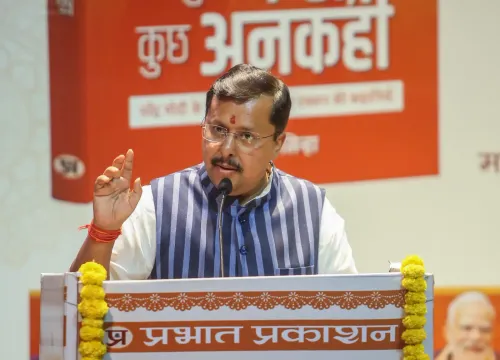
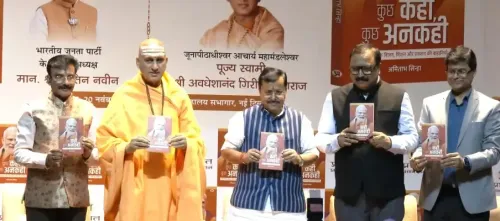
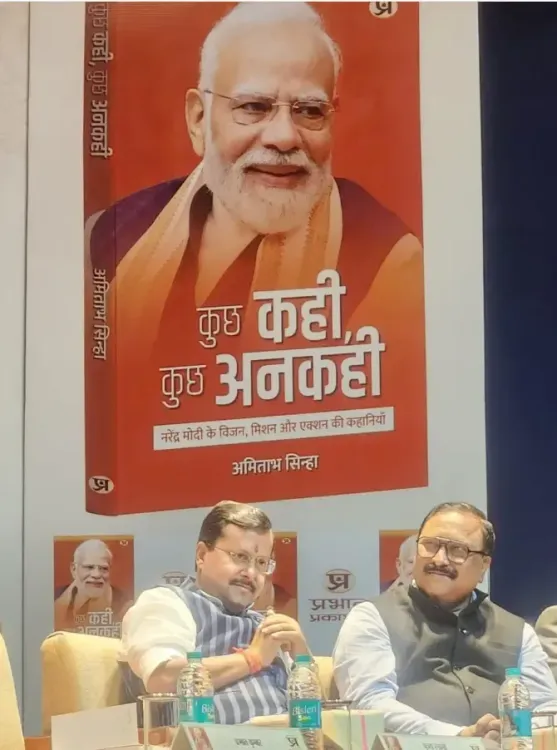
Journalist Amitabh Sinha 's book 'Kuchh Kahi, Kuchh Ankahi' was launched on 21 November 2026 by BJP President Nitin Nabin in New Delhi .
The PMO made multiple follow-up calls to Rajya Sabha MP Ranvijay Singh of Chhattisgarh to confirm he had purchased a smartphone and downloaded required apps.
PM Modi personally called a BJP woman MP from Uttar Pradesh within a week of taking office in 2014 to order removal of her father as personal assistant.
On 31 December 2014 , Modi summoned all Union government Secretaries to his residence for a late-night working session on departmental ideas.
The book also covers Modi's 2014 visit to flood-hit Jammu and Kashmir for a firsthand assessment of the humanitarian crisis.
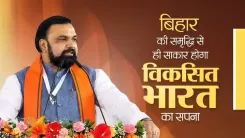
Journalist and author Amitabh Sinha's new book 'Kuchh Kahi, Kuchh Ankahi' offers a rare behind-the-scenes look at Prime Minister Narendra Modi's governance style, surfacing lesser-known anecdotes — from the Prime Minister's Office (PMO) repeatedly following up with an MP over a smartphone purchase to Modi personally phoning a woman parliamentarian to block a family appointment. The book was launched in New Delhi on 21 November 2026 by Bharatiya Janata Party (BJP) President Nitin Nabin.
The Smartphone Follow-Up That Stopped MPs in Their Tracks
One of the book's more striking anecdotes dates to 2014, just months after the Modi government took office. BJP Rajya Sabha MP from Chhattisgarh, Ranvijay Singh, narrated to the author how he received a call from someone identifying themselves as being from the PMO, asking whether he had downloaded specific applications on his phone.
Singh reportedly told the caller he did not own a smartphone. The caller asked when he would acquire one, and Singh sought a month's time. A follow-up call arrived a month later, then again after he requested a week's extension. Only once Singh confirmed he had bought a smartphone and completed the required downloads did the calls cease.
The episode, recounted by Sinha, illustrates what observers have described as Modi's insistence on operational readiness among elected representatives — a departure from the more relaxed expectations of earlier parliamentary eras.
Direct Call to a Woman MP: A Firm Line on Nepotism
Barely a week after the government was formed in 2014, a BJP woman MP from Uttar Pradesh reportedly appointed her father to serve as her personal assistant. According to the book, the matter quickly reached New Delhi, and Prime Minister Modi himself telephoned the MP. In a brief but firm conversation, he instructed her to remove her father from the position and ensured she understood that no relative was to be appointed to any role.
The incident, as Sinha presents it, was not widely publicised at the time — making its inclusion in the book a notable disclosure about how early the Modi administration drew its lines on family patronage.
Modi's Early Wariness of Bureaucratic Inertia
Sinha also documents PM Modi's initial apprehensions about the permanent bureaucracy. At a programme in 2014, Modi reportedly remarked that governments change, but bureaucrats remain firmly established — a candid acknowledgment of the institutional friction incoming administrations routinely face.
His response was structural. On 31 December 2014, Modi summoned all Union government Secretaries to his residence for an extended working meeting that continued late into the night. The gathering was focused on generating new ideas and actionable initiatives across departments — an unusual New Year's Eve exercise that signalled the work tempo his administration intended to set.
The 2014 J&K Flood Visit
Another episode highlighted in the book is Modi's visit to flood-ravaged Jammu and Kashmir in 2014, just months after assuming office. The visit was aimed at directly assessing the scale of devastation and understanding the humanitarian crisis on the ground — an early instance, Sinha suggests, of the Prime Minister's preference for firsthand engagement over desk-level briefings.
What the Book Adds to the Public Record
Taken together, the anecdotes in 'Kuchh Kahi, Kuchh Ankahi' build a portrait of a Prime Minister whose management style combines granular operational oversight — including following up on individual MP technology adoption — with a zero-tolerance stance on nepotism and a deliberate effort to reshape bureaucratic culture from day one. This comes amid a broader genre of insider accounts of Indian political leadership, though Sinha's focus on micro-incidents rather than macro-policy offers a distinct vantage point.
The book is expected to draw attention both as a political biography and as a document of institutional change during the early years of the Modi era.
Point of View
And readers should weigh them accordingly — but their specificity (named MP, named state, precise timeline) gives them more credibility than the usual hagiographic account. What is striking is not just Modi's intolerance for nepotism, which is well-documented publicly, but the PMO's granular operational reach: following up on individual MP smartphone ownership is not governance, it is micro-management. Whether that is a strength or a warning sign about centralisation of authority is a question the book does not ask — but its readers should.
NationPress
21 Nov 2026
Frequently Asked Questions
What is the book 'Kuchh Kahi, Kuchh Ankahi' about?
'Kuchh Kahi, Kuchh Ankahi' is a book by journalist and author Amitabh Sinha that compiles lesser-known anecdotes, milestones, and insights from PM Narendra Modi's political journey and governance style. It was launched on 21 November 2026 by BJP President Nitin Nabin in New Delhi.
What was the PMO smartphone incident involving a BJP MP?
BJP Rajya Sabha MP from Chhattisgarh, Ranvijay Singh, received repeated follow-up calls from the PMO in 2014 asking whether he had bought a smartphone and downloaded specific applications. The calls only stopped after he confirmed he had done so.
Why did PM Modi call a woman MP about her father?
According to the book, a BJP woman MP from Uttar Pradesh appointed her father as her personal assistant within days of the government being formed in 2014. PM Modi personally telephoned her and firmly instructed her to remove her father and appoint no other relatives to any position.
What was the significance of the 31 December 2014 Secretaries meeting?
On 31 December 2014, PM Modi summoned all Union government Secretaries to his residence for an extended late-night meeting to discuss new ideas and initiatives for their departments. The book presents it as an early signal of the demanding work culture Modi intended to establish in the bureaucracy.
Who launched 'Kuchh Kahi, Kuchh Ankahi' and when?
The book was launched by BJP President Nitin Nabin on 21 November 2026 in New Delhi. It is authored by journalist Amitabh Sinha and focuses on anecdotes from PM Modi's governance tenure.