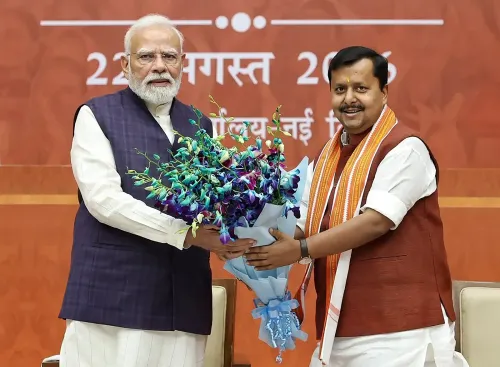
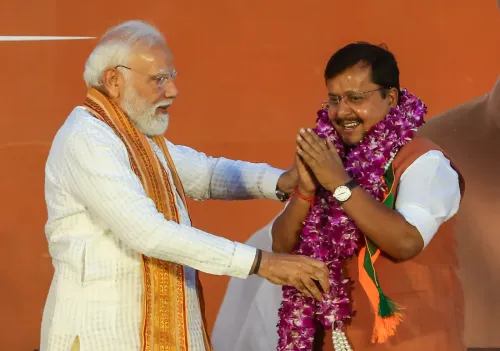
BJP chief Nabin: Modi's 25-year journey defined by 'Nation First' and trust
Synopsis
BJP National President Nitin Nabin used the launch of a new book on PM Modi to lay out five governing principles he says define the Prime Minister's style — from out-of-the-box thinking to zero-tolerance on corruption. The event doubles as a soft political reaffirmation of Modi's legacy narrative with 'Nation First' and public trust as its twin pillars.
Key Takeaways
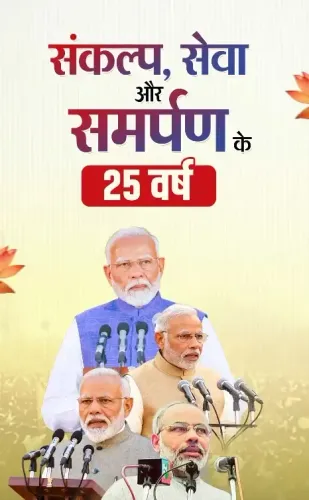
BJP National President Nitin Nabin described PM Modi's 25 years of public service as guided by 'Nation First' and 'Bharosa' (trust).
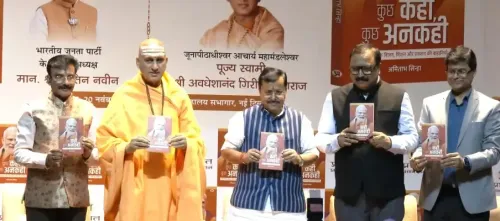
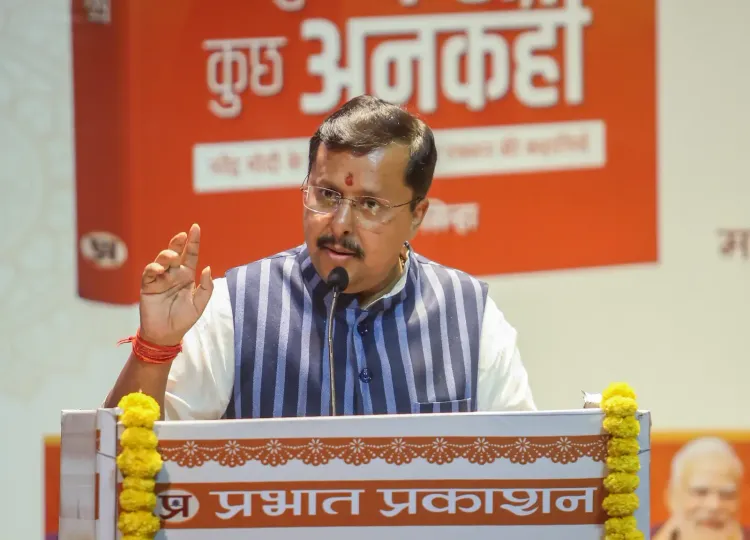
Remarks were made at the launch of 'Kuch Kahi, Kuch Ankahi' by author Amitabh Sinha in New Delhi on 20 November 2026 .
Nabin outlined five defining principles of Modi's governance style, including unconventional thinking and prioritising basic needs.
Welfare milestones cited include 12 crore toilets , Ujjwala Yojana , Ayushman Bharat , and 220 crore COVID-19 vaccine doses .
Nabin linked Modi's journey to India's Viksit Bharat vision for 2047 , anchored in the mantra 'Sabka Saath, Sabka Vikas, Sabka Vishwas, Sabka Prayas' .
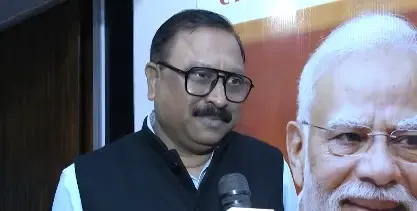
Bharatiya Janata Party (BJP) National President Nitin Nabin on Friday, 20 November 2026, described Prime Minister Narendra Modi's 25 years of public service as being anchored in two foundational values — 'Nation First' as a governing principle and 'Bharosa' (trust) as the defining word of his political journey. Nabin made the remarks at the launch of the book 'Kuch Kahi, Kuch Ankahi', authored by Amitabh Sinha, in New Delhi.
What the Book Captures
Nabin said the book offers insights into the Prime Minister's personality, leadership, working style and commitment to both the organisation and the nation. He praised the author for documenting lesser-known aspects of Modi's journey without sensationalism or embellishment. According to Nabin, the work highlights how Modi has balanced India's cultural and spiritual heritage with modern technology and progressive governance — citing examples ranging from the Ram Temple and Mahakal Lok to digital governance platforms.
From Gujarat to National Leadership
Recalling Modi's political trajectory, Nabin noted that the Prime Minister assumed charge as Gujarat Chief Minister under difficult circumstances in 2001, transforming challenges into opportunities. He said Modi's emphasis on public participation, direct citizen interaction and grassroots engagement laid the foundation for enduring public trust. Nabin also drew on personal recollections — including the 2012 Gujarat Sadbhavana Mission and the 2013 Patna rally — to illustrate Modi's ability to read public sentiment and remain composed under pressure.
Five Defining Principles of Modi's Governance
Nabin outlined five principles he said characterise Modi's working style: thinking beyond conventional approaches, challenging prevailing limitations, prioritising fundamental needs, establishing new governance benchmarks, and ensuring inclusive participation. He pointed to GST, the replacement of Five-Year Plans with NITI Aayog, and long-term policy planning as examples of unconventional thinking. Jan Dhan accounts, Direct Benefit Transfer and UPI were cited as instances of turning structural constraints into opportunity.
Welfare Milestones and Governance Benchmarks
Nabin highlighted several welfare achievements attributed to the Modi government, including the construction of 12 crore toilets, Ujjwala Yojana, household electrification, housing for the poor and Ayushman Bharat. He said these placed basic necessities at the centre of governance. On anti-corruption and security, Nabin said the Prime Minister's zero-tolerance stance on corruption, terrorism and Naxalism — alongside India's growing international standing — reflects new standards in governance. He also cited the COVID-19 pandemic response, during which India administered 220 crore vaccine doses, as evidence of public trust translating into collective national action.
Vision for Viksit Bharat 2047
Nabin said the mantra of 'Sabka Saath, Sabka Vikas, Sabka Vishwas, Sabka Prayas' has given India a shared vision of becoming a developed nation — Viksit Bharat — by 2047. He concluded by saying that when national interest takes precedence over personal ambition, leadership creates history, and that Modi's journey stands as a testament to that enduring principle. The book launch marks another moment in the BJP's ongoing effort to shape the public narrative around its most prominent leader ahead of an active political season.
Point of View
With BJP in a cycle of state-level consolidation, is deliberate. What is notably absent from the framing is any engagement with critiques of those same governance benchmarks — be it the jobs data questions around welfare schemes or the economic debate over replacing planning frameworks. Celebrating a legacy is not the same as auditing it, and the book launch format ensures the former without the discomfort of the latter.
NationPress
20 Nov 2026
Frequently Asked Questions
What is the book 'Kuch Kahi, Kuch Ankahi' about?
'Kuch Kahi, Kuch Ankahi' is a book authored by Amitabh Sinha that offers insights into PM Narendra Modi's personality, leadership style and political journey. BJP National President Nitin Nabin said the book captures lesser-known aspects of Modi's public life without sensationalism or embellishment.
What did BJP chief Nitin Nabin say about PM Modi's 25 years in public service?
Nabin said the guiding principle of Modi's 25-year public service has been 'Nation First', with 'Bharosa' (trust) as the defining word of his political journey. He also outlined five principles — including unconventional thinking and inclusive governance — that he said characterise Modi's working style.
What governance achievements did Nabin highlight at the book launch?
Nabin cited the construction of 12 crore toilets, Ujjwala Yojana, household electrification, Ayushman Bharat, Jan Dhan accounts, UPI and Direct Benefit Transfer as key milestones. He also pointed to India's administration of 220 crore COVID-19 vaccine doses as an example of public trust in action.
What is the Viksit Bharat 2047 vision that Nabin referred to?
Viksit Bharat 2047 is the Modi government's stated goal of transforming India into a developed nation by the centenary of its independence. Nabin said the mantra 'Sabka Saath, Sabka Vikas, Sabka Vishwas, Sabka Prayas' provides the collective framework for achieving this vision.
Why is Nitin Nabin significant in the BJP?
Nitin Nabin is the National President of the Bharatiya Janata Party (BJP), making him the party's top organisational head. His public statements on PM Modi's leadership carry weight as an authoritative articulation of the party's official narrative.