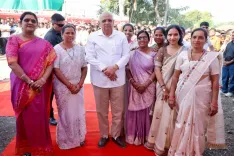
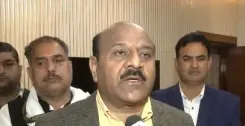
Giriraj Singh spotlights Telangana's Ikat weaver Adem Chandana
Synopsis
Union Textiles Minister Giriraj Singh highlighted Telangana's Adem Chandana, whose entrepreneurial work in traditional Ikat weaving sustains 50 weaver families, calling her an inspiring example of linking cultural heritage with employment and self-reliance.
Key Takeaways
Union Textiles Minister Giriraj Singh praised Adem Chandana of Telangana on 20 November 2026 .
Chandana's enterprise supports the livelihoods of 50 weaver families through traditional Ikat craft.
Pochampally Ikat received a Geographical Indication tag in 2004 , formally protecting its regional identity.
Singh credited Chandana's hard work and entrepreneurial efforts with linking cultural heritage to employment and self-reliance.
Central ministers regularly spotlight individual artisan stories on social media to raise visibility for handloom livelihoods.
A single entrepreneur from Telangana is quietly rewriting what heritage can mean for a living — and Union Textiles Minister Giriraj Singh wants the country to take note. On Friday, 20 November 2026, the minister used his X account to shine a spotlight on Adem Chandana, a weaver-entrepreneur who has turned the ancient art of Ikat weaving into a livelihood anchor for 50 weaver families.
Singh's post, written in Hindi, reads: 'Paramparagat Ikat kala ko nayi pehchaan dene ke saath 50 bunkar parivaron ki aajeevika ka sahara ban rahi hain Telangana ki Adem Chandana.' ('Telangana's Adem Chandana is not only giving a new identity to the traditional Ikat art but also becoming a livelihood support for 50 weaver families.') He adds that through her hard work, dedication, and entrepreneurial efforts, she has set an inspiring example of linking heritage with employment and self-reliance.
What makes Ikat weaving a living legacy
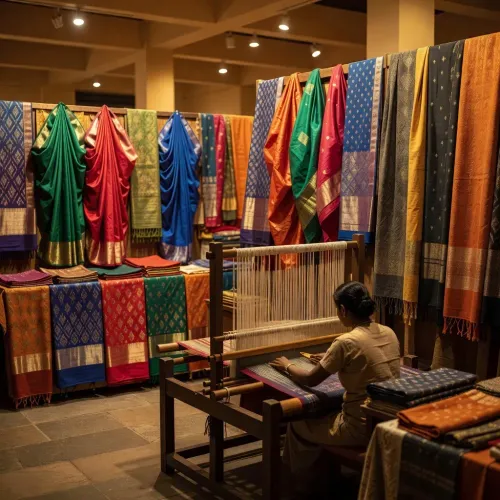
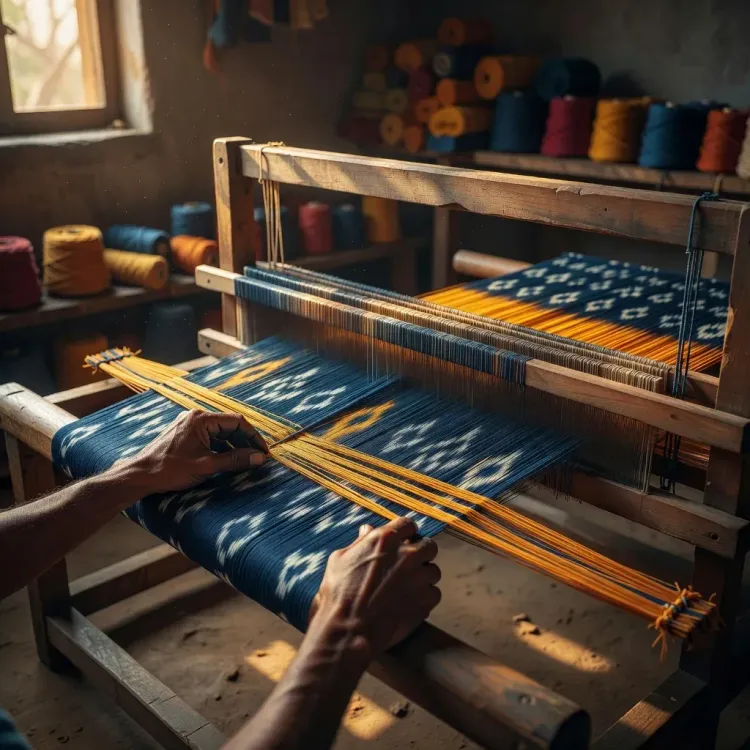
Pochampally Ikat, produced in the handloom clusters of Telangana, received a Geographical Indication tag in 2004 — a formal recognition that the textile's identity is inseparable from its region. The craft involves resist-dyeing yarn before it is woven, a labour-intensive process that demands both skill and patience. Despite that formal protection, the economic condition of individual weaver families has remained precarious, vulnerable to synthetic fabric competition and uneven market access.
That is precisely what makes Chandana's model striking. By building an enterprise that sustains 50 families, she has converted cultural continuity into concrete income — the kind of ground-up intervention that policy frameworks often struggle to replicate from the top down.
Ministers, social media, and the artisan spotlight
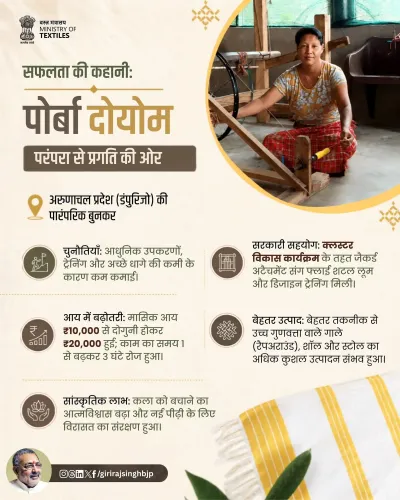
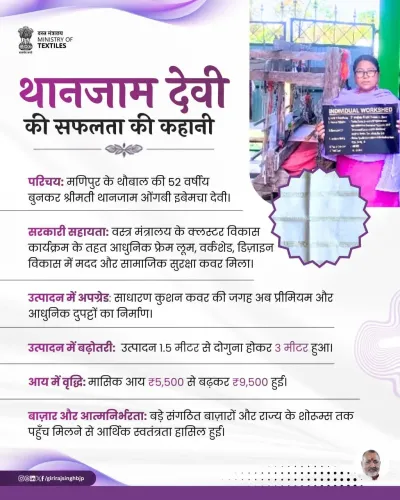
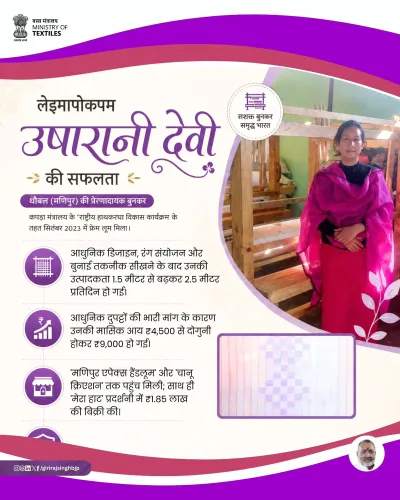
Singh's post fits a recognisable pattern among Central ministers: using social media to amplify individual artisan stories, raising visibility for handloom livelihoods without a formal scheme announcement attached. For weavers and craft clusters, that visibility can open doors — to buyers, to export inquiries, to scheme linkages they might not otherwise know about. The Textiles Ministry has historically supported traditional clusters through marketing assistance, raw-material supply and skill upgradation programmes, and profiles like this one can accelerate those connections.
Whether Chandana's work draws a formal follow-up — an award, a ministry feature, or a scheme tie-in — remains to be seen. But the minister's public endorsement puts one Telangana entrepreneur and the 50 families she supports squarely on the national handloom map. Heritage, in this telling, is not a museum exhibit. It is a paycheck.
Point of View
Giriraj Singh is doing more than offering a compliment — he is signalling the ministry's preferred narrative: that India's handloom revival runs on grassroots enterprise, not just state subsidy. The post dovetails with a broader BJP-era emphasis on 'self-reliance' as a cultural and economic frame, casting artisan entrepreneurs as proof-of-concept for Atmanirbhar Bharat. For Pochampally Ikat specifically, which already carries GI protection, the missing piece has always been market reach and income stability — precisely what Chandana's model addresses. Watch for whether the ministry converts this social-media endorsement into a formal recognition or scheme linkage, which would sharpen its policy signal considerably.
NationPress
20 Nov 2026
Frequently Asked Questions
Who is Adem Chandana from Telangana?
Adem Chandana is a weaver-entrepreneur from Telangana recognised for reviving traditional Ikat weaving and providing livelihood support to 50 weaver families through her enterprise.
What is Ikat weaving?
Ikat is a traditional textile craft in which yarn is resist-dyed before weaving, producing distinctive patterned fabrics. Pochampally Ikat from Telangana received a Geographical Indication tag in 2004.
Why did Giriraj Singh post about Adem Chandana?
Union Textiles Minister Giriraj Singh praised Chandana as an inspiring example of linking cultural heritage with employment and self-reliance, highlighting her role in sustaining 50 weaver families.
What is the Geographical Indication tag for Pochampally Ikat?
Pochampally Ikat received its Geographical Indication (GI) tag in 2004, formally recognising the textile as a product uniquely tied to the Pochampally region of Telangana.
How does the Textiles Ministry support traditional handloom clusters?
The Textiles Ministry has historically supported handloom clusters through marketing assistance, skill upgradation, and raw-material supply programmes, and periodically highlights individual artisan stories to raise their visibility.