J&K Dy CM questions BJP over Pakistan Minister's SCO visit to Delhi
Synopsis
J&K Deputy CM Surinder Choudhary has called out a striking contradiction: the BJP once labelled NC leaders 'traitors' for advocating talks with Pakistan, yet the Centre is now hosting Pakistani Minister Musadik Masood Malik in Delhi for an SCO forum. The challenge puts the ruling party in an uncomfortable position — defending a diplomatic opening it once used as a political weapon against its opponents.
Key Takeaways
J&K Deputy CM Surinder Choudhary questioned the BJP -led Centre on 20 November 2026 over hosting Pakistan Minister Musadik Masood Malik in New Delhi for the SCO Civilisational Dialogue Forum .
Choudhary argued that the BJP branded NC President Farooq Abdullah and CM Omar Abdullah as 'anti-national' for advocating the same Pakistan dialogue the Centre is now facilitating.
He invoked the legacy of late PM Atal Bihari Vajpayee , a BJP icon, who had also called for maintaining good relations with Pakistan.
The National Conference has long maintained that dialogue with Pakistan is essential for peace and stability in Jammu and Kashmir .
Choudhary cited Farooq Abdullah's 1994 Geneva speech defending India's record on human rights in J&K as evidence of the NC's consistent pro-India stance.
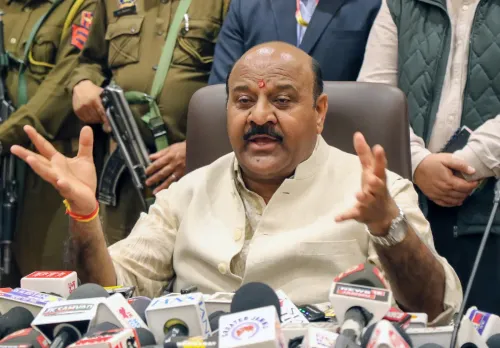
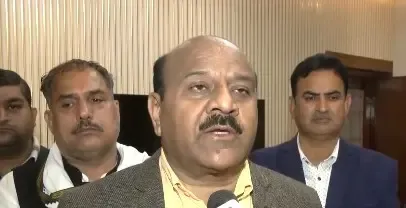
Jammu and Kashmir Deputy Chief Minister Surinder Choudhary on Friday, 20 November 2026, sharply questioned the Bharatiya Janata Party (BJP)-led Centre over permitting Pakistan Minister Musadik Masood Malik to travel to New Delhi to attend the SCO Civilisational Dialogue Forum, drawing attention to what he described as a glaring contradiction in the ruling party's long-held position on engaging with Islamabad.
The Core Contradiction
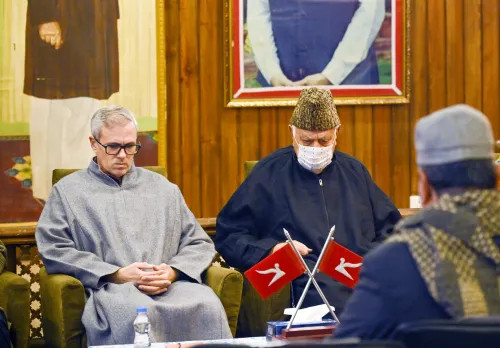
Choudhary pointed out that the National Conference (NC), including NC President Farooq Abdullah and Chief Minister Omar Abdullah, had for years advocated dialogue with Pakistan — only to be labelled anti-national and pro-separatist by the BJP for doing so. He argued that the Centre's decision to allow the Pakistani minister's visit amounts to an implicit acknowledgment that the NC's position was correct all along.
'Farooq Abdullah also said that there was no alternative to engaging in dialogue with Pakistan. Back then, they accused him of speaking the language of separatists and traitors. If that [Pakistan] Minister is coming today, then why are you allowing him to come?' Choudhary said.
Invoking Vajpayee's Legacy
The Deputy Chief Minister also recalled the stance of the late Prime Minister Atal Bihari Vajpayee, himself a BJP stalwart, who famously argued that nations cannot choose their neighbours and that India must maintain functional relations with Pakistan. Choudhary cited this to reinforce his argument that cross-border engagement has historically enjoyed bipartisan support, even within the BJP's own founding tradition.
'Late Atal Bihari Vajpayee ji had also called for the same thing. He used to say, "You can change friends, but you cannot change your neighbours,"' Choudhary noted.
NC's Sacrifices and Consistent Stance
Choudhary stressed that the National Conference has consistently maintained this position despite enormous personal and political cost, with the party's ministers, MLAs, district presidents, and workers reportedly having lost their lives to violence linked to the Kashmir conflict. He said the party has always maintained that moving forward without engaging Pakistan is 'impossible', given Islamabad's role in the region's instability.
He also referenced Farooq Abdullah's speech in Geneva in 1994, where Abdullah — as part of an Indian opposition delegation led by the then-Opposition Leader Atal Bihari Vajpayee — strongly defended India's human rights record in Jammu and Kashmir and countered a Pakistani-sponsored resolution at an international forum. Choudhary argued that this episode, now widely acknowledged, underlines the NC's firmly pro-India credentials.
The Underlying Message
'The BJP should be asked: when we used to say these things, you called us anti-national. So now that you are doing the same, what does that make you?' Choudhary said, while clarifying that the debate is not fundamentally about patriotism. 'The real issue is that if you want to improve the situation in Jammu and Kashmir, if you want peace and stability in the region, then dialogue with Pakistan is essential,' he added.
The remarks come as India and Pakistan continue to maintain largely frozen diplomatic ties, making the Pakistani minister's presence in Delhi for a multilateral forum a notable, if limited, diplomatic signal. How the Centre responds to the NC's pointed challenge — and whether Malik's visit signals any broader thaw — will be closely watched in the days ahead.
Point of View
The party deployed the 'anti-national' charge against NC leaders as an electoral cudgel; hosting a Pakistani minister in Delhi — even within the neutral frame of a multilateral forum — exposes the gap between that rhetoric and the compulsions of governance. Choudhary's gambit is shrewd: he is not asking for normalisation, he is demanding consistency. What mainstream coverage tends to miss is that this episode also rehabilitates the NC's long-term strategic positioning on Pakistan dialogue, which the party had been forced to defend at great political cost. The Centre will need a more nuanced public rationale than silence if it wants to prevent this from becoming a sustained narrative against it ahead of any future J&K electoral contest.
NationPress
20 Nov 2026
Frequently Asked Questions
Why did J&K Deputy CM Surinder Choudhary criticise the BJP over the Pakistan minister's visit?
Choudhary criticised the BJP because the party had previously accused NC leaders, including Farooq Abdullah and Omar Abdullah, of being 'anti-national' and 'traitors' for advocating dialogue with Pakistan. He argued that by now permitting Pakistan Minister Musadik Masood Malik to visit Delhi for the SCO Civilisational Dialogue Forum, the BJP was doing precisely what it had condemned the NC for suggesting.
Who is Musadik Masood Malik and why is he visiting Delhi?
Musadik Masood Malik is a Pakistani minister who visited New Delhi to attend the SCO Civilisational Dialogue Forum. His presence in India is significant given the largely frozen state of India-Pakistan diplomatic relations, and it has drawn political scrutiny domestically.
What did Farooq Abdullah say about Pakistan dialogue that drew criticism?
NC President Farooq Abdullah had long argued that there was no alternative to engaging Pakistan in dialogue, particularly to address instability in Jammu and Kashmir. The BJP criticised these statements as sympathetic to separatists, a charge the NC consistently rejected, pointing to Abdullah's 1994 Geneva speech defending India's record as evidence of the party's pro-India credentials.
What did Atal Bihari Vajpayee say about relations with Pakistan?
Late Prime Minister Atal Bihari Vajpayee, a founding figure of the BJP, famously argued that India could not choose its neighbours and that maintaining good relations with Pakistan was essential. Choudhary cited Vajpayee's position to show that engagement with Pakistan has historically had support even within the BJP's own tradition.
What is the National Conference's position on Pakistan dialogue?
The National Conference has consistently held that dialogue with Pakistan is essential for peace and stability in Jammu and Kashmir, citing Pakistan's role in the region's instability. Choudhary noted that the party has maintained this position despite significant political and personal sacrifices by its leaders and workers.