Rahul Gandhi reads Rajasthan panchayat win as anti-BJP rural verdict
Synopsis
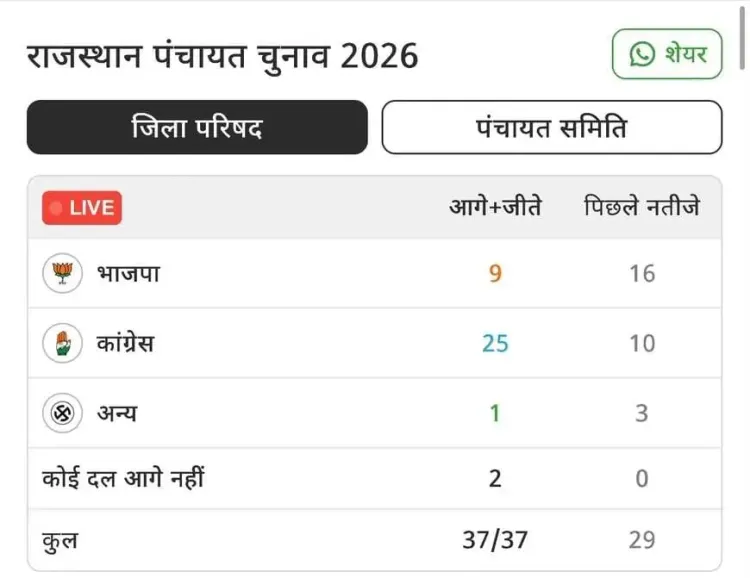
Congress leader Rahul Gandhi on 20 November 2026 declared Rajasthan's panchayat election results a rural rejection of BJP's 'double engine' model, citing MGNREGA attacks, farm losses, and hollowed-out panchayat powers as the driving grievances.
Key Takeaways
Rahul Gandhi posted on 20 November 2026 crediting Congress's performance in Rajasthan panchayat elections to rural discontent with BJP governance.
He called the result a direct blow to the BJP's ' double engine ' slogan, noting it came from a BJP-ruled state.
Gandhi's three specific charges: BJP attacked MGNREGA , pushed farmers into losses, and stripped panchayats of powers.
He linked those policy failures to inflation, unemployment, and rural-to-urban migration 'emptying villages.' MGNREGA , enacted in 2005 , guarantees up to 100 days of paid work annually to rural households and remains a central political battleground.
Gandhi framed the result not as a state-level outcome but as 'the voice of every village in the country.'
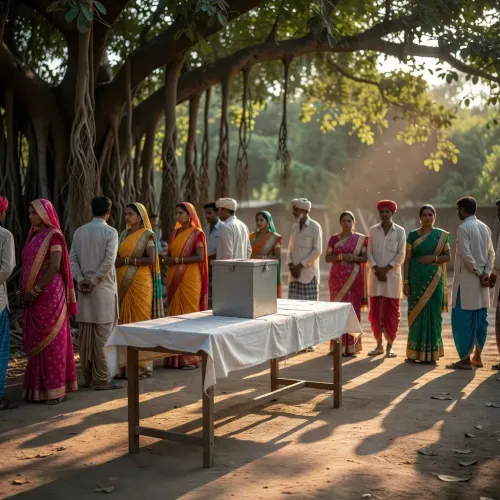
Village India has spoken — and Congress leader Rahul Gandhi is making sure nobody misses the address. On Friday, 20 November 2026, the Leader of the Opposition in the Lok Sabha posted a pointed message on X, framing Congress's performance in Rajasthan's panchayat elections as a direct repudiation of the BJP's much-touted 'double engine' governance model, delivered from within a BJP-ruled state.
Gandhi's post, written in Hindi, opens with gratitude — 'राजस्थान के ग्रामीण भाइयों-बहनों का दिल से धन्यवाद' ('A heartfelt thank you to the rural brothers and sisters of Rajasthan') — before turning combative. The trust placed in Congress, he wrote, is now a responsibility. Then comes the sharper edge: 'This answer has come from a BJP-governed state — straight at the 'double engine'.'
Three charges Gandhi levelled at BJP's rural record
Gandhi did not stop at symbolism. He laid out a specific three-part indictment: that the BJP attacked MGNREGA, pushed farmers into loss, and stripped panchayats of their powers. He then tied those policy grievances to lived consequences — inflation, unemployment, and migration that have, in his words, 'emptied the villages.' The sequence is deliberate: policy failure → economic distress → demographic drain.
MGNREGA, enacted in 2005 under the UPA government, guarantees up to 100 days of wage employment annually to rural households and has long been a flashpoint between the Congress and BJP. Opposition leaders have repeatedly accused successive central budgets of under-funding the scheme. Panchayati Raj institutions, empowered by the 73rd Constitutional Amendment of 1992, are the other pillar Gandhi invoked — suggesting that local self-governance has been hollowed out rather than strengthened.
The 'double engine' argument turned on its head
The BJP's 'double engine' slogan promises smoother development when the same party governs both the state and the centre. It is a core campaign argument the party deploys in every state election. Gandhi's framing — that the verdict against that model came precisely from a state where BJP holds both levers — is a deliberate inversion. If double engine means doubled accountability, the argument runs, then a rural revolt against it in Rajasthan stings twice as hard.
Rajasthan is a large, predominantly agrarian state in northwestern India, where rural households depend heavily on both agriculture and centrally-funded employment schemes. Local body elections in such states are often read by national parties as a temperature check on welfare delivery at the last mile — the panchayat level where policy either reaches people or quietly disappears.
From Rajasthan's villages to every village in India
Gandhi's closing line is the one he clearly wants to travel furthest: 'This is not just Rajasthan's mandate — it is the voice of every village in the country.' It is a classic opposition move — localising a result for authenticity, then nationalising it for maximum political weight. Whether the panchayat-level numbers bear the weight of that claim will shape how the BJP and other regional parties respond in the days ahead.
What is not in dispute is the terrain on which Gandhi has chosen to fight: rural employment, farm income, local governance, and the cost of living. These are the same fault lines that have defined India's political centre of gravity for decades. The villages, Gandhi is saying, were watching. They were enduring. Now they have spoken.
Point of View
Gandhi is executing a well-worn but potent opposition strategy: converting granular local-body data into a national narrative about governance failure. The choice of MGNREGA and panchayat autonomy as the two policy hooks is significant — both carry constitutional weight and large voter bases in agrarian India. The 'double engine' inversion is the sharpest rhetorical move: it weaponises the BJP's own brand language against it in a state where that brand was supposed to deliver. How the ruling party and Rajasthan's state government respond to this framing will reveal how exposed they feel on the rural welfare front heading into future electoral cycles.
NationPress
20 Nov 2026
Frequently Asked Questions
What did Rahul Gandhi say about Rajasthan panchayat elections?
Rahul Gandhi said the Congress's performance in Rajasthan's panchayat elections reflects rural anger at BJP's governance, specifically citing attacks on MGNREGA, farm losses, weakened panchayat powers, inflation, unemployment, and migration. He called it the voice of every village in India.
What is the BJP 'double engine' slogan Gandhi criticised?
The 'double engine' slogan refers to the BJP's argument that development is faster when the same party governs both the state and the central government. Gandhi argued that a rural vote against Congress in a BJP-ruled state directly undercuts this claim.
What is MGNREGA and why does it matter in this context?
MGNREGA — the Mahatma Gandhi National Rural Employment Guarantee Act — was enacted in 2005 and provides up to 100 days of paid wage employment annually to rural households. Gandhi accused the BJP of attacking the scheme, which is a key safety net for agrarian communities.
What powers do panchayats have in India?
Panchayats are rural local self-government bodies given constitutional status and powers by the 73rd Constitutional Amendment of 1992. They are meant to manage local development, public works, and welfare delivery at the village level.
When were Rajasthan panchayat elections held in 2026?
The specific dates and results of the Rajasthan panchayat elections referenced in Rahul Gandhi's post on 20 November 2026 have not been independently verified. Gandhi's post on that date indicated Congress performed strongly and interpreted it as a mandate against BJP's rural policies.