UNICEF Chief lauds Assam's child welfare and flood response
Synopsis
UNICEF Chief for Assam and the North-East Dr Madhulika Jonathan commended the Assam government's child welfare and flood-response measures on 20 November 2026, praising collaboration under Poshan 2.0 and Beti Bachao Beti Padhao, including child-friendly spaces in flood relief camps.
Key Takeaways
Dr Madhulika Jonathan , UNICEF Chief for Assam and the North-East, publicly praised the Assam government's child welfare and flood-response interventions.
The commendation highlighted the state's work under Poshan 2.0 and Beti Bachao Beti Padhao (BBBP) in partnership with the Department of Women and Child Development .
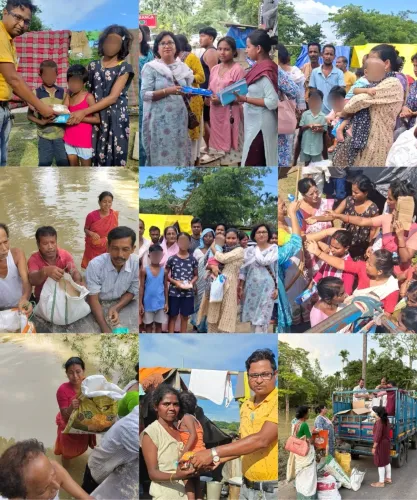
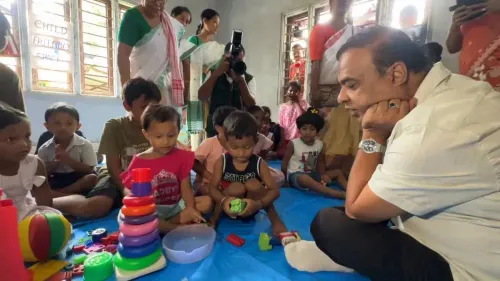
Assam established child-friendly spaces in flood relief camps, ensuring continuity of health, nutrition, and educational services during displacement.
Poshan 2.0 evolved from the national POSHAN Abhiyaan launched in 2018 , targeting stunting, wasting, and anaemia in children and mothers.
BBBP , introduced in 2015 , focuses on improving the child sex ratio and expanding girls' education — including in emergency settings.
UNICEF's long-standing technical partnership with successive Assam governments underpins the state's integrated flood and welfare response architecture.
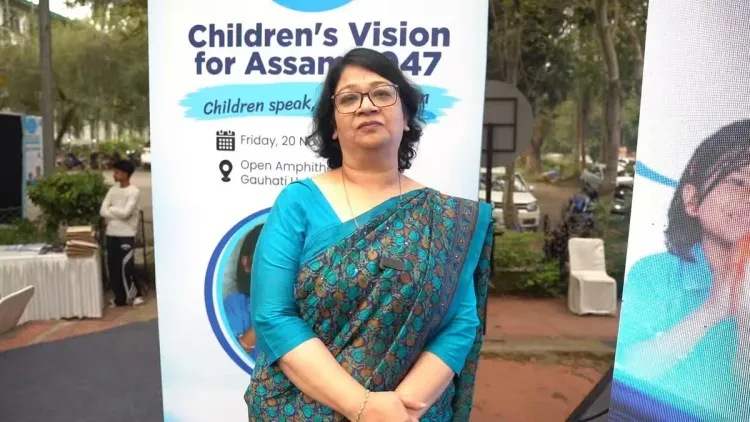
When UNICEF's top representative for the North-East walks into a flood relief camp and finds a functioning child-friendly space with uninterrupted nutrition support, that is not an accident — it is policy working. On Friday, 20 November 2026, the Chief Minister's Office of Assam shared that Dr Madhulika Jonathan, UNICEF Chief for Assam and the North-East, publicly commended the state government's efforts in child welfare, nutrition, and maternal healthcare.
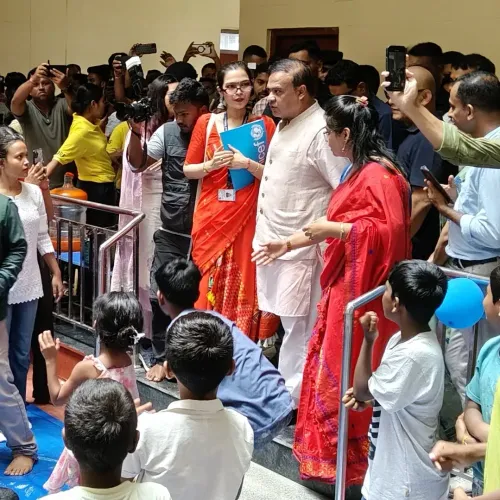
Dr Jonathan highlighted the close collaboration between UNICEF and Assam's Department of Women and Child Development under two flagship national programmes — Poshan 2.0 and the Beti Bachao Beti Padhao (BBBP) initiative. She specifically lauded the state's flood response: the establishment of child-friendly spaces in relief camps and the continuity of health, nutritional, and educational services even as floodwaters displace communities across the state's low-lying districts.
What child-friendly flood relief actually looks like in Assam
Assam is one of India's most flood-prone states, with the Brahmaputra and its tributaries inundating large swaths of territory virtually every monsoon season. The human toll falls disproportionately on the most vulnerable — pregnant women, nursing mothers, and young children who cannot afford a gap in nutrition or healthcare, even for a few days. The state's approach — building dedicated child-friendly spaces inside relief camps and maintaining uninterrupted service delivery — addresses precisely that vulnerability. These are not symbolic gestures; they are structured environments where children receive psychosocial support, supplementary nutrition, and access to continued schooling while their families wait out the floods.Poshan 2.0 and BBBP: the policy scaffolding behind the praise
Poshan 2.0, the Centre's flagship nutrition mission that evolved from the 2018 POSHAN Abhiyaan, focuses on reducing stunting, wasting, and anaemia among children and maternal populations — indicators that worsen sharply during flood displacement. Beti Bachao Beti Padhao, launched in 2015 to improve the child sex ratio and expand girls' education, provides the institutional channel through which the Women and Child Development department tracks girls' welfare even during emergencies. Assam's integration of these central schemes with its localised flood-response architecture is precisely what drew Dr Jonathan's recognition. The state did not simply administer relief; it built a welfare continuity mechanism.UNICEF's long-standing partnership with the state
UNICEF has maintained a technical partnership with successive Assam governments across child rights monitoring, nutrition surveillance, and emergency response planning. Dr Jonathan's commendation signals that the partnership is yielding measurable ground-level results — not just in programme design, but in the harder test of execution under crisis conditions. The next indicator to watch is the mid-term performance of Poshan 2.0 metrics in Assam — stunting rates, maternal anaemia figures, and antenatal coverage — which will tell the fuller story of whether this year's flood response translated into sustained nutritional outcomes for the state's children.Point of View
Something most states treat as separate verticals. For the Himanta Biswa Sarma-led government, the UNICEF endorsement strengthens a narrative of governance competence in a state whose annual flood crisis is otherwise a political liability. More broadly, the episode illustrates how subnational implementation fidelity — not just scheme design at the Centre — determines whether programmes like Poshan 2.0 actually reach the last mile. The real test will come when independent nutrition indicators from Assam's flood-affected districts are published.
NationPress
20 Nov 2026
Frequently Asked Questions
Why did UNICEF praise the Assam government in November 2026?
UNICEF Chief for Assam and the North-East Dr Madhulika Jonathan commended the Assam government for its proactive work in child welfare, nutrition, and maternal healthcare, specifically praising the establishment of child-friendly spaces in flood relief camps and uninterrupted service delivery under Poshan 2.0 and Beti Bachao Beti Padhao.
What is Poshan 2.0 and how is it implemented in Assam?
Poshan 2.0 is the central government's upgraded nutrition mission, building on the POSHAN Abhiyaan launched in 2018. In Assam, it is implemented through the Department of Women and Child Development and focuses on reducing stunting, wasting, and anaemia — including during flood-displacement periods.
What are child-friendly spaces in Assam flood relief camps?
Child-friendly spaces are structured environments set up inside flood relief camps where displaced children receive psychosocial support, supplementary nutrition, and continued access to education, ensuring welfare continuity even when families are uprooted by flooding.
What is Beti Bachao Beti Padhao and when was it launched?
Beti Bachao Beti Padhao is a national scheme launched in 2015 to improve the child sex ratio and expand girls' education. In Assam, it is administered by the Department of Women and Child Development and extends to emergency and flood-affected settings.
What is UNICEF's role in Assam's welfare programmes?
UNICEF serves as a technical partner for successive Assam governments, supporting child rights monitoring, nutrition surveillance, and emergency response planning, particularly during the state's recurring annual monsoon flooding.