Pakistan using PECA cybercrime laws to silence journalists, global groups warn
Synopsis
Global press freedom bodies are sounding the alarm over Pakistan's arrest of journalist Shahid Maitla under PECA cybercrime laws — a case triggered by his social media posts accusing a former caretaker Prime Minister of corruption. Despite a protective bail order from the Islamabad High Court, Maitla was forcibly transferred to volatile Balochistan, drawing accusations of 'abduction-style' tactics from the CPJ.
Key Takeaways
Journalist Shahid Maitla was arrested under Pakistan's Prevention of Electronic Crimes Act (PECA) after a complaint by former caretaker PM Anwaar-ul-Haq Kakar .
A Pakistani court approved a two-day transit remand ; the NCCIA subsequently transferred Maitla to Balochistan .
Maitla's lawyer argued the arrest was illegal, noting the Islamabad High Court had already granted pre-arrest bail.
The CPJ , IFJ , and PFUJ have all called for Maitla's immediate and unconditional release.
Organisations say PECA has been increasingly weaponised against journalists since the NCCIA's establishment in 2024 and social media policy amendments in 2025 .
Several leading international press freedom organisations have strongly condemned the arrest of journalist Shahid Maitla by Pakistani authorities, warning that the case exposes the continued weaponisation of Pakistan's Prevention of Electronic Crimes Act (PECA) to intimidate reporters and suppress independent media. The condemnation, issued on 20 November 2026, comes after a Pakistani court approved a two-day transit remand of Maitla, following which a team from the National Cyber Crime Investigation Agency (NCCIA) transported him to Balochistan.
How the Case Unfolded
According to reports, Balochistan politician and former caretaker Prime Minister Anwaar-ul-Haq Kakar lodged a complaint against Maitla over social media posts in which the journalist accused Kakar of corruption. The case was registered under PECA, and the NCCIA — established in 2024 — took Maitla into custody after the court granted the transit remand.
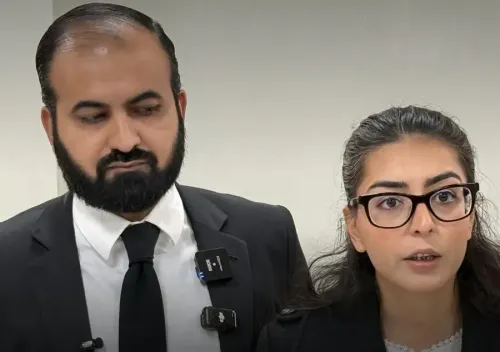
Maitla's lawyer, Habib Hanzala, told the court on 18 November that his client had been illegally detained, arguing that the Islamabad High Court had already granted Maitla pre-arrest bail in connection with the dispute, which reportedly dates back several months. Critics argue the transfer to Balochistan — despite the existing protective bail — was a deliberate act of coercion.
Committee to Protect Journalists Demands Release
The Committee to Protect Journalists (CPJ) called on Pakistani authorities to immediately and unconditionally release Maitla, drop all cybercrime charges against him, and guarantee his safety rather than transfer him to what the organisation described as the 'highly volatile and unstable Balochistan province.'
'Pakistani authorities' abduction-style seizure of Shahid Maitla and his forced transfer to the highly volatile and unstable Balochistan province, despite existing protective bail, demonstrate a blatant disregard for due process and press freedom in Pakistan,' said CPJ Afghanistan and Pakistan Representative Waliullah Rahmani. He added: 'Authorities must immediately and unconditionally release Maitla, guarantee his safety while in state custody, and stop weaponising cybercrime laws to intimidate journalists.'
IFJ and PFUJ Call for Transparent Probe
The International Federation of Journalists (IFJ) and its Pakistani affiliate, the Pakistan Federal Union of Journalists (PFUJ), also condemned the arrest and called for Maitla's immediate release alongside a transparent investigation into the allegations against him.
Both organisations noted that PECA has been 'continued to be weaponised against journalists, particularly since the establishment of the NCCIA in 2024 and amendments to the country's social media policy in 2025.' The IFJ stated: 'The arrest of Shahid Maitla represents the latest weaponisation of the PECA to punish journalists and repress the right to press freedom in Pakistan,' adding a demand for 'the repeal of legal provisions that criminalise independent and critical journalism.'
The PFUJ, calling on authorities to uphold due process, said: 'Journalists must be able to perform their professional duties without fear, intimidation, or pressure, and the authorities must take concrete steps to protect press freedom and the safety of journalists.'
Pattern of PECA Misuse Against Pakistani Media
This is not an isolated case. Press freedom advocates have documented a growing pattern of Pakistani authorities invoking PECA — originally enacted to address online harassment and cybercrime — against journalists whose reporting or social media commentary is critical of officials or the military establishment. The 2025 amendments to Pakistan's social media regulations drew international criticism for further widening the scope for such prosecutions. Notably, Balochistan has historically ranked among Pakistan's most dangerous provinces for journalists, making Maitla's forced transfer there a cause for heightened concern among press freedom bodies.
What Happens Next
Press freedom groups are urging the Pakistani government to drop all charges, release Maitla unconditionally, and begin a credible review of PECA provisions that criminalise journalism. International bodies are expected to escalate pressure through formal diplomatic channels if Maitla is not released promptly. The case will likely intensify scrutiny of Pakistan's media environment ahead of upcoming reviews by international human rights mechanisms.
Point of View
Designed ostensibly for online safety, can be repurposed as a censorship instrument by states unwilling to tolerate scrutiny. Pakistan's PECA has quietly become one of South Asia's most potent tools for press suppression — not through explicit media bans, but through the chilling effect of criminal prosecution. What makes this case particularly stark is that a valid protective bail from the Islamabad High Court was effectively bypassed by routing Maitla through a transit remand and dispatching him to Balochistan — a province with a documented record of enforced disappearances of journalists. International condemnation has historically produced limited results in Islamabad; whether diplomatic pressure translates into genuine legal reform, or remains performative, is the real test.
NationPress
20 Nov 2026
Frequently Asked Questions
Who is Shahid Maitla and why was he arrested?
Shahid Maitla is a Pakistani journalist arrested under the Prevention of Electronic Crimes Act (PECA) after former caretaker Prime Minister Anwaar-ul-Haq Kakar filed a complaint over Maitla's social media posts accusing Kakar of corruption. A Pakistani court approved a two-day transit remand, and the NCCIA transferred him to Balochistan.
What is Pakistan's PECA and why are press freedom groups concerned about it?
PECA — the Prevention of Electronic Crimes Act — is Pakistan's principal cybercrime law, enacted to address online harassment and digital offences. Press freedom groups argue it has been repeatedly misused since the NCCIA's establishment in 2024 and social media policy amendments in 2025 to prosecute journalists who post critical content online.
What did the Committee to Protect Journalists say about the case?
The CPJ's Afghanistan and Pakistan Representative Waliullah Rahmani called the transfer an 'abduction-style seizure' that demonstrates 'a blatant disregard for due process and press freedom.' The CPJ demanded Maitla's immediate unconditional release, the dropping of all charges, and a halt to the use of cybercrime laws against journalists.
Why is Maitla's transfer to Balochistan considered especially alarming?
Balochistan has historically been among Pakistan's most dangerous provinces for journalists, with documented cases of enforced disappearances and violence against media workers. His transfer there, despite a protective bail order from the Islamabad High Court, has heightened fears for his physical safety.
What are international organisations demanding from Pakistan?
The CPJ, IFJ, and PFUJ are demanding Maitla's immediate and unconditional release, a transparent investigation into the allegations, and a broader repeal of PECA provisions that criminalise independent journalism. They are also calling on Pakistani authorities to guarantee Maitla's safety while he remains in state custody.