CM Fadnavis Signals New Era of Maritime Innovation for Maharashtra
Synopsis
Maharashtra Chief Minister Devendra Fadnavis on November 20, 2026, announced a 'new wave of India's maritime innovation' in the state, aligning with central schemes like Sagarmala and Maritime India Vision 2030 to drive sustainable port-led development.
Key Takeaways
CM Devendra Fadnavis declared a 'new wave of India's maritime innovation' beginning in Maharashtra on November 20, 2026 .
The announcement is tagged under #SustainableTransport and #MaritimeLeadership , signalling a green and competitive maritime agenda.
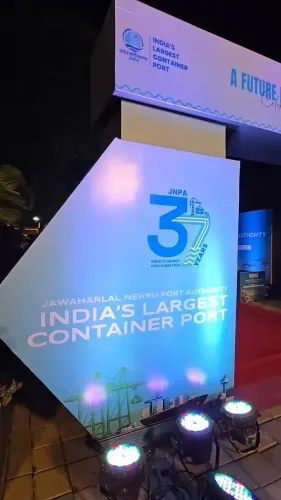
Maharashtra hosts JNPT , India's largest container port, making it central to any national maritime push.
The move aligns with two key central frameworks: the Sagarmala Project (2015) and Maritime India Vision 2030 (2021) .
Specific projects or partnerships tied to this initiative are yet to be publicly detailed.
Maharashtra is stepping into a new chapter of maritime ambition — and Chief Minister Devendra Fadnavis wants the country to take notice. On Friday, November 20, 2026, Fadnavis posted on X signalling what he called 'A New Wave of India's Maritime Innovation' beginning in Maharashtra, anchoring the state's identity firmly to the future of sustainable sea-based transport.
Maharashtra's Coastline as India's Maritime Engine
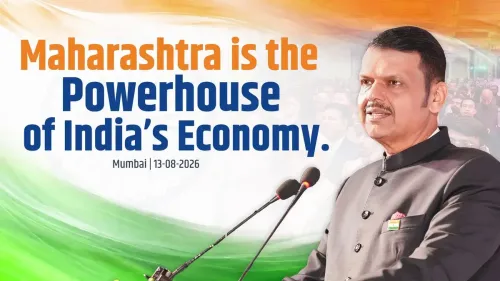
Maharashtra is not a peripheral player in India's maritime story — it is the spine of it. Home to Jawaharlal Nehru Port (JNPT), the country's largest container port, the state commands one of the most strategically vital coastlines in the nation. Any serious push on maritime innovation here carries national consequence, not just regional colour.
Fadnavis's post, hashtagged #SustainableTransport and #MaritimeLeadership, positions the state squarely within two larger arcs of central policy: the Sagarmala Project, launched in 2015 to drive port-led development and coastal modernisation, and Maritime India Vision 2030, unveiled in 2021 to elevate India into the front rank of global maritime nations with a sharp focus on sustainability and innovation.
Sustainable Shipping and the Race India Can't Afford to Lose
The timing matters. Global shipping is under intense pressure to decarbonise — international regulators are tightening emission norms, and port competitiveness increasingly hinges on green credentials. India's maritime sector, long defined by volume and connectivity, is now being asked to compete on innovation and sustainability too.
Maharashtra's sheer scale — major ports, an established logistics corridor, and deep industrial hinterland — makes it the logical launchpad for any national maritime innovation agenda. Port operators and the shipping industry, the two stakeholders with the most skin in this game, stand to gain directly from state-level momentum that translates central schemes into on-ground investment and partnerships.
What Fadnavis's Push Signals for State-Centre Alignment
The Chief Minister's framing of this as 'India's maritime innovation' — not merely Maharashtra's — is a deliberate signal. It maps the state's ambitions onto the Centre's own blueprint, reinforcing a pattern Fadnavis has consistently pursued: aligning Maharashtra's development priorities with Union government schemes to unlock faster approvals and central funding.
Specific projects, partnerships, or budget provisions tied to this 'new wave' are yet to be detailed publicly. But the direction is clear: Maharashtra intends to be the state that shows what India's maritime future actually looks like — not just on paper, but in the water.
Point of View
The emphasis on sustainable transport is not incidental; it positions Maharashtra to attract green-port investment at a moment when international shipping clients are actively selecting ports on ESG credentials. The move also fits a broader BJP governance pattern of using large infrastructure narratives to consolidate the party's development image ahead of political cycles. Whether this translates into on-ground projects or remains a signalling exercise will depend on the specifics that follow.
NationPress
20 Nov 2026
Frequently Asked Questions
What is the maritime innovation initiative announced by CM Fadnavis in Maharashtra?
On November 20, 2026, Chief Minister Devendra Fadnavis announced the beginning of a 'new wave of India's maritime innovation' in Maharashtra, focused on sustainable transport and maritime leadership. Specific project details are yet to be made public.
What is the Sagarmala Project and how does it relate to Maharashtra?
The Sagarmala Project, launched by the central government in 2015, aims to promote port-led development and modernisation of India's maritime infrastructure. Maharashtra, home to JNPT — India's largest container port — is a key beneficiary state under this scheme.
What is Maritime India Vision 2030?
Maritime India Vision 2030 is a central government roadmap unveiled in 2021 to position India as a leading global maritime nation, with an emphasis on sustainability, innovation, and enhanced port capacity.
Why is Maharashtra important for India's maritime sector?
Maharashtra hosts Jawaharlal Nehru Port (JNPT), India's largest container port, and has an extensive coastline that makes it critical to the country's trade logistics and maritime infrastructure ambitions.
What does sustainable transport mean in the context of India's ports?
In the context of India's ports, sustainable transport refers to reducing carbon emissions from shipping and port operations, adopting green energy solutions, and meeting international environmental standards that are increasingly required by global trade partners.