Why is the Madhya Pradesh Assembly Session Facing Disruption?
Synopsis
The ongoing monsoon session of the Madhya Pradesh Legislative Assembly has been plagued by opposition protests, leading to significant disruptions. Key legislative activities took place amidst chaos, highlighting the tensions between the ruling and opposition parties. As the session continues, the implications of these events remain crucial for state governance.
Key Takeaways
Protests from the opposition have dominated the monsoon session.
Key bills, including the Labour Amendment Bill, have been passed despite disruptions.
Assembly Speaker has expressed concerns over unanswered questions from legislators.
The Assembly is set to reconvene on August 4 after the recent adjournment.
Political tensions reflect broader governance issues in Madhya Pradesh.
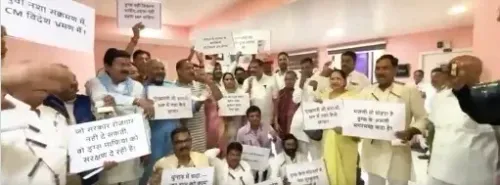
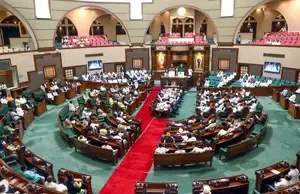
Bhopal, Aug 1 (NationPress) The initial five days of the current monsoon session of the Madhya Pradesh Legislative Assembly were predominantly marked by protests from opposition (Congress) members, causing significant disruption and chaos, alongside some legislative activities, including the passage of vital bills up to Friday.
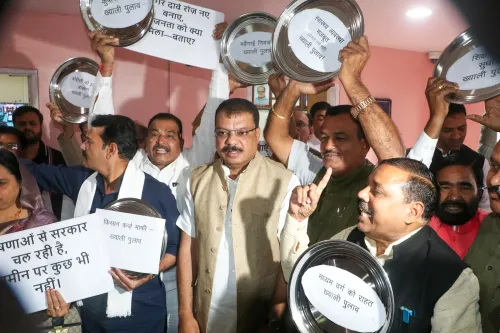
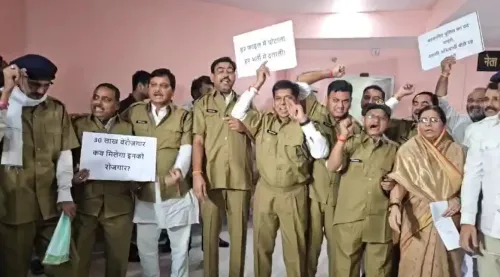
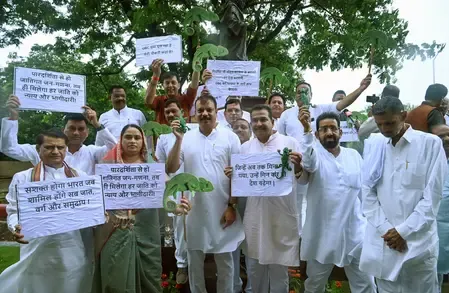
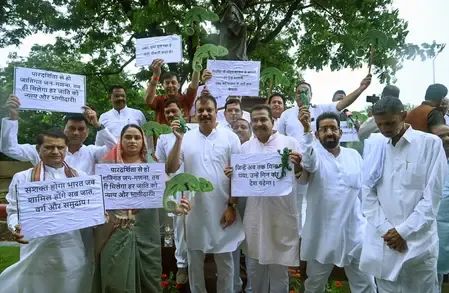
Just before the monsoon session commenced on July 28, the Madhya Pradesh Assembly Secretariat released a notification banning protests and sloganeering within the Assembly premises; however, these directives remained largely unheeded as the opposition members engaged in symbolic protests, which persisted until Friday.
On the inaugural day (July 28), the House was adjourned merely two hours after expressing condolences for the victims of the June 12 Ahmedabad plane crash, the April 22 Pahalgam terror attack, and other notable figures who recently passed away.
On day two (July 29), the Opposition Leader, Umang Singhar, accused the state of failing to act against the perpetrators of attacks on MLAs occurring statewide. He further asserted that the state government and police were inactive regarding these incidents. The Congress party also raised concerns about the reservation issue, claiming that the BJP government was unwilling to implement the 27 percent reservation policy for OBCs.
Assembly Speaker Narendra Singh Tomar expressed his dissatisfaction on the second day, noting that the legislators' questions were not being answered directly. He instructed Chief Minister Mohan Yadav to provide straightforward responses rather than stating that 'details are being gathered.' This issue was highlighted by senior Congress MLA from Jabalpur East, Bala Bachchan, who pointed out that 16 inquiries related to the Chief Minister's office received similar responses about 'information being gathered.'
In response, the Speaker remarked, 'Instructions have been issued on this matter previously. The Chief Minister is present. A direct answer should be provided.'
On the third day (July 30), the House resumed after a symbolic protest by the Opposition in the Assembly premises. Nonetheless, a constructive discussion took place on several key issues raised by both Congress and BJP MLAs, leading to the approval of several significant bills (Amendments).
On the fourth day (July 31), the state Assembly passed the revised rules of the Labour (Amendment) Bill 2025, requiring industrial units to give a 45-day notice before declaring a strike or lockout. In spite of protests from Congress MLAs, Labour Minister Prahlad Patel defended the bill, asserting that it aims to strike a balance between workers' welfare and industrial growth.
'We respect the laborers, but the pace of development must also be preserved,' Patel stated. During the proceedings, State's Urban Affairs Minister Kailash Vijayvargiya proposed expanding Metro rail connectivity for discussion. In response, senior Congress MLA and ex-CM Kamal Nath commended the government for the proposal while claiming credit for approving the Rail Metro Project during his tenure as a Union Minister.
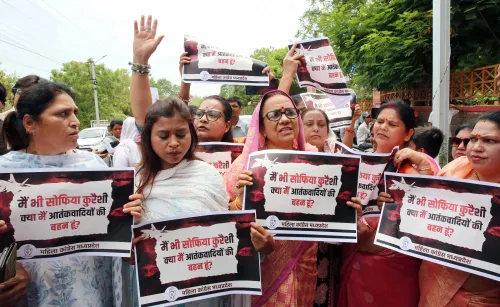
On the fifth day (August 1), the monsoon session of the Madhya Pradesh Assembly descended into turmoil as opposition MLAs aggressively demanded the resignation of Cabinet Minister Vijay Shah.
The House echoed with chants of 'Vijay Shah resign' as the minister attempted to address a departmental query. Continuous disturbances led Speaker Narendra Singh Tomar to adjourn the House for half an hour. Upon reconvening, the opposition created further chaos. During the discussion of the second calling attention motion amidst noisy scenes, the opposition stormed into the Well. Consequently, the Speaker adjourned the House until August 4.
The monsoon session of the Madhya Pradesh Assembly is set to conclude on August 8.
Point of View
The events unfolding in the Madhya Pradesh Assembly reflect a broader struggle between governance and accountability. The persistent disruptions signal a need for effective dialogue and resolution between the ruling party and the opposition. It is crucial for the assembly to transition from chaos to constructive engagement to ensure that legislative responsibilities are fulfilled in the interest of the people.
NationPress
19 Sept 2026
Frequently Asked Questions
What caused the disruptions in the Madhya Pradesh Assembly?
The disruptions were primarily due to protests from opposition members demanding accountability from the government, particularly concerning issues affecting MLAs and the implementation of reservation policies.
What bills were passed during the session?
Several important bills were passed, including amendments to the Labour Bill 2025, which introduced new rules regarding strikes and lockouts in industrial units.
When does the monsoon session conclude?
The monsoon session of the Madhya Pradesh Assembly is scheduled to conclude on August 8.