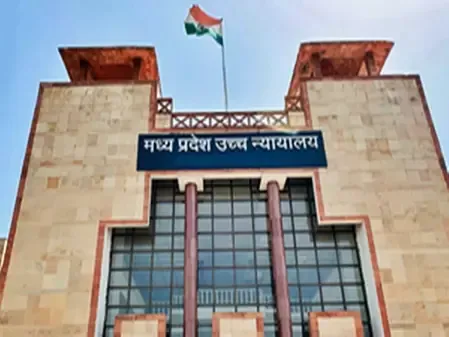
MP High Court orders OPS benefits for 99,000 teachers in Madhya Pradesh

Synopsis
The Madhya Pradesh High Court has ruled that nearly 99,000 teachers — originally appointed as Shiksha Karmis and later merged into the state cadre in 2018 — cannot be denied Old Pension Scheme benefits simply because the government labelled that merger a 'fresh appointment.' The bench's logic is legally sharp: you cannot use the same service record to grant promotions but deny a pension.
Key Takeaways
The Madhya Pradesh High Court's Gwalior bench ordered OPS benefits for approximately 99,000 teachers recruited between 1998 and 2005 .
The ruling came on a petition by teacher Karuna Sharma , decided by Justice Anand Singh Bahrawat .
Teachers were originally appointed as Shiksha Karmis via panchayats and urban local bodies between 1998 and 2003 , then merged into the state cadre in 2018 .
The state government had argued the 2018 merger constituted a fresh appointment, justifying enrolment under NPS — a contention the court rejected outright.
The court directed transfer of accumulated NPS corpus to the OPS for all affected teachers.
The affected 99,000 teachers represent a significant portion of Madhya Pradesh's total teaching workforce of approximately 3.75 lakh .
The Madhya Pradesh High Court has directed the state government to extend Old Pension Scheme (OPS) benefits to approximately 99,000 teachers recruited between 1998 and 2005, in a ruling that could reshape retirement security for a large section of the state's teaching workforce. The order, issued by the Gwalior bench, also mandates the transfer of accumulated funds from the affected teachers' National Pension System (NPS) accounts into the OPS.
Background to the Dispute
The teachers at the centre of this ruling were originally appointed as Shiksha Karmis through panchayats and urban local bodies between 1998 and 2003. Following a cadre merger in 2018, the Madhya Pradesh government treated the amalgamation as a fresh appointment and enrolled them under the NPS — the scheme applicable to employees joining government service after 1 January 2005. This effectively excluded them from the OPS, which covers pre-2005 recruits.
What the Court Ruled
Justice Anand Singh Bahrawat of the Gwalior bench delivered the ruling while hearing a petition filed by teacher Karuna Sharma. The court rejected the state government's argument that the 2018 cadre merger amounted to a new appointment, thereby justifying the switch to NPS. The bench held that when the administration continues to grant seniority and promotional benefits on the basis of teachers' earlier service records, it cannot selectively treat that same period of service as irrelevant for pension purposes. The court directed that the NPS corpus accumulated by the affected teachers be transferred to the OPS and that they be extended full OPS benefits.
Scale of Impact
The verdict is expected to affect more than 99,000 teachers across Madhya Pradesh, out of a total state teaching workforce of approximately 3.75 lakh. Education Department sources indicated that the government will now have to examine the administrative and financial implications of implementing the order — a process likely to involve significant fiscal recalibration.
Reactions and Precedent
Teacher associations have welcomed the verdict, describing it as long-awaited justice for educators who reportedly served the state for nearly two decades under uncertain pension arrangements. Notably, the judgment reinforces the legal principle that service continuity, once accepted for career progression, must equally be respected for retirement benefits. Legal observers say the ruling is likely to set a precedent for similar claims by other categories of employees whose appointments were regularised through subsequent cadre mergers — a pattern seen in several other states as well.
What Happens Next
The Madhya Pradesh government is yet to indicate whether it will challenge the ruling in a higher court or move to implement it. The financial burden of transferring NPS corpus and extending OPS entitlements to nearly a lakh teachers will require detailed actuarial assessment. With teacher unions energised by the verdict, pressure on the state administration to act swiftly is expected to mount in the coming weeks.
Point of View
And the state's next move will signal whether it treats this as a one-off or a systemic fix. Other states with similar cadre-merger histories should watch closely — this precedent travels.
NationPress
7 Nov 2026
Frequently Asked Questions
What did the Madhya Pradesh High Court order regarding OPS for teachers?
The Madhya Pradesh High Court directed the state government to extend Old Pension Scheme (OPS) benefits to approximately 99,000 teachers recruited between 1998 and 2005. The court also ordered the transfer of their accumulated National Pension System (NPS) funds into the OPS.
Who are the teachers affected by this ruling?
The affected teachers were originally appointed as Shiksha Karmis through panchayats and urban local bodies between 1998 and 2003. After a cadre merger in 2018, the state enrolled them under the NPS, treating the merger as a fresh appointment — a position the court has now rejected.
Why did the Madhya Pradesh government enrol these teachers under NPS instead of OPS?
The government argued that the 2018 cadre merger amounted to a new appointment, making these teachers subject to NPS rules applicable to employees joining after 1 January 2005. The High Court rejected this argument, holding that service already recognised for seniority and promotion cannot be treated as new for pension purposes.
How many teachers are affected and what is the broader impact?
More than 99,000 teachers across Madhya Pradesh are affected, out of a total state teaching workforce of around 3.75 lakh. Education Department sources indicate the government must now assess the administrative and financial implications of implementing the order.
Could this ruling set a precedent for other employees?
Legal observers say the judgment is likely to set a precedent for other categories of government employees whose appointments were regularised through cadre mergers in Madhya Pradesh and potentially other states. The core principle — that service continuity accepted for career progression must be respected for retirement benefits — has broad applicability.