Why Did Muslim Rashtriya Manch Criticize Tejashwi Yadav Over the Waqf Act?

Synopsis
The Muslim Rashtriya Manch has launched a fierce critique against Tejashwi Yadav for his comments on the Waqf Bill, asserting that they undermine the rights of marginalized communities. This unfolding political drama raises critical questions about community welfare and political motives.
Key Takeaways
MRM condemns Tejashwi Yadav's remarks on the Waqf Bill.
Waqf Bill is crucial for the welfare of marginalized communities.
Calls for transparency in Waqf management are rising.
Political motives behind comments are under scrutiny.
Awareness campaigns for community education on Waqf rights are planned.
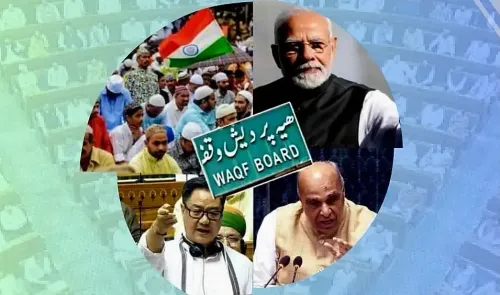
New Delhi, Oct 27 (NationPress) The Muslim Rashtriya Manch (MRM) on Monday vehemently condemned Rashtriya Janata Dal (RJD) leader Tejashwi Yadav over his remarks advocating for the “disposal of the Waqf Bill”, labeling it as an assault on the rights of impoverished Muslims, widows, and orphans.
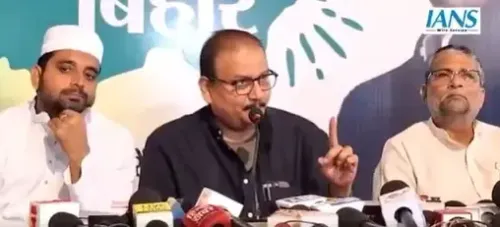
In a press conference, Dr. Shalini Ali, the National Convener and leader of MRM’s Women’s Wing, asserted that Tejashwi’s statements amounted to “a betrayal of the Muslim community” and accused the RJD leader of engaging in vote-bank politics.
“This utterance is a blatant fraud against widows, orphans, and the underprivileged. Discarding the Waqf law equates to an infringement on the rights of needy Muslims,” she stated.
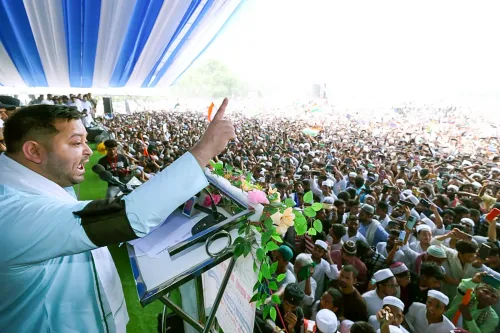
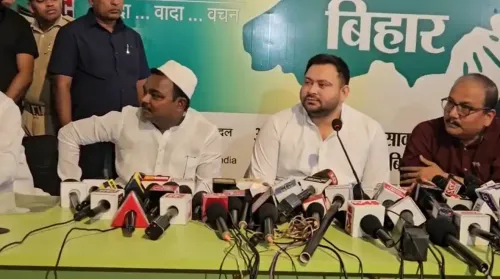
The comments made by Tejashwi Yadav during a rally in Bihar’s Seemanchal region on October 26 have prompted a strong political backlash, particularly from the MRM, which criticized him for obstructing reforms intended to enhance transparency regarding Waqf properties. Dr. Ali emphasized that the Waqf Amendment Act, 2024 aims to modernize and digitize Waqf records, introduce third-party audits, and ensure that revenues are allocated for education, healthcare, and welfare programs benefiting widows, orphans, and the Pasmanda community.
“Waqf is a sacred trust, not a political tool. The Act is formulated to eliminate corruption and ensure that Waqf funds reach those in need,” she remarked, adding that leaders challenging the law are “intimidated by a self-sufficient and empowered Muslim society.”
The MRM further claimed that Tejashwi Yadav’s viewpoint reflects a “political mindset that perceives Waqf assets merely as instruments for electoral advantage.” The organization announced plans to initiate an awareness campaign to educate the community about the provisions of the amended law. “We will not permit anyone to exploit Waqf properties for political gain. The community seeks development, not exploitation,” Dr. Ali stated.
The MRM reiterated that the Act is in sync with the Centre’s “Sabka Saath, Sabka Vikas, Sabka Vishwas” initiative and urged political figures to endorse transparency and accountability in Waqf management.
As of now, there has been no response from Tejashwi Yadav or the RJD regarding the MRM’s accusations.
Point of View
It is crucial to approach this matter with impartiality. The divergence in opinions regarding the Waqf Bill reflects the broader political dynamics in India. While the Muslim Rashtriya Manch raises valid concerns regarding community welfare, it is essential to evaluate the motivations behind the statements of political leaders like Tejashwi Yadav. Ultimately, the focus should remain on ensuring the rights of the marginalized and fostering constructive dialogue.
NationPress
19 Sept 2026
Frequently Asked Questions
What is the Waqf Act?
The Waqf Act governs the management of Waqf properties, which are charitable endowments in Islam. It aims to ensure that the income generated from these properties is utilized for the welfare of the community, including education and healthcare.
Why did the Muslim Rashtriya Manch criticize Tejashwi Yadav?
The MRM criticized Tejashwi Yadav for his remarks suggesting the dismissal of the Waqf Bill, viewing it as an attack on the rights of poor Muslims, widows, and orphans.
What are the implications of the Waqf Amendment Act, 2024?
The Waqf Amendment Act, 2024 aims to modernize Waqf management by digitizing records, introducing audits, and ensuring that the income benefits the needy.