Mumbai records 380mm rainfall in 48 hrs; BMC calls special meet on July 9
Synopsis
Mumbai's eastern suburbs absorbed 380mm of rain in just 48 hours — among the heaviest spells in recent monsoon memory. With casualties reported, schools shut, and a stormy BMC council meeting set for 9 July, this is as much a governance crisis as a weather event.
Key Takeaways
Mumbai's eastern suburbs recorded 380 mm of rainfall in 48 hours ending 6 July ; city division logged 300 mm , western suburbs 345 mm .
Winds gusted at 70–80 km/h , with the IMD issuing a Red Alert for three consecutive days — 4, 5, and 6 July .
All schools and colleges in Mumbai were closed on Monday, 6 July ; the alert was downgraded to Orange for Tuesday.
BMC Commissioner Ashwini Bhide personally monitored operations from the Disaster Management Control Room across all three days.
A Special General Body Meeting has been called for 9 July , where opposition parties are expected to confront the administration over casualties and civic preparedness.
Citizens can reach the BMC emergency helpline at 1916 for distress calls.
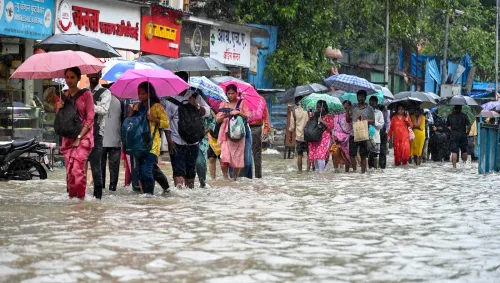
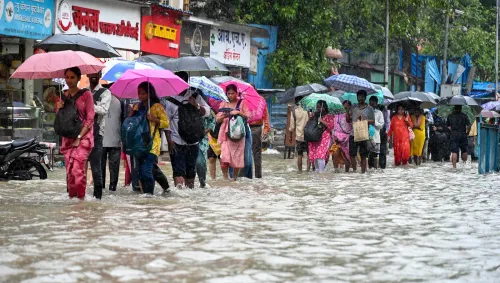
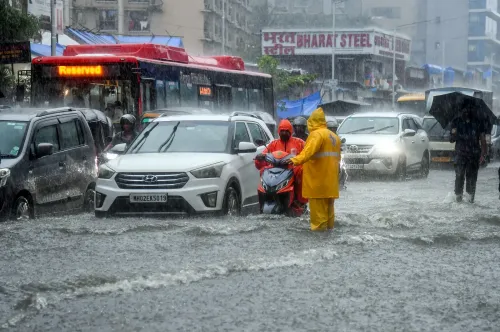
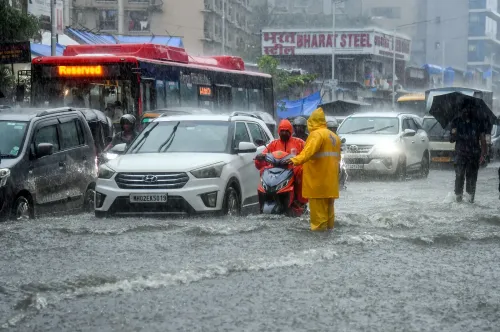
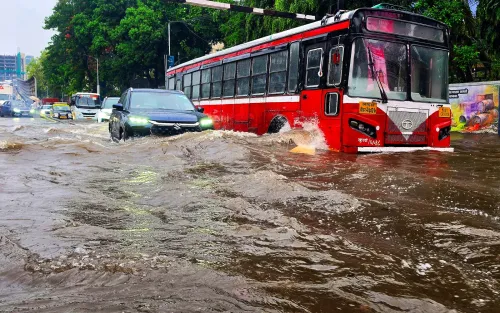
Mumbai and its suburbs endured a third consecutive day of torrential rains on Sunday, 6 July, with the eastern suburbs recording the highest rainfall at 380 mm over the preceding 48 hours. The city division logged 300 mm and the western suburbs 345 mm in the same period, as gusty winds of 70 to 80 km/h compounded the crisis across the metropolitan region.
BMC on War Footing
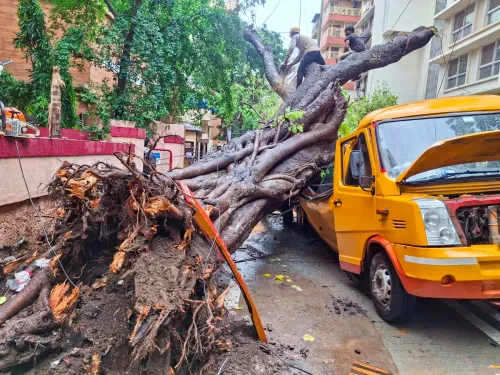
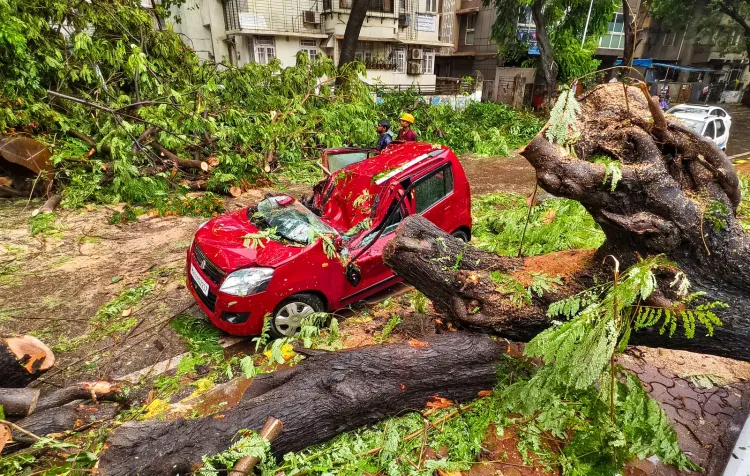
The Brihanmumbai Municipal Corporation (BMC) deployed its full emergency machinery in response, stationing special teams at vulnerable locations to tackle tree collapses, short circuits, and structural cave-ins of dilapidated buildings. High-capacity dewatering pumps, suction machinery, and additional manpower have been working continuously to drain waterlogged stretches across the city.
BMC Commissioner Ashwini Bhide personally oversaw operations from the Disaster Management Control Room at the civic headquarters across all three days, issuing real-time directives to ward officials and coordinating with state agencies to contain the damage.
IMD Alerts and School Closures
The India Meteorological Department (IMD) had issued a Red Alert for the Brihanmumbai region for three consecutive days — Saturday 4 July, Sunday 5 July, and Monday 6 July — warning of heavy to very heavy rainfall and gale-force winds. As a precautionary measure, all government, private, and municipal schools and colleges in Mumbai were shut on Monday, 6 July. The IMD subsequently downgraded the warning to an Orange Alert for Tuesday, forecasting continued heavy to very heavy rainfall with gusty winds.
Special General Body Meeting on July 9
The BMC has convened a Special General Body Meeting on 9 July, to be attended by all corporators. The session is expected to be contentious: multiple incidents of heavy flooding, tree falls, and structural collapses have resulted in casualties among residents, and opposition parties are preparing to press the ruling administration on civic preparedness and infrastructure failure. The administration will face formal demands for explanation over its response mechanisms.
Safety Advisory for Citizens
The civic administration has urged residents to step out only for essential purposes and to avoid trees, dilapidated structures, hoardings, electric poles, and waterlogged zones. Citizens are also advised against parking vehicles under trees and visiting beaches or promenades during the alert period. For emergencies, the BMC helpline 1916 remains operational round the clock.
With the IMD's Orange Alert still in effect and more rainfall forecast, the BMC's Disaster Management Department continues to monitor the situation, as Mumbai braces for what could be an extended and politically charged monsoon season.
Point of View
And the 380mm reading in 48 hours is a stress test the city's drainage network was never designed to pass. The convening of a Special General Body Meeting within days of the event is a political reflex as much as an administrative one — opposition parties will use it to extract accountability that annual post-flood inquiries have historically failed to deliver. Commissioner Bhide's visible presence at the control room is a communications signal, but the harder question is whether BMC's dewatering and early-warning systems have materially improved since the catastrophic floods of 2005. With climate patterns intensifying and Mumbai's informal housing stock still concentrated in flood-prone zones, the city's vulnerability is structural, not seasonal.
NationPress
5 Oct 2026
Frequently Asked Questions
How much rainfall did Mumbai record in the latest spell?
Mumbai's eastern suburbs recorded the highest at 380 mm over 48 hours ending 6 July, while the city division logged 300 mm and the western suburbs 345 mm in the same period. Winds accompanying the rain gusted at 70 to 80 km/h.
What alert level did the IMD issue for Mumbai?
The India Meteorological Department issued a Red Alert for the Brihanmumbai region for three consecutive days — 4, 5, and 6 July — warning of heavy to very heavy rainfall and gale-force winds. The alert was subsequently downgraded to an Orange Alert for Tuesday, 7 July.
Why has the BMC called a Special General Body Meeting on 9 July?
The BMC has convened the meeting for all corporators to discuss rain-related incidents, casualties, and the civic administration's response. Opposition parties are expected to raise questions about infrastructure failure and preparedness, making it a politically charged session.
Were schools closed due to the Mumbai rains?
Yes, all government, private, and municipal schools and colleges in Mumbai were declared closed on Monday, 6 July, as a precautionary measure in view of the IMD's Red Alert and forecast of gale-force winds.
What safety measures has the BMC advised for Mumbai residents?
The BMC has urged citizens to venture out only for essential work, avoid trees, dilapidated buildings, hoardings, and waterlogged areas, and refrain from visiting beaches or promenades. In an emergency, residents can call the BMC helpline at 1916.