Are the Naga Flag and Constitution Truly Non-Negotiable?
Synopsis
In a significant reaffirmation, the NSCN-IM has declared the Naga flag and Constitution as non-negotiable. General Secretary Thuingaleng Muivah, during his historic visit to his homeland after 50 years, accused the Indian government of failing to uphold the 2015 Framework Agreement. This article explores the implications of these assertions for the future of Naga political identity.
Key Takeaways
NSCN-IM emphasizes Naga flag and Constitution as non-negotiable.
Thuingaleng Muivah's historic visit to Somdal village marks a significant moment for the Naga community.
Accusations against the Centre for political inaction raise concerns about future negotiations.
The Framework Agreement remains a cornerstone for Naga aspirations.
Community support is vital for the ongoing political struggle.
Imphal, Oct 22 (NationPress) The National Socialist Council of Nagalim's (NSCN-IM) Isak-Muivah faction has once again emphasized that the Naga national flag and a Constitution are non-negotiable issues, while accusing the Centre of losing the political will to carry out the terms of the 2015 Framework Agreement.
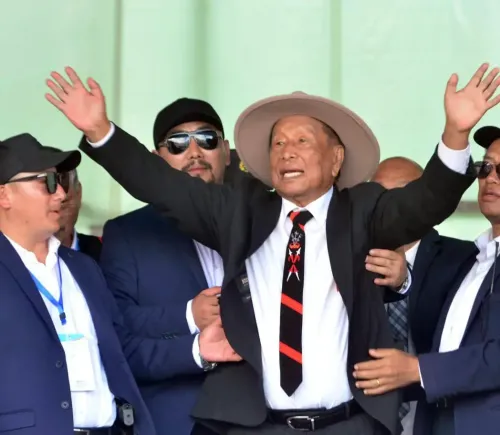
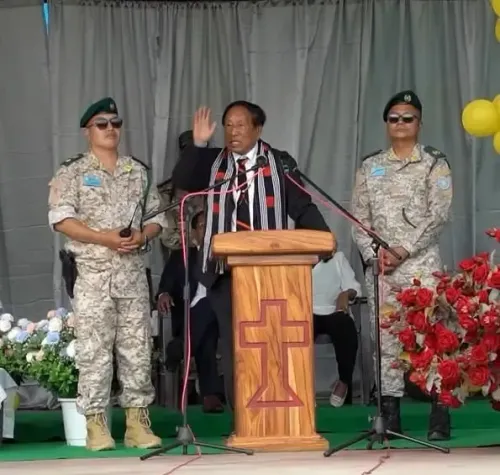
NSCN-IM General Secretary Thuingaleng Muivah, who returned to his birthplace in Somdal village of Manipur’s Ukhrul district for the first time in 50 years, stated that for both Nagalim and the Naga people, these elements remain non-negotiable, irrespective of the time.
"I emphasize once more that the only honorable negotiated political agreement must align with the letter and spirit of the Amsterdam Joint Communique and the Framework Agreement, which acknowledge Nagalim's unique history, sovereignty, territory, national flag, and constitution," declared the NSCN-IM leader.
Muivah is anticipated to spend about a week in Somdal village, marking his first visit since he joined the Naga movement five decades ago.
Numerous senior leaders from NSCN-IM accompanied him to the Tangkhul Naga-dominated district.
The Tangkhul Naga community is buzzing with excitement, welcoming a pivotal figure in Naga history back to his homeland after years of struggle for the Naga cause.
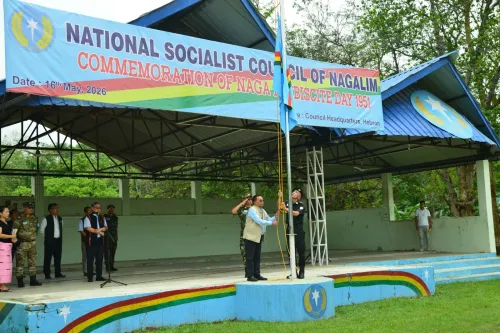
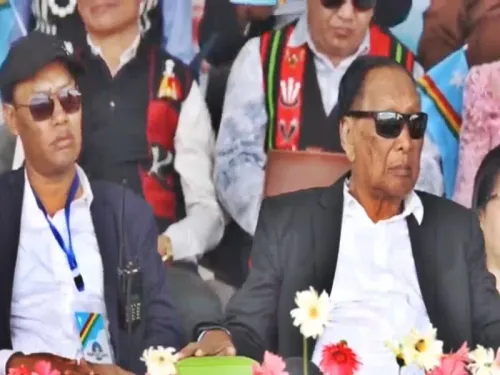
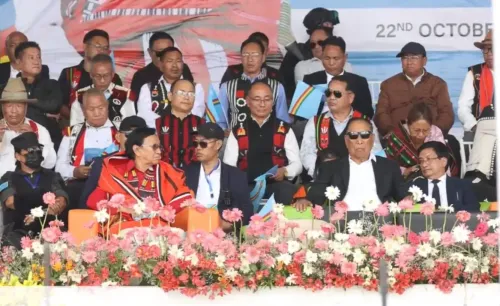
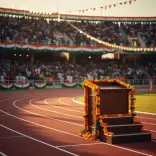
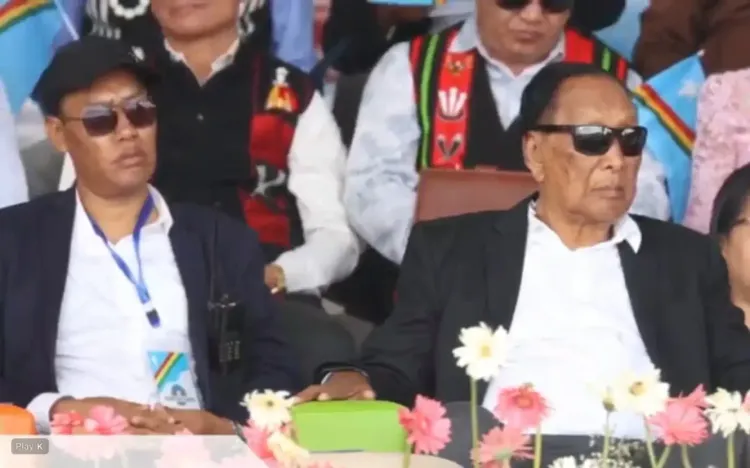
Thousands of Nagas, adorned in traditional attire and brandishing NSCN-IM flags, welcomed Muivah upon his arrival at Bakshi Ground in the district headquarters from Nagaland’s Dimapur. He then proceeded to a stage erected for a grand reception.
A significant number of Naga men, equipped with traditional spears and wearing customary headgear, gathered at the venue to honor Muivah, who has been a crucial negotiator in the Naga peace discussions with the Union government since the NSCN-IM initiated a ceasefire in 1997.
In his message, Muivah asserted that, given the current circumstances, the July 2002 communique and the August 2015 Framework Agreement—which are grounded in sovereignty and recognize Nagalim's unique history and sovereignty, national flag, and constitution—are the sole basis for a respectful political settlement between Nagalim and India.
According to the veteran leader, both the communique and the Framework Agreement serve as unifying rallying points for all Nagas, urging them not to falter or fear but to join the national salvation effort based on these principles.
He expressed gratitude towards the international community for their steadfast support of Nagalim and its people throughout the years.
"I pray and appeal that you will continue to advocate for the righteous political cause of Nagalim," Muivah stated.
He noted that the NSCN has approached negotiations with respect for international political norms for a fair settlement, having adhered to the peace process for 28 years.
"However, India has seemingly lost its political will to honor the Framework Agreement, instead forcing Nagalim into conflict through betrayal and divisive tactics," Muivah contended.
"We will not compromise Nagalim's history and sovereignty, and we will strive to finalize a political settlement based on the Amsterdam Joint Communiqué and Framework Agreement's principles."
He added that any national workers or Nagas who betray the integrity of these agreements by rejecting Nagalim's unique history and sovereignty, the national flag, and constitution will be viewed as traitors to Nagalim and its people.
The Union government has engaged in political discussions with the NSCN-IM and other Naga factions since the ceasefire agreement was signed in 1997, later formalizing the Framework Agreement in August 2015.
Additionally, the government initiated parallel negotiations with the Working Committee of Naga National Political Groups (NNPG) in 2017, culminating in the signing of the Agreed Position in November 2017.
Nonetheless, the NSCN-IM has consistently insisted on its demands for a separate flag and constitution for the Nagas, as well as the integration of Naga-inhabited areas across four northeastern states: Arunachal Pradesh, Assam, Manipur, and Nagaland, including parts of Myanmar.
These requests have been repeatedly denied by the Centre.
Point of View
It is essential to recognize the profound implications of the NSCN-IM's stance on the Naga flag and Constitution. The insistence on these non-negotiable elements reflects a deep-rooted cultural identity and a desire for autonomy among the Naga people. While negotiations continue, the government must acknowledge these sentiments to foster lasting peace and address the concerns of the Naga community.
NationPress
30 Sept 2026
Frequently Asked Questions
What are the key demands of the NSCN-IM?
The NSCN-IM demands a separate Naga national flag and Constitution, along with the integration of Naga-inhabited areas across four northeastern states.
Who is Thuingaleng Muivah?
Thuingaleng Muivah is the General Secretary of the NSCN-IM, a pivotal figure in the Naga political movement, and has been a key negotiator in peace talks with the Indian government.
What is the significance of the 2015 Framework Agreement?
The 2015 Framework Agreement is a crucial document that outlines the terms for peace and political resolution between the Naga factions and the Indian government.
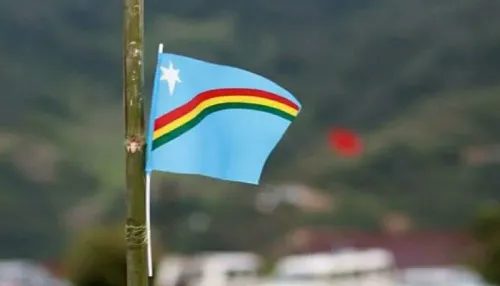
Why is the Naga flag important?
The Naga flag symbolizes Naga identity, culture, and aspirations for autonomy, making it a vital element in the struggle for Naga sovereignty.
What has been the response of the Indian government to these demands?
The Indian government has repeatedly rejected the NSCN-IM's demands for a separate flag and Constitution, maintaining a stance against the integration of Naga-inhabited areas.