How Does the Buyers-Suppliers Meet at Hornbill Festival Promote Indigenous Products?
Synopsis
The Hornbill Festival in Nagaland is not just a celebration of culture; it’s a thriving marketplace for indigenous products. The recent 'Buyers & Suppliers Meet' brought together buyers and local MSMEs, paving the way for sustainable economic growth. Discover how this event fosters lasting partnerships and showcases the vibrant spirit of Nagaland.
Key Takeaways
Connection Opportunities: The meet creates valuable connections between buyers and local MSMEs.
Economic Impact: It fosters significant economic and social benefits for local communities.
Showcasing Heritage: Nagaland’s rich culture and craftsmanship are highlighted.
Sustainable Development: The event promotes sustainable livelihoods through market access.
Long-term Partnerships: Encourages collaboration between buyers and local entrepreneurs.
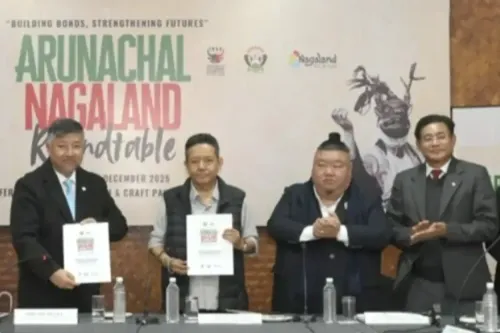
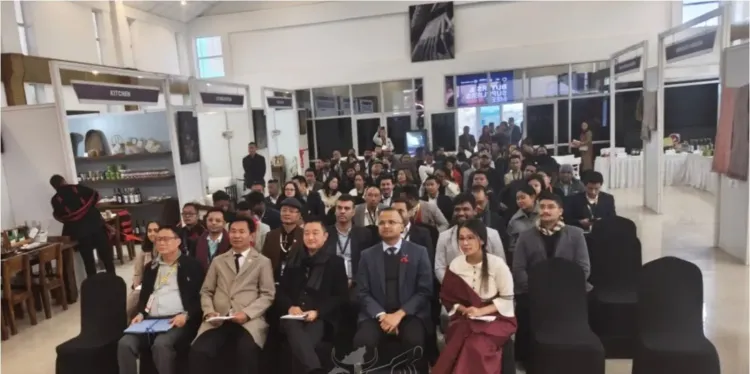
Kohima, Dec 4 (NationPress) During the ongoing 26th edition of the Hornbill Festival at the Naga Heritage Village in Kisama, a ‘Buyers & Suppliers Meet’ was conducted on Thursday aimed at enhancing the visibility and marketing of local and indigenous products.
According to officials, the event brought together 24 buyers from across India and 22 MSMEs from Nagaland, creating a valuable platform for establishing enduring and scalable connections.
Organized by the Department of Industries and Commerce in collaboration with the Nagaland Industrial Development Corporation (NIDC), the Buyers & Suppliers Meet 2025 took place at Bamboo Hall, Naga Heritage Village, Kisama.
In her opening remarks, Hekani Jakhalu, the Advisor for Industries and Commerce, stated that the ‘Buyers & Suppliers Meet 2025’ is part of the RAMP Project by the Union Ministry of MSME. She welcomed the buyers, industry leaders, and entrepreneurs, highlighting their mutual dedication to fortifying India’s MSME ecosystem while showcasing Nagaland’s dynamic enterprises.
She described Nagaland as the ‘Land of Festivals’, where culture and craftsmanship ignite innovation. The resilience, creativity, and enduring spirit of Nagaland are embodied by its weavers, artisans, farmers, food processors, and start-ups.
Jakhalu emphasized that this gathering is more than just a marketplace; it serves as a catalyst for collaboration and long-term partnerships.
With 24 buyers from various parts of India and 22 MSMEs from Nagaland, the event presents a prime opportunity for cultivating lasting and scalable relationships.
The Advisor underlined that linking small businesses to robust market networks can yield profound economic and social benefits. She also pinpointed sectors where Nagaland excels, such as artisanal fruit beverages, herbal and organic teas, diverse food-processing items, and eco-friendly handicrafts and handloom products, each reflecting quality, sustainability, and cultural identity.
Jakhalu remarked that the meet can turn cultural richness into market opportunities while supporting sustainable livelihoods.
The government’s goal is to enhance the competitiveness of MSMEs, facilitate market access, and incorporate Nagaland’s products into broader value chains. Beyond institutional objectives, she stressed the significance of collaboration, with buyers acting as mentors and partners, and entrepreneurs as innovators ready to evolve.
Secretary of Industries & Commerce, Kumar Ramnikant, mentioned that this meet, part of the government of India’s RAMP project, represents a strategic move towards transforming policy into partnership and potential into prosperity.
He emphasized Nagaland’s rich cultural heritage and entrepreneurial spirit, asserting that the state is not merely a provider of raw materials but a hub of innovation deeply rooted in tradition. Its strengths, ranging from skilled artisans to unique offerings like King Chilli and herbal teas, create a distinct competitive advantage.
He cautioned that strengths alone are insufficient; sustainable market linkages are crucial, and he elaborated that the government is committed to fostering long-term strategic partnerships, positioning buyers as collaborators in developing quality standards, design, and scalable production.
Director of Industries and Commerce, P. Tokugha Sema, acknowledged the participation of 24 distinguished buyers from reputable firms across the country, noting that their involvement signifies the growing national recognition of Nagaland’s identity-driven products.
He also recognized the 22 MSMEs from Nagaland—artisans, food processors, farmer-led units, and micro-enterprises—whose efforts highlight the state’s craftsmanship and innovation.
He noted that the buyers’ interests, which include handloom, handicrafts, home decor, artisanal foods, herbal teas, and processed products, align closely with local strengths. The platform provides opportunities for product evaluation, discussions on supply terms, and alignment with market standards.
Point of View
The Buyers-Suppliers Meet at the Hornbill Festival stands out as a significant development in promoting local craftsmanship and economic growth. It highlights the importance of integrating traditional industries into the broader market landscape, showcasing Nagaland’s unique offerings while fostering sustainable development. Such initiatives are vital in enhancing the visibility of indigenous products on a national scale, ultimately contributing to the empowerment of local communities.
NationPress
23 Sept 2026
Frequently Asked Questions
What is the purpose of the Buyers & Suppliers Meet?
The Buyers & Suppliers Meet aims to enhance the marketing of local and indigenous products by connecting MSMEs from Nagaland with buyers from across India.
How many buyers and MSMEs participated in the event?
The event featured 24 buyers from various parts of India and 22 MSMEs from Nagaland.
Who organized the Buyers & Suppliers Meet?
The meet was organized by the Department of Industries and Commerce in collaboration with the Nagaland Industrial Development Corporation (NIDC).
What sectors does Nagaland excel in?
Nagaland excels in sectors such as artisanal fruit beverages, herbal and organic teas, diverse food-processing products, and eco-friendly handicrafts.
What is the significance of this meet for local entrepreneurs?
The meet provides a platform for local entrepreneurs to build lasting partnerships, showcase their products, and gain access to broader market networks.