Is NEP 2020 Proposing to Merge All School Boards into a National Entity?
Synopsis
The Ministry of Education clarifies that the National Education Policy 2020 does not aim to unify all School Boards into a national entity. Instead, it proposes a new structure for consistent educational standards while allowing existing Boards to operate independently.
Key Takeaways
NEP 2020 does not merge School Boards.
Introduces a 5+3+3+4 educational structure.
PARAKH establishes norms for assessments.
Vidyanjali connects schools with community support.
Over 8.33 lakh schools are engaged in the initiative.
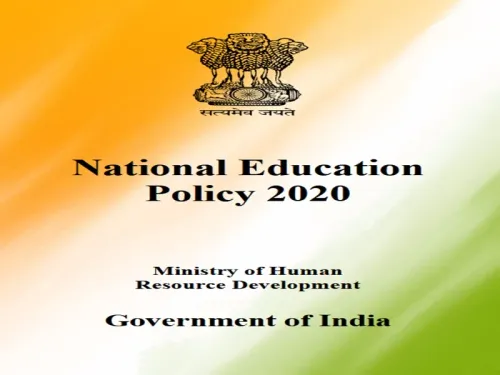
New Delhi, Dec 1 (NationPress) The National Education Policy, 2020 (NEP 2020) does not suggest the merging or unification of all School Boards into a singular national Board, as confirmed by the Ministry of Education on Monday.
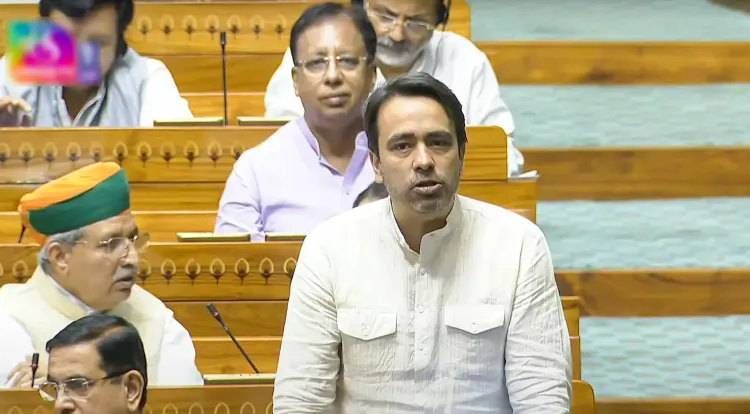
In response to a query in Lok Sabha, Minister of State for Education Jayant Chaudhary stated, “The policy advocates for a common 5+3+3+4 structure, replacing the prior 10+2 format across all Boards.”
“The NEP 2020 does not endorse the merging or unification of all School Boards into a single national Board,” he reiterated.
He explained that the policy recommends this uniform structure to ensure developmental suitability and curricular consistency throughout the nation while permitting existing Boards to operate within their respective areas.
Chaudhary mentioned that the Ministry of Education has established the National Assessment Centre, PARAKH (Performance Assessment, Review, and Analysis of Knowledge for Holistic Development) as the national authority responsible for setting norms and guidelines for student assessments and enhancing the quality of school evaluations in the country.
The MoS provided a written response to a question from Trinamool MP Kalyan Banerjee.
Chaudhary noted that PARAKH was initiated on February 8, 2023, with the aim of establishing norms, standards, guidelines, and carrying out activities related to student assessment.
He added that PARAKH has the mandate to grant Equivalence to Class X and Class XII certificates issued by School Boards nationwide.
The Equivalence of Boards initiative, spearheaded by PARAKH, aims to streamline academic expectations, enhance comparability of learning standards, and bolster the credibility of Board examinations while respecting the diversity and autonomy of over 60 School Boards.
In sharing details about CSR initiatives from local Public Sector Undertakings related to welfare projects and teacher training, the MoS noted that government schools across the country are registered on the Vidyanjali portal, which promotes community and CSR involvement in accordance with the National Education Policy (NEP) 2020.
Schools independently evaluate and upload their specific needs for services or assets on the portal. These requests remain publicly accessible to all registered participants in the public domain, with participation driven entirely by demand at the school level, stated Chaudhary.
He also emphasized Vidyanjali, a volunteer management program designed to enhance government and government-aided schools through community and private sector collaboration across the nation.
Since its launch on September 7, 2021, over 8.33 lakh government and government-aided schools have onboarded 5.54 lakh volunteers and 2,365 CSR/NGOs, he reported.
Point of View
Fostering uniformity in learning standards while respecting regional diversities.
NationPress
23 Sept 2026
Frequently Asked Questions
Will all School Boards be merged under NEP 2020?
No, NEP 2020 does not propose the merger of all School Boards into a single national entity.
What is the new structure proposed by NEP 2020?
NEP 2020 recommends a 5+3+3+4 structure to replace the previous 10+2 format.
How does Vidyanjali work?
Vidyanjali allows schools to post their needs for services or assets, making these requests visible to potential contributors.
How many schools are registered on Vidyanjali?
Over 8.33 lakh government and government-aided schools are registered on the Vidyanjali portal.