Nepal seeks India's nod for National Identity Card in cross-border travel

Synopsis
Nepal has formally asked India to accept its biometric National Identity Card as a valid travel document — a move that could reshape cross-border identity norms between the two countries. With 20 million Nepalis already enrolled for the NID and New Delhi yet to respond officially, the proposal puts India's open-border framework under fresh scrutiny.
Key Takeaways
Nepal formally proposed in late June that India recognise its National Identity Card (NID) as a valid cross-border travel document.
The NID contains biometric data including fingerprints , facial images , and iris scans , making it more secure than Nepal's paper citizenship certificate.
More than 4.5 million Nepali citizens have received the NID; around 20 million have enrolled.
Officials from the Indian Embassy in Kathmandu made informal inquiries about the NID's technical and security features after Nepal's request.
India currently recognises Nepal's passport and citizenship certificate as valid identity documents; no formal decision on the NID has been announced.
Nepal has formally requested India to recognise its National Identity Card (NID) as a valid travel document for cross-border movement, a senior immigration official confirmed. The proposal, submitted in late June, aims to strengthen identity verification and ease the flow of people across one of the world's most open international borders.
What Nepal Has Proposed
Ram Chandra Tiwari, Director General of Nepal's Department of Immigration, said his office formally sent the proposal to the Government of India seeking recognition of the NID for both air travel and cross-border movement. 'At present, India recognises mainly Nepal's passport and citizenship certificate as official identity documents. We have formally proposed that the National Identity Card also be accepted as a valid identification document for air travel and cross-border movement,' Tiwari said.
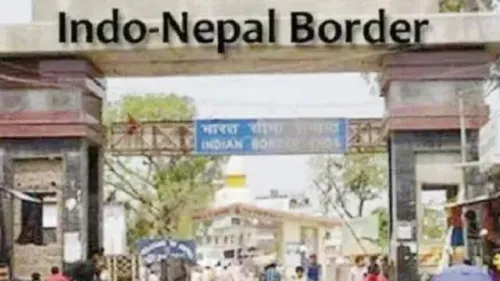
Currently, India recognises Nepal's passport and citizenship certificate as valid documents. Citizens of both countries can travel between the two nations without passports or visas under a long-standing bilateral arrangement.
What the NID Is and Why It Matters
Nepal's NID is a biometric document containing fingerprints, facial images, and iris scans — comparable in scope to India's Aadhaar card. The Nepali government has made the NID mandatory for a range of public services, including passport applications, land registration, and opening bank accounts, as it moves to phase out the traditional paper-based citizenship certificate.
Tiwari argued that the NID is a more secure alternative to the citizenship certificate. 'A citizenship certificate is merely a paper document without biometric information, whereas the NID provides a secure and reliable means of identification. Its recognition would enhance security arrangements for both Nepal and India,' he said.
India's Initial Response
Following Nepal's request, officials from the Indian Embassy in Kathmandu made informal inquiries with Nepal's immigration authorities about the NID's technical and security features. 'The embassy officials made informal inquiries regarding the card's technical and security aspects. It was not a formal bilateral meeting but an exchange of information,' Tiwari clarified.
No formal bilateral decision has been announced by New Delhi as of the time of reporting.
Scale of Enrolment
According to Nepal's Department of National ID and Civil Registration, more than 4.5 million Nepali citizens have already received the NID, while around 20 million people have enrolled for one. The scale of enrolment underscores the Nepali government's push to make the NID the country's primary identity document.
Current Cross-Border Travel Rules
Nepal and India share an open border under which citizens of both countries can travel freely without passports or visas for most forms of movement. Indian citizens travelling to Nepal by air are currently permitted to use passports, voter identity cards, or identity cards issued by India's central or state governments. Nepal is now seeking a reciprocal expansion of accepted documents for its own citizens.
Whether India formally accepts the NID will hinge on assessments of its security architecture — a process that, based on current diplomatic signals, is still at an early stage.
Point of View
But the real question is whether India's security establishment is ready to trust a foreign biometric document at the border. The informal embassy inquiry suggests New Delhi is interested but cautious — understandable given that the open Nepal-India border is also a known transit route for smuggling and irregular migration. Accepting the NID could streamline movement for millions of Nepali workers in India, but it also sets a precedent: once one biometric foreign ID is accepted, the framework for others becomes harder to resist. India's response, when it comes, will signal how seriously it takes Nepal's digitisation credentials.
NationPress
17 Sept 2026
Frequently Asked Questions
What is Nepal's National Identity Card (NID)?
Nepal's NID is a biometric identity document containing fingerprints, facial images, and iris scans. It is comparable to India's Aadhaar card and is being positioned by the Nepali government as the country's primary identity document, replacing the traditional paper citizenship certificate.
Why has Nepal requested India to recognise the NID?
Nepal wants Indian authorities to accept the NID as a valid travel document for cross-border movement and air travel. Currently, India only recognises Nepal's passport and citizenship certificate, and Nepal argues the biometric NID offers stronger security than the paper citizenship certificate.
Has India formally responded to Nepal's NID proposal?
Not yet. Officials from the Indian Embassy in Kathmandu made informal inquiries about the NID's technical and security aspects after Nepal submitted its proposal in late June, but no formal bilateral decision has been announced by New Delhi.
How many Nepali citizens have the NID so far?
According to Nepal's Department of National ID and Civil Registration, more than 4.5 million citizens have already received the NID, while around 20 million have enrolled for one.
What documents can citizens use to travel between Nepal and India currently?
Citizens of both Nepal and India can travel between the two countries without passports or visas under a long-standing open-border arrangement. India currently recognises Nepal's passport and citizenship certificate; Indian citizens travelling to Nepal by air can use passports, voter identity cards, or government-issued identity cards.