Will the New Inflation Series Impact Policy in the Near Future?
Synopsis
As economists assess the potential impacts of the new CPI inflation series, they anticipate a lack of significant influence on policy. With inflation rates recorded at 2.75 percent and various factors at play, clarity is essential for future economic decisions.
Key Takeaways
Current CPI inflation rate: 2.75 percent.
Potential policy impact: Minimal in the near term.
Inflation variability: Reduced weight in food and beverages may stabilize rates.
Next CPI report: Expected before the next MPC meeting.
Influencing factors: Growth, inflation cycles, and trade negotiations.
New Delhi, Feb 12 (NationPress) Economists expressed on Thursday that they do not foresee the new CPI inflation series significantly affecting policy decisions in the immediate future.
The headline CPI inflation recorded a rate of 2.75 percent in January 2026 according to the revised CPI series (base year 2024), which is notably below the mid-point of the RBI MPC’s target range of 2 percent to 6 percent.
“We do not anticipate that the new inflation series will have a substantial impact on policy in the short term. A prolonged rate pause appears probable, supported by a cyclical rebound in both growth and inflation, along with heightened confidence after the resolution of the US-India trade talks,” stated Madhavi Arora, Chief Economist at Emkay Global Financial Services.
The year-on-year (YoY) inflation rates across 11 of the 12 categories of the CPI fluctuated between 0.1 percent and 3.4 percent, remaining below the 4 percent threshold. The categories of personal care, social protection, and miscellaneous goods and services stood out with an inflation rate of 19.0 percent, primarily due to the surge in gold and silver prices.
Aditi Nayar, Chief Economist at ICRA Ltd, remarked that the new CPI series is not directly comparable to the previous series due to alterations in composition, weights, and calculation methods.
“Despite this, with a reduced weight for the food and beverages (F&B) segment, we anticipated the headline figure to be slightly higher than our previous estimate of 2.5 percent for January 2026 based on the old series, which indeed turned out to be the case,” she emphasized.
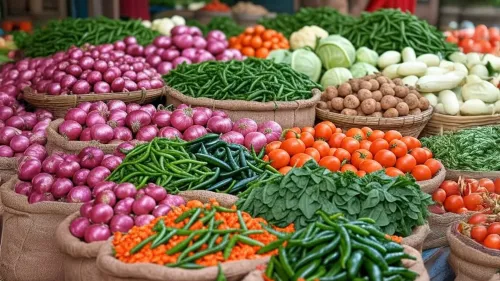
Interestingly, the weight of vegetables and pulses within the F&B segment has slightly diminished, which may lessen the fluctuations in the headline figure compared to the old series, given that these items exhibited significant variability in their monthly inflation rates.
However, the weight of cereals, which had a relatively stable monthly inflation rate, has decreased considerably, potentially countering the favorable effects of the former.
“Our preliminary evaluation indicates that the expected increase in CPI inflation for FY2027 compared to FY2026 was largely expected to be driven by the F&B segment. With a slightly lower weight for F&B in the new series compared to the old one, the anticipated base-effect driven increase in the headline figure for FY2027 would likely be moderated,” explained Nayar.
With another CPI inflation report for February expected before the next MPC meeting, economists suggest that more clarity may emerge in interpreting the CPI data.
Point of View
It’s vital to remain focused on the facts. The current CPI inflation series is not anticipated to alter policy significantly in the near future, providing a sense of stability as we navigate through post-trade negotiation adjustments.
NationPress
3 Oct 2026
Frequently Asked Questions
What is the current CPI inflation rate?
The current CPI inflation rate is recorded at 2.75 percent as of January 2026 according to the new CPI series.
Why is the new CPI series not comparable to the old series?
The new CPI series differs from the old series due to changes in composition, weights, and calculation methodologies.
What are the implications of the reduced weight in food and beverages?
The reduced weight in food and beverages may temper the expected increase in headline inflation in FY2027.
When will the next CPI inflation print be released?
The next CPI inflation print for February is expected to be released before the next MPC meeting.
What factors are influencing the current inflation rates?
Factors influencing current inflation rates include growth, inflation cycles, and the recent US-India trade negotiations.