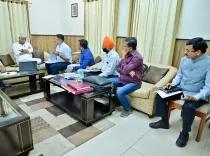
NFSU, Nepal Police exchange forensic research pact before PMs

Synopsis
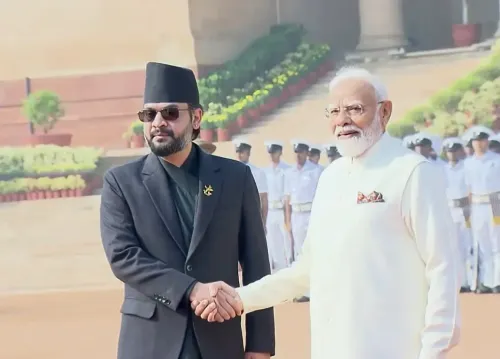
NFSU and Nepal Police have exchanged a forensic research and training pact in the presence of Narendra Modi and Balendra Shah. It was one of eight agreements exchanged during the Nepalese prime minister's two-day India visit.
Key Takeaways
NFSU and the Nepal Police Crime Investigation Department exchanged a forensic cooperation pact on 23 November .
Narendra Modi and Balendra Shah were present for the exchange of agreements.
The pact covers research and training in areas including toxicology, forensic biology and fingerprint analysis, according to NFSU .
The forensic agreement was among eight memorandums exchanged during Shah's two-day visit.
India announced ₹15,000 crore in development assistance and a new Nepal transit trade route through Deendayal Port at Kandla .
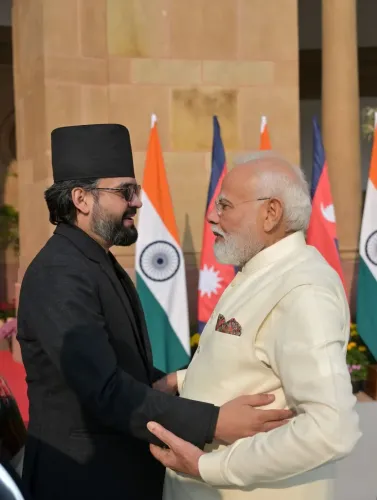
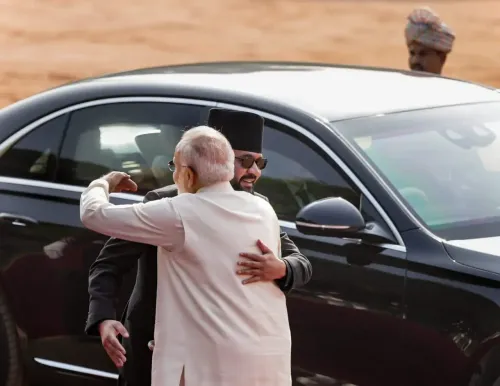
The National Forensic Sciences University (NFSU) in Gandhinagar, Gujarat, and Nepal Police exchanged a forensic research and training pact on Monday, 23 November, in the presence of Prime Minister Narendra Modi and his Nepalese counterpart, Balendra Shah. The agreement aims to strengthen cooperation in forensic science and criminal investigations between the two countries.
The memorandum of understanding was among eight agreements exchanged during Shah's two-day state visit to India on 22 and 23 November. The source did not specify the year or the precise venue of the exchange.
Forensic research and training agreement
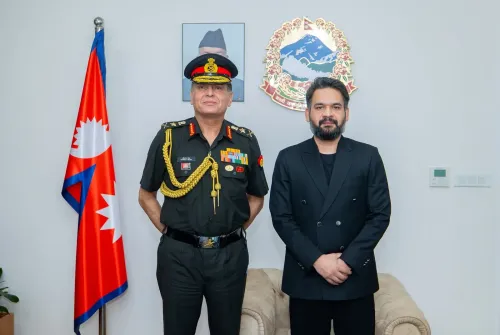
The pact involves the Crime Investigation Department (CID) of Nepal Police and NFSU. It was signed by Prof. (Dr.) S.O. Junare, the university's Vice-Chancellor (in-charge), and Ananda Kafle, Joint Secretary of the COSC Division in Nepal's Ministry of Home Affairs.
The agreement provides for academic collaboration, specialised training, forensic research and the exchange of scientific knowledge. According to NFSU, the work will cover forensic biology, forensic chemistry, toxicology, serology, questioned document examination and fingerprint analysis.
Those disciplines encompass different forms of forensic examination, from biological and chemical analysis to the examination of documents and fingerprints. The proposed collaboration is expected to support forensic capabilities and scientific investigation practices in both countries.
University outlines criminal justice goals
Junare said, “The collaboration would foster excellence in teaching, research, training and knowledge exchange between the two institutions. The partnership would contribute to strengthening forensic practices and criminal justice systems in both countries.”
The agreement brings together a forensic sciences university and a police investigative department, linking academic cooperation with the needs of criminal investigations. The information available does not specify when individual training or research activities will begin.
Eight agreements during Nepal visit
The forensic pact formed part of a wider set of eight memorandums exchanged during Shah's visit. The agreements covered areas including space technology, police training, civil service capacity building, healthcare, traditional medicine, sustainable urban development, and livestock and fisheries development.
It was Shah's first visit to India since he assumed office in March that year, according to the source. Senior officials from both countries were present for the exchange of the agreements.
Development assistance and connectivity
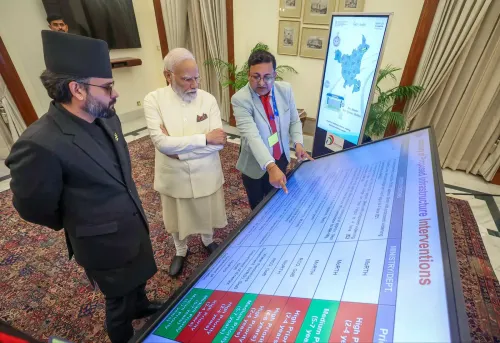
During talks in New Delhi, Modi and Shah also discussed economic cooperation, energy partnerships, cross-border connectivity and infrastructure. India announced ₹15,000 crore in development assistance, equivalent to 24,000 crore Nepalese rupees, including support for post-disaster reconstruction and infrastructure projects, as well as a line of credit for energy-sector projects.
India also announced a new route for Nepal's transit trade through Deendayal Port at Kandla, a development relevant to Gujarat. The two countries agreed to advance cooperation on railway connectivity, hydropower and other infrastructure projects.
Attention will now turn to how the institutions put the forensic agreement into practice and advance the wider cooperation discussed during the visit.
Point of View
But its value will depend on the practical training and research that follow. Clear implementation details and a way to assess outcomes would help both countries judge whether cooperation is improving investigative capacity. The wider set of agreements also makes delivery, rather than the number of memorandums signed, the meaningful test.
NationPress
23 Nov 2026
Frequently Asked Questions
What is the NFSU and Nepal Police agreement?
It is a memorandum of understanding on forensic research, specialised training, academic collaboration and scientific knowledge exchange. It involves NFSU and the Crime Investigation Department of Nepal Police.
Which forensic fields does the India-Nepal pact cover?
According to NFSU, it covers forensic biology, forensic chemistry, toxicology, serology, questioned document examination and fingerprint analysis.
Who signed the NFSU and Nepal Police pact?
NFSU Vice-Chancellor (in-charge) Prof. (Dr.) S.O. Junare and Nepal Home Ministry Joint Secretary Ananda Kafle signed the agreement. It was exchanged in the presence of Narendra Modi and Balendra Shah.
What else did India and Nepal agree during Shah's visit?
The forensic pact was among eight agreements covering areas including space technology, police training and healthcare. India also announced ₹15,000 crore in development assistance and a Nepal transit trade route through Deendayal Port at Kandla.
When will the forensic cooperation begin?
The available information does not specify a start date for individual research or training activities. The memorandum was exchanged on 23 November during Shah's two-day visit.