India and Nepal sign MoUs on space, health and security
Synopsis
India and Nepal signed cooperation agreements across security, health and satellite communications as their leaders also flagged off a 604-km train between Janakpur Dham and Ayodhya. Regular passenger services are scheduled to begin on 28 November.
Key Takeaways
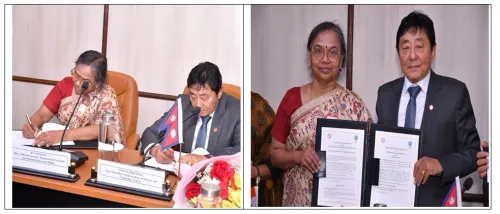
India and Nepal signed several cooperation MoUs in New Delhi on 23 November .
ISRO and Nepal's communications ministry agreed to establish a network for use of the South Asia Satellite .
Balendra Shah and Narendra Modi inaugurated the Darchula-Dharchula bridge and the second phase of the Motihari-Amlekhgunj pipeline.
The leaders virtually laid foundation stones for projects including the 669 MW Lower Arun Hydropower Project .
The Saryu-Kamala Express is scheduled to begin regular passenger services on 28 November , covering 604 km in approximately 19 hours .
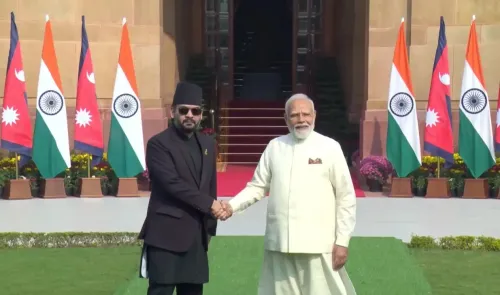
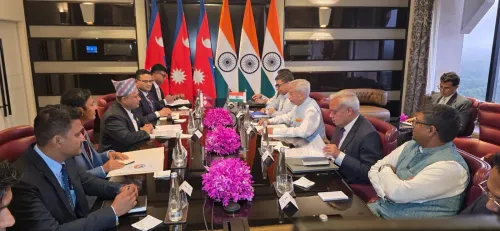
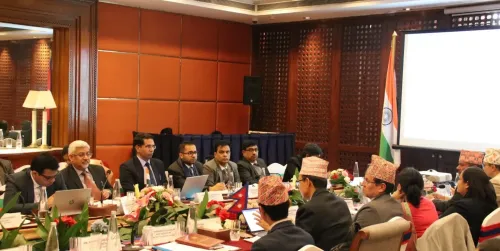
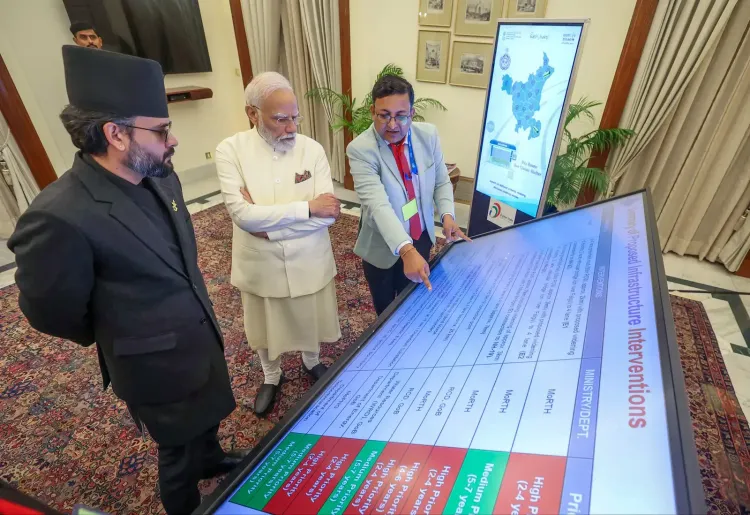
India and Nepal signed several memorandums of understanding on 23 November in New Delhi, expanding cooperation in areas including satellite communications, security, health and urban development. The agreements followed delegation-level talks between Nepali Prime Minister Balendra Shah and Prime Minister Narendra Modi during Shah's official visit.
The leaders also inaugurated cross-border infrastructure, laid foundation stones for energy and connectivity projects, and virtually flagged off a passenger train linking Janakpur Dham and Ayodhya. The source did not specify the year of the visit.
Agreements on security and civil service training
One agreement provides for academic and research collaboration between the National Forensic Sciences University in Gandhinagar, Gujarat, and Nepal Police's Crime Investigation Department. Another brings together India's Rashtriya Raksha University and Nepal's National Police Academy.
A separate MoU covers capacity-building and training programmes for Nepali civil servants. It involves India's National Centre for Good Governance and Department of Administrative Reforms and Public Grievances, alongside Nepal's Administrative Staff College under the Ministry of Federal Affairs and General Administration.
These agreements address institutional cooperation as well as infrastructure, bringing universities, police bodies and civil service training organisations into the bilateral programme.
Satellite, health and urban cooperation
Nepal's Ministry of Communication and Information Technology and the Indian Space Research Organisation (ISRO) signed an agreement to establish a satellite communication network for the utilisation of the South Asia Satellite.
Other agreements cover Ayurveda and traditional systems of medicine, sustainable urban development, health and medicine, and livestock and fisheries development. The source did not provide implementation schedules or funding details for these agreements.
Cross-border energy and infrastructure projects
Shah and Modi jointly inaugurated a motorable bridge connecting Darchula in Nepal with Dharchula in India. They also inaugurated the second phase of the Motihari-Amlekhgunj petroleum pipeline project.
The leaders virtually laid foundation stones for the 669 MW Lower Arun Hydropower Project, an integrated check post at Banbasa in Uttarakhand, the Siliguri-Jhapa Petroleum pipeline and a greenfield petroleum storage terminal in Jhapa, Nepal. Although the source described these as three projects, it listed four items.
The announcements span power generation, petroleum infrastructure and border facilities, alongside the agreements on institutional cooperation. Their stated scope illustrates the range of issues covered during the visit, although the source did not set out construction schedules.
Janakpur Dham-Ayodhya train and next steps
The leaders virtually flagged off the Saryu-Kamala Express, a passenger service connecting Janakpur Dham in Nepal with Ayodhya in Uttar Pradesh. The 604-km journey is expected to take approximately 19 hours, with one service a week in each direction.
Regular passenger services are scheduled to begin on 28 November. The route includes Mankapur, Basti, Gorakhpur, Narkatiaganj, Raxaul, Sitamarhi, Shisho, Madhubani and Jaynagar, among other stations.
The service is expected to strengthen connections between the two religious and cultural centres associated with the Ramayana tradition and promote religious tourism. The weekly timetable and scheduled start date are the immediate details available to prospective passengers.
Earlier, the prime ministers held bilateral talks at Hyderabad House in New Delhi. Nepal's Ministry of Foreign Affairs said their discussions focused on trade and investment, energy cooperation, connectivity and people-to-people ties, adding that both sides reaffirmed their commitment to the relationship.
Attention will now turn to the scheduled start of train services and implementation details for the agreements and projects.
Point of View
Satellite and infrastructure commitments are translated into transparent implementation plans. The source's mismatch between the number of foundation-stone projects described and those listed also underlines the need for clear project-wise disclosure. Passengers and border communities will ultimately judge the announcements by services delivered, not ceremonies held.
NationPress
23 Nov 2026
Frequently Asked Questions
What agreements did India and Nepal sign?
India and Nepal signed MoUs covering areas including forensic science, security, civil service training, health, traditional medicine, urban development and satellite communications. The agreements followed talks in New Delhi between their prime ministers.
What is the India-Nepal satellite agreement?
The agreement provides for a satellite communication network to utilise the South Asia Satellite. It was signed by Nepal's Ministry of Communication and Information Technology and ISRO.
When will the Saryu-Kamala Express begin regular service?
Regular passenger services are scheduled to begin on 28 November. The source did not specify the year.
What is the route and travel time of the Saryu-Kamala Express?
The train connects Janakpur Dham in Nepal with Ayodhya in India over a 604-km route, with an expected journey time of approximately 19 hours. It is scheduled to run once a week in each direction.
Which India-Nepal infrastructure projects were inaugurated?
The leaders inaugurated a motorable bridge between Darchula and Dharchula and the second phase of the Motihari-Amlekhgunj petroleum pipeline project. They also laid foundation stones for several other projects.