Ashok Gehlot attacks Rajasthan government over governance
Synopsis
Ashok Gehlot says Rajasthan's BJP government has weakened Congress-era welfare schemes and failed to address grievances. After the Panchayat polls, he also called for Opposition consultation on major national decisions and said Congress's leadership would decide its chief ministerial choice after an election.
Key Takeaways
Former Rajasthan Chief Minister Ashok Gehlot alleged that the state government had weakened or discontinued Congress-era welfare schemes.
Gehlot attributed the Congress performance in the Rajasthan Panchayat elections to public dissatisfaction, earlier welfare measures and party unity.
Gehlot said the Congress high command would decide its chief ministerial choice after an election.
Gehlot questioned expenditure of around ₹100 crore on advertising and organising a Rajasthan diaspora event, citing government figures.
Gehlot urged the Centre to consult the Opposition on One Nation, One Election , delimitation and reserved seats.
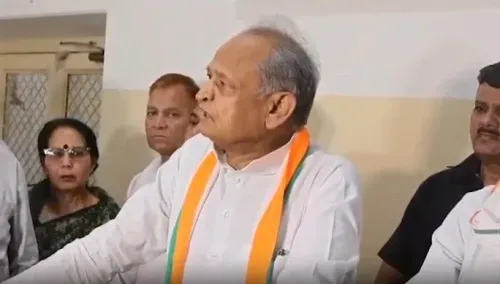
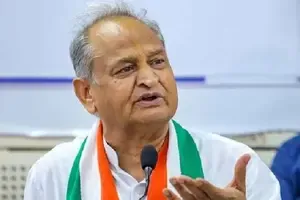
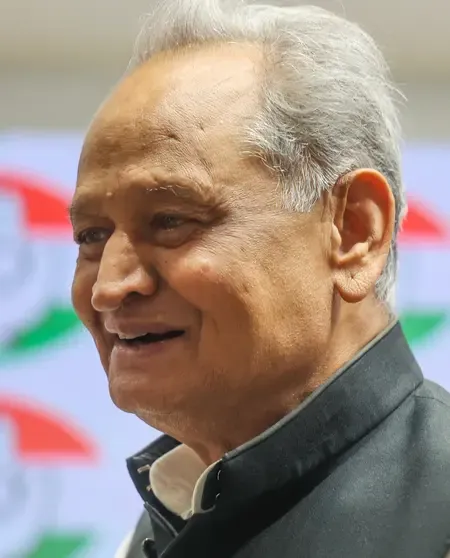
Former Rajasthan Chief Minister Ashok Gehlot has accused Chief Minister Bhajanlal Sharma's government of failing to address public grievances and weakening welfare schemes introduced by the previous Congress administration. In an interview reported from Jaipur on 23 November, he also urged the Centre to consult the Opposition before taking major decisions.
The senior Indian National Congress (Congress) leader linked his party's performance in the Rajasthan Panchayat elections to what he described as public dissatisfaction with the state government, support for earlier welfare measures and unity within Congress.
Gehlot's allegations on welfare and governance
Gehlot alleged that the Bharatiya Janata Party (BJP) government had discontinued, weakened or dismantled several schemes introduced during his tenure without bringing in substantial alternatives. He said people who had benefited from those initiatives missed them, although he did not identify specific schemes in the interview.
He also alleged that development work was not taking place, corruption had increased and public complaints were going unanswered. Gehlot claimed that some BJP leaders and bureaucrats had privately expressed concern about the functioning of the government; the interview did not provide independent evidence for those assertions.
Comparing Sharma with former Chief Minister Vasundhara Raje, Gehlot said he had significant political differences with her but credited her with administrative experience and a firm governing style. He said he had offered Sharma advice and had no personal complaint against him, while criticising his government's performance.
Gehlot also questioned spending on an event for the Rajasthan diaspora and the results of investment summits. He said government figures put advertising and organisational expenditure for the event at around ₹100 crore, and argued that such initiatives should be judged by investment and jobs delivered.
Panchayat results and Congress leadership
Discussing the Panchayat election outcome, Gehlot credited Congress President Mallikarjun Kharge and Congress leader Rahul Gandhi with raising issues including inflation, unemployment and alleged vote theft. He also cited an INDIA Bloc rally at Ramlila Maidan and a march by MPs, saying their campaign had sent a message beyond Rajasthan.
His account of a Congress victory did not include a seat tally or vote figures. He said the party had organised observers, held discussions and monitored the election process to demonstrate unity in the state.
Asked whether he could become Chief Minister for a fourth time, Gehlot said the party's high command would make that decision after an election, taking account of public opinion and the views of legislators. He said Congress should focus on winning rather than on an individual leader.
Gehlot referred to December 2028 for the next Rajasthan Assembly election and May 2029 for the Lok Sabha election, and predicted a defeat for the National Democratic Alliance (NDA). Those dates were presented as his expectation, not as an announced election schedule.
Modi, the Gandhi family and past campaigns
Gehlot defended Rahul Gandhi and the Gandhi family's role in Congress, alleging that the BJP and the Rashtriya Swayamsevak Sangh (RSS) had targeted them politically. He also praised former Prime Minister Jawaharlal Nehru's contribution to building national institutions and accused the BJP of seeking to damage his legacy.
On Prime Minister Narendra Modi, Gehlot acknowledged his public-speaking ability and political success but alleged that the BJP and RSS had helped create an anti-corruption campaign against the former United Progressive Alliance (UPA) government. Those allegations were his interpretation of past political events.
Call for consultation with the Opposition
Gehlot urged the Centre to hold wider consultations on One Nation, One Election, delimitation and changes relating to reserved seats. He alleged that the government had not adequately involved the Opposition and asked why an all-party meeting could not be convened before decisions were taken.
He made a similar argument about the Special Intensive Revision (SIR) of electoral rolls, saying an all-party discussion could have allowed parties to offer suggestions. He criticised Chief Election Commissioner Gyanesh Kumar's handling of the issue and attributed the resulting concerns to government mistakes.
Gehlot said repeated personal attacks had contributed to hostility between the ruling party and the Opposition. “The government should listen to the Opposition and then take its decisions. That is how democracy should function,” he said, adding that the ruling party should take the first step towards improving relations.
Gehlot's assessment puts welfare delivery and consultation at the centre of Congress's case against the BJP; the interview did not include a response from the state government or the Centre.
Point of View
Not just competing political claims. His call for consultation also raises a wider question about how governments build trust when consequential electoral and institutional changes are debated. Congress's Panchayat performance may give its argument momentum, but local results alone cannot establish the scale of statewide sentiment. Both the state government and its opponents should put verifiable delivery figures before voters.
NationPress
23 Nov 2026
Frequently Asked Questions
What did Ashok Gehlot say about Rajasthan's government?
Ashok Gehlot alleged that the Rajasthan government had failed to address grievances and had weakened or discontinued welfare schemes introduced under Congress. He also alleged that development work had stalled and corruption had increased.
Why did Gehlot say Congress performed well in the Panchayat elections?
Gehlot attributed the outcome to public dissatisfaction with the BJP government, support for previous welfare schemes and unity within Congress. He also cited the national campaigns of Mallikarjun Kharge and Rahul Gandhi.
Will Ashok Gehlot seek a fourth term as Rajasthan Chief Minister?
Gehlot said the Congress high command would decide its chief ministerial choice after an election. He said the party should focus on winning rather than on an individual leader.
What did Gehlot ask the Centre to do?
Gehlot asked the Centre to consult the Opposition before taking major decisions. He specifically discussed One Nation, One Election, delimitation and changes relating to reserved seats.
Did Gehlot name the welfare schemes he said were weakened?
Gehlot did not identify specific welfare schemes in the interview. He alleged that beneficiaries missed measures introduced by the previous Congress government.