Exercise Nomadic Elephant 2026: India, Mongolia begin 18th joint military drill in Pithoragarh
Synopsis
India and Mongolia have kicked off the 18th edition of Exercise Nomadic Elephant at Pithoragarh, Uttarakhand — a drill that now explicitly includes counter-drone systems and cyber security training alongside traditional counter-insurgency modules, reflecting how bilateral military exercises are adapting to 21st-century warfare realities.
Key Takeaways
The 18th edition of Exercise Nomadic Elephant 2026 opened on 21 September 2026 at the Foreign Training Node, Pithoragarh, Uttarakhand .
The exercise runs from 21 September to 3 October 2026 , focusing on counter-insurgency in semi-urban and mountainous terrain.
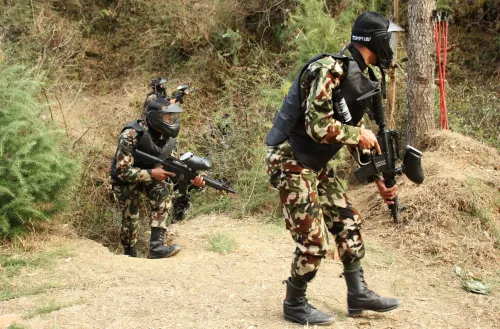
Training modules include Cordon and Search Operations , Room Intervention Drills , Special Heliborne Operations , Cyber Security Training , and counter-drone systems .
The exercise follows Khaan Quest 2026 , which concluded in Ulaanbaatar in July, where India's Jat Regiment fielded 40 troops alongside contingents from 18 nations .
India and Mongolia have now sustained this bilateral military exercise for 18 consecutive editions , reflecting enduring defence ties.
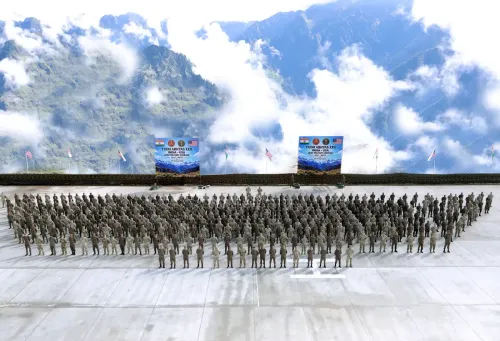
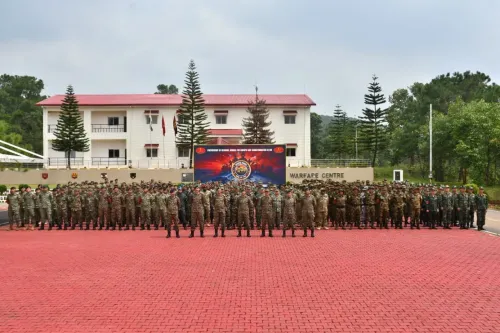
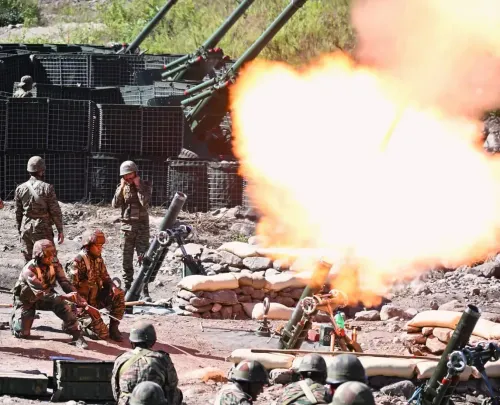
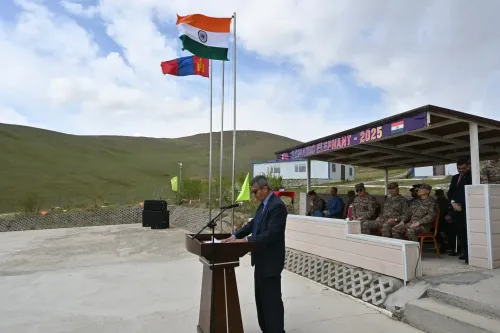
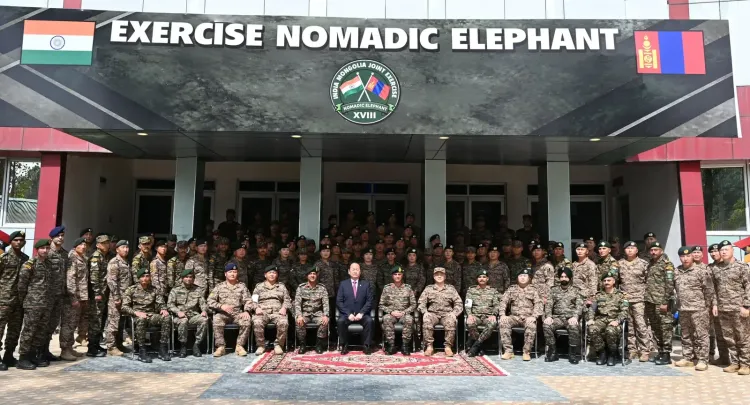
The 18th edition of Exercise Nomadic Elephant 2026, the annual India–Mongolia Joint Military Exercise, formally opened on Monday, 21 September at the Foreign Training Node, Pithoragarh, Uttarakhand. The two-week exercise runs from 21 September to 3 October 2026, with soldiers from both nations training together in counter-insurgency operations across semi-urban and mountainous terrain.
What the Exercise Covers
According to the Additional Directorate General of Public Information (ADGPI) of the Indian Army, the exercise is designed to enhance the joint military capability of both armies in counter-insurgency operations suited to semi-urban and mountainous environments. It will also facilitate the exchange of best practices and the refinement of operational drills.
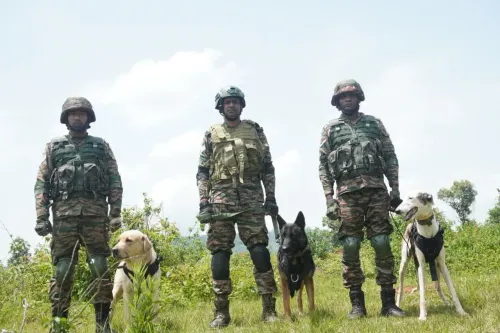
Specific modules include Cordon and Search Operations, Room Intervention Drills, Special Heliborne Operations, Cyber Security Training, and the employment of drones and counter-drone systems. The inclusion of cyber security and counter-drone elements reflects the evolving nature of modern combat, marking a notable expansion of the exercise's scope beyond conventional infantry drills.
What the Two Armies Aim to Achieve
The joint exercise serves a dual purpose: building tactical interoperability between the two armies and deepening the broader bilateral defence relationship between India and Mongolia. Pithoragarh, situated in the high-altitude Himalayan belt, provides realistic terrain conditions for the kind of mountainous warfare and counter-insurgency scenarios the exercise simulates.
Notably, this is the 18th consecutive edition of Nomadic Elephant, underscoring the durability of the India–Mongolia military-to-military engagement — one of India's more consistent bilateral defence partnerships in the region.
India–Mongolia Defence Ties: Recent Milestones
The launch of Nomadic Elephant 2026 follows recent multilateral engagement between the two nations. In July 2026, the multinational peacekeeping exercise Khaan Quest 2026 concluded at the Five Hills Training Area in the Mongolian capital of Ulaanbaatar. The closing ceremony was attended by Major General Baasandamba Dashtseden, Deputy Minister of Defence, and Lieutenant General Ganbyamba Sunrev, Chief of General Staff of the Mongolian Armed Forces, both of whom commended the professionalism displayed by participating contingents.
The 23rd edition of Khaan Quest had opened on 20 June 2026, inaugurated by Batlut Damba, Minister of Defence of Mongolia, and Lieutenant General Ganbyamba Sunrev. An Indian contingent from the Jat Regiment, comprising 40 troops including two lady officers, participated on India's behalf. Bringing together contingents from 18 nations, the exercise enhanced interoperability, joint peacekeeping capabilities, and humanitarian assistance under the United Nations Peacekeeping framework.
The ADGPI noted that the Indian Army 'demonstrated high standards of professionalism and operational proficiency during joint training and simulation-based exercises alongside partner nations,' adding that the exercise 'reaffirmed India's commitment to global peace, UN peacekeeping and multilateral military cooperation.'
Strategic Context
Mongolia occupies a strategically significant position between Russia and China, making its defence partnerships — including with India — geopolitically meaningful beyond their bilateral dimension. India's consistent engagement through both bilateral exercises like Nomadic Elephant and multilateral frameworks like Khaan Quest signals an effort to deepen security ties with nations across the Indo-Pacific and Central Asian periphery.
The Pithoragarh node's high-altitude setting also allows Indian troops to condition for terrain-specific operations, adding domestic training value alongside the partnership objectives.
The two-week exercise concludes on 3 October 2026, after which both armies are expected to conduct a joint after-action review to assess lessons learned and areas for deeper cooperation.
Point of View
But its strategic value is easy to understate. Mongolia's landlocked position between Russia and China makes it a rare partner that engages India bilaterally while remaining outside bloc alignments — a diplomatic asset India has quietly cultivated for nearly two decades. The addition of cyber security and counter-drone modules to this edition is not incidental; it mirrors the upgrades India is rolling into most of its bilateral exercises, signalling that the Indian Army sees hybrid-warfare preparation as a standing agenda item, not an exception. The back-to-back cadence of Khaan Quest in July and Nomadic Elephant in September also suggests a deliberate effort to deepen the annual engagement calendar with Ulaanbaatar — worth watching as India's Eurasian connectivity ambitions develop.
NationPress
21 Sept 2026
Frequently Asked Questions
What is Exercise Nomadic Elephant 2026?
Exercise Nomadic Elephant 2026 is the 18th edition of the annual India–Mongolia Joint Military Exercise, held at the Foreign Training Node in Pithoragarh, Uttarakhand, from 21 September to 3 October 2026. It focuses on counter-insurgency operations in semi-urban and mountainous terrain, alongside newer modules covering cyber security and counter-drone systems.
Where is Exercise Nomadic Elephant 2026 being held?
The exercise is being held at the Foreign Training Node in Pithoragarh, Uttarakhand — a high-altitude location in the Himalayas that provides realistic terrain for mountainous warfare training.
What training activities are covered in Nomadic Elephant 2026?
The exercise covers Cordon and Search Operations, Room Intervention Drills, Special Heliborne Operations, Cyber Security Training, and the employment of drones and counter-drone systems, according to the Indian Army's ADGPI.
What was Khaan Quest 2026 and how does it relate to Nomadic Elephant?
Khaan Quest 2026 was a multinational peacekeeping exercise held at the Five Hills Training Area in Ulaanbaatar, Mongolia, which concluded in July 2026 with participation from 18 nations. India's Jat Regiment sent 40 troops, including two lady officers. Both exercises are part of India's broader bilateral defence engagement with Mongolia.
Why does India conduct regular military exercises with Mongolia?
India has maintained bilateral military exercises with Mongolia for 18 consecutive editions to enhance interoperability, exchange operational best practices, and strengthen defence ties. Mongolia's strategic location between Russia and China gives the partnership geopolitical significance beyond its bilateral scope.