North Macedonia President hails India as top global voice, fastest-growing economy
Synopsis
North Macedonia’s President didn’t just offer diplomatic pleasantries — she delivered one of the more expansive tributes to India’s civilisational, democratic, and economic standing heard from a European head of state in recent memory, calling India ‘one of the most influential voices in shaping the global agenda’ as both sides agreed to push bilateral ties well beyond their current ceiling.
Key Takeaways
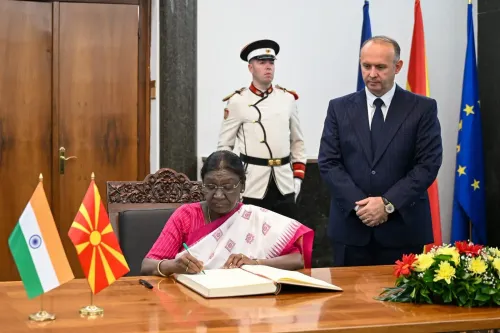
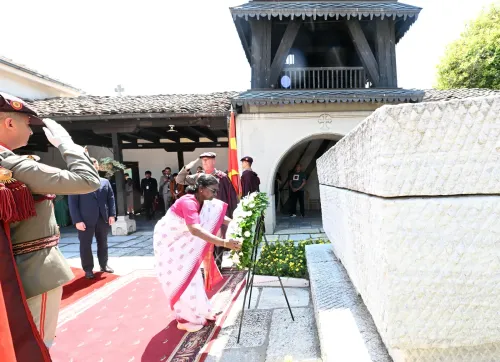
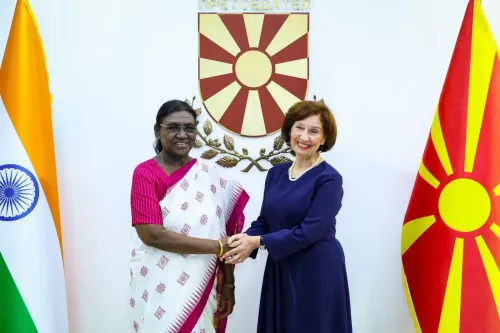
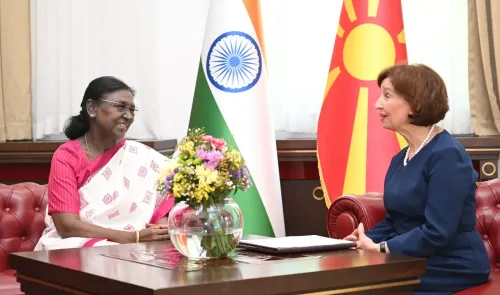
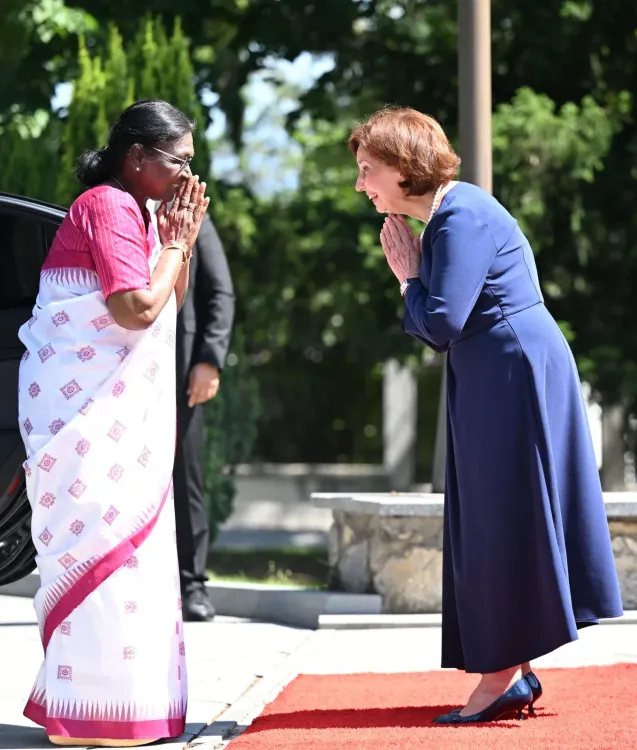
North Macedonia President Gordana Siljanovska-Davkova met President Droupadi Murmu in Skopje on 21 July .
Davkova called India ‘one of the most influential voices in shaping the global agenda’ and praised its status as the world’s largest democracy and one of the fastest-growing economies .
She described India’s economic transformation as ‘one of the most remarkable success stories in the twenty-first century.’ Both leaders agreed to make government-to-government engagements more frequent, structured, and ambitious.
The two sides acknowledged significant untapped potential in bilateral relations and committed to elevating economic ties to match political ones.
North Macedonia President Gordana Siljanovska-Davkova on Tuesday described India as one of the most influential voices shaping the global agenda, calling it a leading force in economic growth, technological innovation, and scientific achievement during a joint press conference in Skopje with President Droupadi Murmu. The remarks came as the two heads of state concluded bilateral talks that both sides characterised as forward-looking and marked by significant untapped potential.
Key Remarks from the Joint Press Conference
Addressing the press alongside President Murmu, Davkova described the bilateral dialogue as candid and constructive. “Our talks today were extremely cordial, open and directed towards the future. We confirmed the good, political collaboration. We agreed that the real potential is still to be realised,” she said.
Davkova went beyond the diplomatic formalities, offering an expansive tribute to India’s civilisational depth. “Talking about India, we’re not talking about only one country, but we are talking about one of the largest and most enduring civilisations in the history of mankind,” she stated.
India’s Cultural and Philosophical Legacy
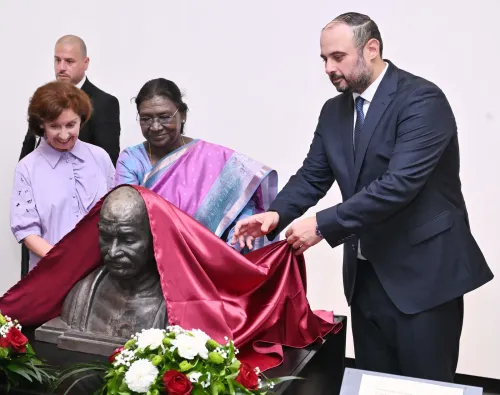
The North Macedonia President drew on a wide arc of Indian heritage in her remarks, citing landmarks from the Himalayas to the Taj Mahal, and figures from Mahatma Gandhi to Swami Vivekananda, Ravi Shankar, and Satyajit Ray. “India is famous as the country of Mahatma Gandhi, whose philosophy of non-violence changed the dictionary of international policy,” she noted, adding that India has consistently balanced its historic legacy with a drive for contemporary innovation.
India as an Economic and Democratic Powerhouse
Davkova described India’s economic transformation as “one of the most remarkable success stories in the twenty-first century,” noting that within a single generation, India has emerged as a global centre for digital technologies and entrepreneurship. She underscored that India is the world’s largest democracy and one of the fastest-growing economies, asserting that its voice on the global stage carries commensurate weight.
“It is at the same time one of the oldest civilisations in the world, but also one of the main moving forces of contemporary economic growth, technological innovations and scientific achievements,” she said. “And not only that, India is one of the most influential voices in shaping the global agenda.”
Bilateral Ties and the Road Ahead
Both leaders reaffirmed a shared commitment to deepening ties between New Delhi and Skopje, agreeing to make engagements between governments, ministers, parliaments, and institutions more frequent, better structured, and more ambitious. Davkova stressed that the strength of the political relationship must now be matched by equally robust economic cooperation. “It’s time for our economic partnership to match the quality of our political relations,” she said, adding that North Macedonia believes it has much to offer Indian partners. The two sides indicated that the growing momentum of political dialogue would be actively sustained going forward.
Point of View
Vivekananda, Ravi Shankar, and Satyajit Ray in a single breath signals a deliberate effort to frame the relationship in civilisational terms, not just transactional ones. For India, the visit is a small but telling data point in its broader push to deepen ties with Central and Eastern European nations, a region often overshadowed by New Delhi’s focus on Western Europe. The repeated emphasis on ‘untapped potential’ from both sides, however, is a diplomatic signal that concrete deliverables — trade frameworks, institutional linkages — have yet to materialise. The real test of this summit will be whether the warm words translate into measurable bilateral trade growth or remain a well-photographed moment of goodwill.
NationPress
20 Oct 2026
Frequently Asked Questions
What did North Macedonia’s President say about India?
President Gordana Siljanovska-Davkova described India as one of the most influential voices in shaping the global agenda, calling it one of the largest and most enduring civilisations in history and praising its status as the world’s largest democracy and one of the fastest-growing economies. She made these remarks at a joint press conference with President Droupadi Murmu in Skopje on 21 July.
Why did President Droupadi Murmu visit North Macedonia?
President Murmu visited Skopje for bilateral talks with President Davkova aimed at elevating India–North Macedonia relations. Both sides acknowledged significant untapped potential and agreed to make engagements between governments, ministers, parliaments, and institutions more frequent and ambitious.
What areas of cooperation did India and North Macedonia agree to strengthen?
The two countries agreed to deepen political dialogue and ensure government-to-government engagements become better structured and more ambitious. Davkova specifically called for economic ties to match the quality of the bilateral political relationship, citing India’s emergence as a global hub for digital technologies and entrepreneurship.
How did North Macedonia’s President describe India’s economic rise?
Davkova called India’s economic transformation ‘one of the most remarkable success stories in the twenty-first century,’ noting that within one generation India has grown into one of the world’s leading economic powers and a global centre for innovation and digital technologies.
Which Indian cultural and historical figures did Davkova reference?
Davkova cited Mahatma Gandhi, Swami Vivekananda, sitar maestro Ravi Shankar, and filmmaker Satyajit Ray, as well as landmarks including the Himalayas, the Taj Mahal, and ancient temples, to illustrate India’s civilisational and cultural depth.