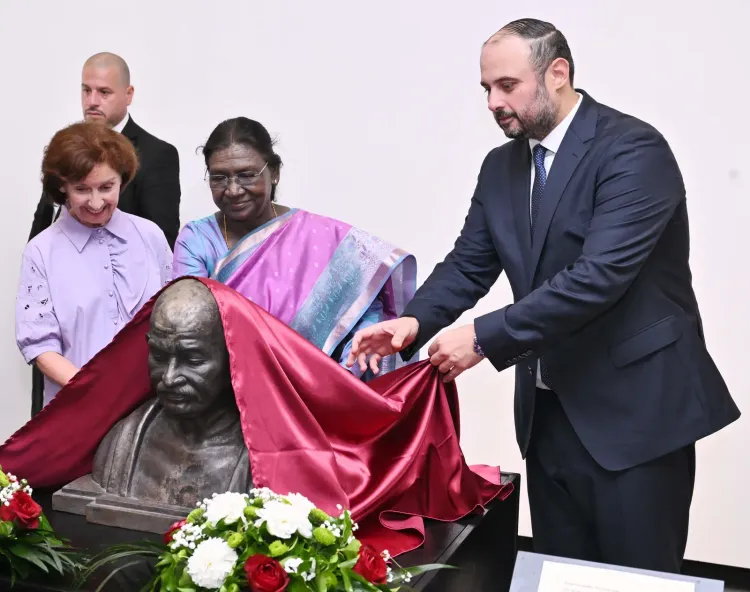
Murmu, North Macedonia President unveil Gandhi bust at Skopje Museum
Synopsis
President Droupadi Murmu's first state visit to North Macedonia produced a striking diplomatic image: a Mahatma Gandhi bust installed at the Skopje Museum, a shared stop at the Mother Teresa Memorial, and an address to the national assembly — all in a country India has rarely spotlighted. With Romania next on the itinerary for the first Indian presidential visit in over three decades, this tour signals a deliberate pivot toward Central and Eastern Europe.
Key Takeaways
President Droupadi Murmu and North Macedonia's Gordana Siljanovska-Davkova unveiled a Mahatma Gandhi bust at the Skopje Museum on 22 July .
Both presidents visited the Mother Teresa Memorial in Skopje; Mother Teresa was born there and lived in the city until 1928 .
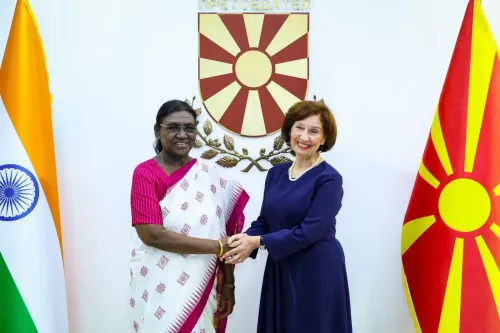
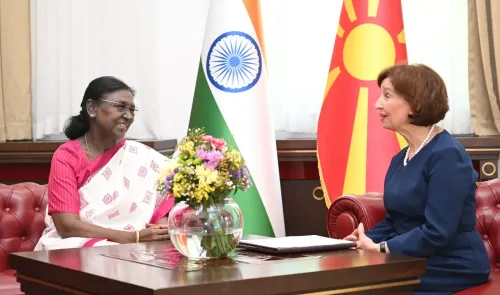
Formal bilateral talks at Villa Vodno covered the full range of cooperation and regional and global issues.
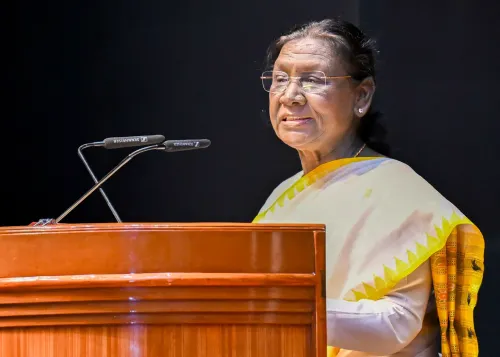
President Murmu addressed the Assembly of North Macedonia and spoke at the India-North Macedonia Business Forum .
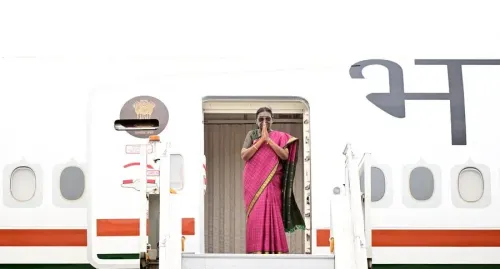
North Macedonia is the second stop of a three-nation tour; Romania is next ( 23–25 July ), marking the first Indian presidential visit there in over three decades .
President Droupadi Murmu and her North Macedonian counterpart Gordana Siljanovska-Davkova jointly unveiled a bust of Mahatma Gandhi at the Skopje Museum on Wednesday, 22 July, in a ceremony that underscored the growing diplomatic warmth between India and North Macedonia. The unveiling formed a centrepiece of President Murmu's first state visit to the Balkan nation.
The Gandhi Bust Ceremony
The Indian President's Secretariat, in a post on X, said President Murmu expressed confidence that the bust 'will stand as a lasting symbol of friendship between India and North Macedonia and of the common commitment of both countries to peace, tolerance and humanity.' The gesture carries symbolic weight — placing Gandhi's image in a public cultural institution signals India's intent to anchor bilateral ties in shared civilisational values rather than purely transactional interests.
Key Engagements in Skopje
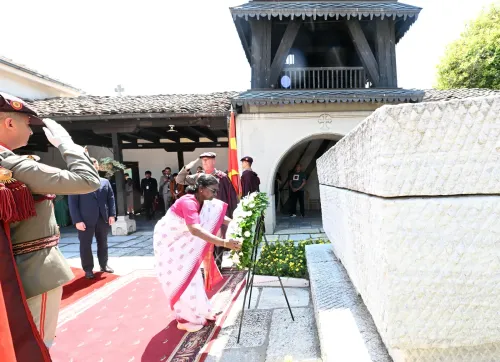
Beyond the museum ceremony, President Murmu and President Siljanovska-Davkova visited the Mother Teresa Memorial in Skopje. Mother Teresa, born in Skopje, lived in the city until 1928 — a historical connection that added personal resonance to the visit. President Murmu also addressed the Assembly of North Macedonia, participated in the India-North Macedonia Business Forum, and laid a wreath at the Grave of Goce Delchev at the Church of Saint Spas in Skopje.
Bilateral Talks at Villa Vodno
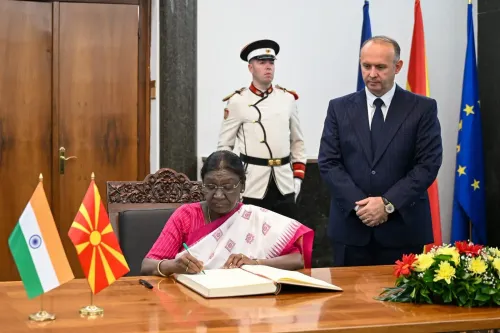
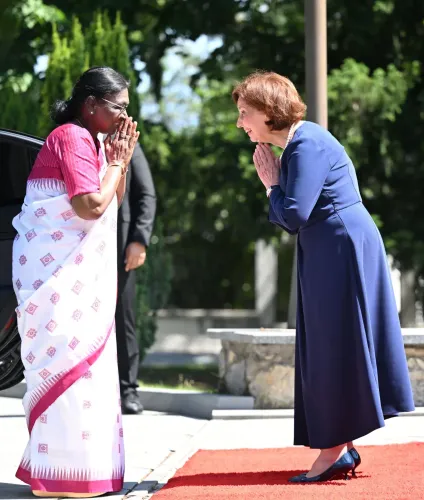
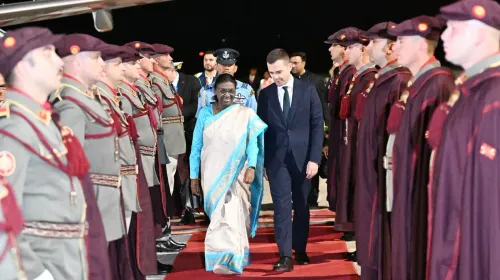
On Tuesday, the two presidents held formal talks at Villa Vodno in Skopje, covering the full range of bilateral cooperation and exchanging views on regional and global issues of mutual interest. According to a statement from the President's Secretariat, both leaders 'reaffirmed deep and friendly bilateral ties, grounded in shared democratic values and mutual respect.' President Murmu was accorded a ceremonial welcome and guard of honour ahead of the meeting. North Macedonia's Prime Minister Hristijan Mickoski hosted a state luncheon in her honour on Tuesday.
Three-Nation Tour: What Comes Next
North Macedonia is the second leg of President Murmu's three-nation tour. The final stop will be Romania, where she is scheduled from 23 to 25 July at the invitation of President Nicusor Dan. Notably, this will mark the first visit by an Indian President to Romania in more than three decades — a milestone that signals India's renewed diplomatic outreach to Central and Eastern Europe.
Point of View
And this visit — paired with a first-ever presidential trip to Romania — suggests a deliberate effort to deepen ties with a region that sits at the intersection of EU expansion politics and NATO's eastern edge. The business forum and parliamentary address indicate India is not treating this as a ceremonial tour. Whether concrete trade or investment outcomes follow will be the real measure of this outreach.
NationPress
21 Oct 2026
Frequently Asked Questions
Why did President Murmu visit North Macedonia?
President Droupadi Murmu visited North Macedonia on her first state visit to the country, where she held bilateral talks with President Gordana Siljanovska-Davkova, addressed the national assembly, and participated in the India-North Macedonia Business Forum. The visit aimed to strengthen diplomatic and economic ties between the two nations.
What is the significance of the Mahatma Gandhi bust at Skopje Museum?
The bust, unveiled jointly by President Murmu and her North Macedonian counterpart on 22 July, is intended to serve as a lasting symbol of friendship and shared commitment to peace, tolerance, and humanity, according to the Indian President's Secretariat. It represents India's use of cultural diplomacy to cement bilateral relations.
What is the connection between Skopje and Mother Teresa?
Mother Teresa was born in Skopje and lived there until 1928, making the city a significant site in her life story. President Murmu and President Siljanovska-Davkova visited the Mother Teresa Memorial in Skopje as part of the state visit programme.
Where does President Murmu travel after North Macedonia?
President Murmu is scheduled to visit Romania from 23 to 25 July at the invitation of President Nicusor Dan. This will be the first visit by an Indian President to Romania in more than three decades.
What was discussed during the bilateral talks in Skopje?
The two presidents met at Villa Vodno in Skopje on Tuesday and discussed the full range of bilateral cooperation, as well as regional and global issues of mutual interest. They reaffirmed ties grounded in shared democratic values and mutual respect, according to the President's Secretariat.