NSE CEO Chauhan: Build businesses, not stock valuations
Synopsis
NSE chief Ashish Kumar Chauhan told founders at a Mumbai event that the stock market is a reflection of a business — not the business itself. His pitch: list early, keep 75% control, raise growth capital, and let profits drive your valuation rather than chasing one.
Key Takeaways
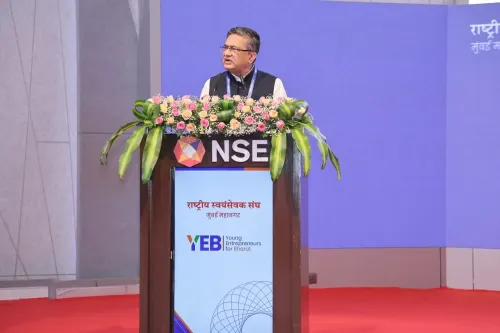
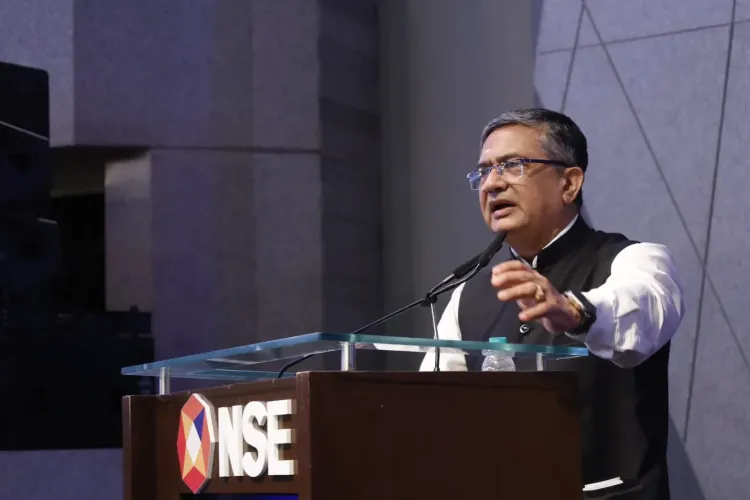
NSE MD and CEO Ashish Kumar Chauhan spoke at the JIIF Foundation Day in Mumbai on 26 June .
He urged startups and MSMEs to focus on profitability and operations, not day-to-day share price movements.
Founders can list by offering just 25% equity to the public while retaining 75% control.
A company with ₹2 crore annual profit could command a market cap of ₹40–₹50 crore post-listing, according to Chauhan.
Listing benefits include improved governance, analyst coverage, easier bank financing, and structured succession planning.
National Stock Exchange (NSE) Managing Director and CEO Ashish Kumar Chauhan on Friday, 26 June called on entrepreneurs to prioritise business fundamentals and profitability over short-term stock price movements, asserting that strong operational foundations are what ultimately drive lasting market value. He was speaking at the JITO Incubation and Innovation Foundation (JIIF) Foundation Day event held at the NSE in Mumbai.
The Core Message
Chauhan drew a clear line between a business and its stock price. 'Your business is in your operations, not in the share price. The stock market is only a reflection of your business, it is not the business itself,' he said. His remarks were directed at founders of startups and MSMEs, urging them not to let daily market fluctuations distract from building sustainable enterprises.
Why Public Listing Matters for Founders
Framing capital markets as a key enabler of India's entrepreneurial growth story, Chauhan encouraged startups and MSMEs to view a public listing as a strategic scaling tool rather than an end goal. He noted that listing improves governance standards, boosts credibility, attracts analyst coverage, and eases access to bank financing. It also facilitates orderly succession planning, making asset division among heirs more structured.
Control and Capital: The Listing Advantage
Chauhan was emphatic that listing need not mean losing control. 'When you list, you keep 75 per cent with yourself and offer 25 per cent to the market in the beginning. You can give more later. Control stays with you,' he said. He added that public markets reward profitable businesses with valuations that private balance sheets simply cannot replicate — citing the example of a company earning an annual profit of ₹2 crore potentially commanding a market capitalisation of ₹40 to ₹50 crore once listed, opening doors to fresh capital, strategic partners, and business expansion.
Broader Context
Chauhan's remarks come at a time when India's startup and MSME ecosystem is navigating a more cautious funding environment, with venture capital deal volumes having moderated significantly from their 2021 peak. The push for public listings aligns with the NSE's own interest in deepening India's equity market participation, but the advice also reflects a growing consensus among market veterans that valuation-chasing — rather than profit-building — has been a structural weakness in the domestic startup culture. Notably, India's stock exchanges have in recent years introduced simplified listing frameworks for SMEs, making Chauhan's pitch more actionable than it might have been a decade ago.
What Founders Should Take Away
The NSE chief's message, in essence, is that the market is a lagging indicator of business health, not a leading one. Entrepreneurs who obsess over their stock price before building a profitable core risk confusing the mirror for the face. With India's public markets increasingly accessible to smaller companies, the opportunity to raise growth capital while retaining majority control is real — but it rewards only those who have done the operational groundwork first.
Point of View
And his pitch to MSMEs is also a pitch for market depth. That said, the core argument is hard to dispute: India's startup culture has too often priced growth on hope rather than earnings, and the correction has been brutal for many founders who confused a high valuation with a healthy business. The more interesting question is whether India's SME listing framework has matured enough to absorb the volumes Chauhan is implying — and whether retail investors in those counters have the information quality they need to price them fairly.
NationPress
25 Sept 2026
Frequently Asked Questions
What did NSE CEO Ashish Kumar Chauhan say about stock valuations?
Chauhan said entrepreneurs should not be distracted by short-term stock price movements, emphasising that 'the stock market is only a reflection of your business, it is not the business itself.' He urged founders to focus on profitability and operations as the true drivers of long-term market value.
Why did Chauhan encourage startups to consider public listing?
He argued that public listing allows founders to raise growth capital without surrendering control, improve governance standards, attract analyst coverage, and ease access to bank financing. It also facilitates succession planning by making asset division more structured.
How much equity does a founder have to give up when listing on the NSE?
According to Chauhan, a promoter can offer as little as 25% equity to the public at the time of listing and retain 75% control, with the option to dilute further only as the business requires.
What valuation uplift can a listed company expect over a private one?
Chauhan cited the example of a company earning ₹2 crore in annual profit potentially commanding a market capitalisation of ₹40 to ₹50 crore once listed — a multiple that private balance sheets typically cannot match.
Where did Chauhan make these remarks?
He spoke at the JITO Incubation and Innovation Foundation (JIIF) Foundation Day event held at the NSE in Mumbai on 26 June.