NSE IPO delayed to September: Co-location case, ₹1,491 crore settlement hold up listing

Synopsis
NSE's IPO — poised to be India's largest-ever listing at over ₹5 lakh crore — is stuck in regulatory limbo. A ₹1,491 crore SEBI settlement over the co-location case is internally approved but not yet formalised, and a separate criminal complaint over erroneous share credits adds to the legal overhang. September is the new target, but the clock is ticking.
Key Takeaways
NSE's IPO is now expected to launch in September 2025 , delayed by unresolved regulatory and legal matters.
NSE has proposed a ₹1,491.21 crore settlement with SEBI over the co-location case; SEBI Chairman Tuhin Kanta Pandey confirmed internal approval, but formal completion is pending.
A separate dispute involves 5,000 NSE shares allegedly wrongfully retained by an individual; NSE has filed a police complaint under the Bharatiya Nyaya Sanhita (BNS) .
NSE flagged heavy reliance on derivatives trading income and risks from AI , cybersecurity, and regulatory changes in its DRHP.
The IPO is expected to value NSE at more than ₹5 lakh crore , surpassing Hyundai Motor India's ₹27,870 crore offering from October 2024 .
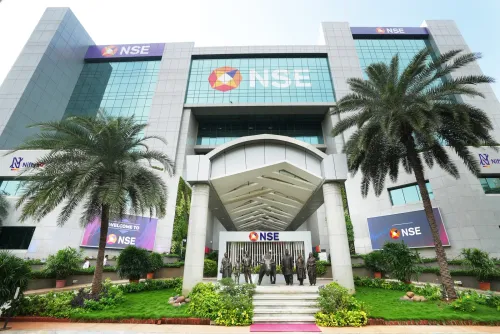
The National Stock Exchange (NSE) IPO, one of the most anticipated public listings in Indian market history, is now expected to launch in September 2025, with unresolved regulatory and legal hurdles continuing to stall the process. Pending matters — chiefly the long-running co-location case and disclosures in the exchange's draft red herring prospectus (DRHP) — have kept the listing on hold despite earlier expectations of an earlier market debut.
The Co-location Case and SEBI Settlement
At the heart of the delay is the co-location and dark fibre case, a regulatory dispute that has dogged NSE for years. In its DRHP, the exchange disclosed a proposed settlement of ₹1,491.21 crore with the Securities and Exchange Board of India (SEBI) to resolve the proceedings.
SEBI Chairman Tuhin Kanta Pandey confirmed last week that the regulator has internally approved the proposed settlement, signalling that the matter is moving toward closure. However, the settlement has not yet been formally completed, and related matters remain pending before the Supreme Court, SEBI, and other judicial forums — all disclosed under the material litigation section of the IPO documents.
Demat Account Dispute Adds to Legal Overhang
A separate legal matter has also surfaced in NSE's DRHP. The exchange alleges that 5,000 equity shares of NSE were erroneously credited to the demat account of an individual identified as Kashmiri Lal Rana, who allegedly retained and sold them despite knowing they did not belong to him.
NSE has filed a police complaint against Rana under the Bharatiya Nyaya Sanhita (BNS), invoking provisions related to criminal breach of trust and cheating. The matter has been flagged as a material litigation risk in the IPO disclosures.
Operational and Business Risks Flagged
Beyond litigation, NSE has highlighted a range of operational vulnerabilities in its IPO filings. The exchange cautioned that regulatory changes, technology failures, cybersecurity incidents, and risks tied to artificial intelligence (AI) could materially affect its business and financial performance.
Notably, NSE also flagged its heavy dependence on trading income — particularly from the derivatives segment. Any regulatory or market shift affecting derivatives trading could have a significant bearing on revenues, the exchange warned, a concern that takes on added weight given SEBI's recent scrutiny of the F&O market.
What the IPO Could Mean for Indian Markets
If the listing proceeds as planned, NSE is expected to be valued at more than ₹5 lakh crore, making it one of the largest IPOs in Indian corporate history. The offering would surpass Hyundai Motor India's ₹27,870 crore IPO launched in October 2024, currently among the biggest recent listings.
The exchange is also expected to conduct investor roadshows ahead of the public issue. With India's primary market appetite remaining strong, institutional and retail investor interest in the NSE IPO is expected to be substantial — provided the regulatory and legal clouds clear in time.
Point of View
491 crore, however large, does not automatically erase the reputational overhang for prospective retail investors. More telling is NSE's own disclosure of its derivatives dependency: with SEBI actively scrutinising the F&O segment for retail investor harm, the exchange is effectively flagging that its core revenue engine faces regulatory headwinds at the very moment it is asking the public to buy in. The September timeline is optimistic unless the Supreme Court proceedings move swiftly.
NationPress
5 Oct 2026
Frequently Asked Questions
Why is the NSE IPO being delayed?
The NSE IPO is being delayed primarily due to unresolved regulatory and legal matters, including the long-running co-location case and a proposed ₹1,491.21 crore settlement with SEBI that has not yet been formally completed. Additional litigation disclosures in the DRHP have also contributed to the hold-up.
When is the NSE IPO expected to launch?
The NSE IPO is now expected to launch in September 2025, according to reports. Earlier timelines had suggested a sooner market debut, but pending legal and regulatory matters have pushed the date back.
What is the co-location case involving NSE?
The co-location case relates to allegations that certain brokers received preferential access to NSE's trading systems through co-location facilities, giving them an unfair speed advantage. NSE has proposed to pay ₹1,491.21 crore to settle the matter with SEBI; the regulator has internally approved the settlement, but it remains pending before the Supreme Court and other forums.
What will NSE's IPO valuation be?
If launched as planned, the NSE IPO is expected to value the exchange at more than ₹5 lakh crore, which would make it one of the largest public offerings in Indian corporate history — surpassing Hyundai Motor India's ₹27,870 crore IPO from October 2024.
What business risks has NSE disclosed in its IPO documents?
NSE has flagged several risks in its DRHP, including heavy reliance on derivatives trading income, potential regulatory changes affecting the F&O segment, technology failures, cybersecurity threats, and emerging risks linked to artificial intelligence. The exchange cautioned that any of these could materially impact its revenues and operations.