Odisha textbook errors: Corrected editions, fix sheets coming for Classes I-VIII
Synopsis
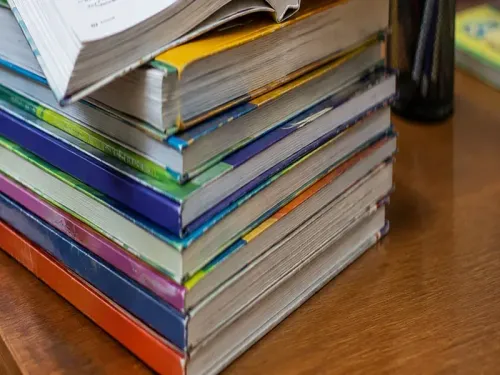
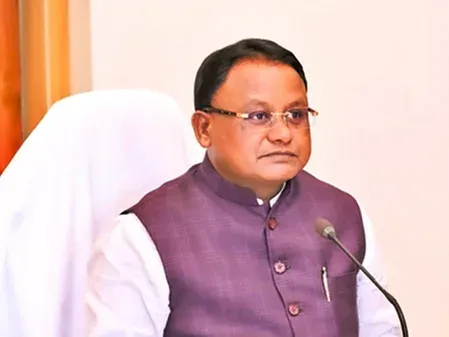
Odisha's newly introduced school textbooks for Classes I to VIII contained errors significant enough for Chief Minister Mohan Charan Majhi to order an accountability committee. Now, correction sheets are heading to teachers and a public feedback portal will shape the final revised editions — a rare instance of a state government opening its curriculum corrections to public scrutiny.
Key Takeaways
Odisha S&ME Department confirmed on 1 July 2025 that errors in new textbooks for Classes I to VIII are being corrected.
Chief Minister Mohan Charan Majhi ordered a committee led by the Development Commissioner to identify errors and fix official accountability.
Correction sheets will be distributed to teachers immediately to prevent disruption to classroom teaching.
Corrected content will be uploaded to the S&ME department's official website for public review and further suggestions.
The inclusion of 'Nimbuda Nimbuda' in a textbook was clarified as part of a music lesson on folk-song adaptation, not a content error.
Fully revised, error-free editions will be printed and distributed to students after all feedback is incorporated.
The Odisha School and Mass Education (S&ME) Department on Wednesday, 1 July 2025, confirmed that errors found in newly introduced school textbooks for Classes I to VIII are being addressed on priority, with correction sheets to be distributed to teachers immediately and fully revised, error-free editions to follow at the earliest. The assurance came from Commissioner-cum-Secretary N. Thirumala Naik at a media briefing in Bhubaneswar.
How the Errors Were Flagged
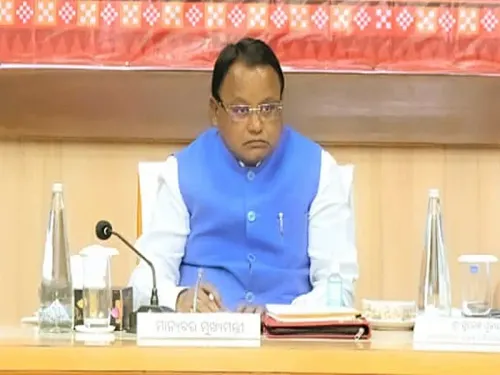
The new textbooks, introduced for the current academic year, drew public feedback pointing to factual and content errors. Taking the complaints seriously, Chief Minister Mohan Charan Majhi directed the formation of a dedicated committee to examine the lapses, identify the officials responsible, and recommend measures to prevent recurrences.
The committee, led by the Development Commissioner, has since submitted its report. Based on its findings, accountability has been fixed on the concerned officials and appropriate disciplinary action has been initiated, according to Naik.
Immediate Steps to Protect Classroom Learning
Since the textbooks are already in circulation among students, the department has opted for a two-track approach. Correction sheets covering all identified errors will be sent to teachers without delay, ensuring that classroom instruction is not disrupted while revised editions are being printed and prepared for distribution.
In parallel, the department is conducting a subject-expert review of the full textbook set to catch any remaining errors. Corrected portions will also be uploaded to the S&ME department's official website, where teachers, educationists, and the public can review the changes and submit additional suggestions before the final editions go to print.
The 'Nimbuda Nimbuda' Controversy Explained
One specific controversy centred on the inclusion of the popular Bollywood song 'Nimbuda Nimbuda' in an Odisha school textbook. Naik clarified that the lesson in question is part of the music curriculum and is designed to illustrate how traditional folk songs from various regions of India are adapted and popularised by contemporary musicians.
The chapter, he explained, uses examples from different regional folk traditions to promote cross-cultural learning and to show how local musical heritage gains wider recognition through modern adaptations. Naik urged that the reference be read strictly in the context of music education.
What Happens Next
After incorporating all valid public feedback gathered through the website, the government will publish completely revised, error-free textbooks and distribute them to students across Classes I to VIII as early as possible, Naik said. The episode has prompted the state to put in place a more structured review mechanism to prevent similar lapses in future academic cycles.
Point of View
But it also signals that the state's internal subject-expert pipeline was not robust enough to catch errors before circulation. If Odisha is serious about curriculum quality, the committee's recommendations must translate into a mandatory multi-stage peer-review protocol before any future textbook goes to press.
NationPress
30 Sept 2026
Frequently Asked Questions
What errors were found in Odisha school textbooks for 2025?
The newly introduced textbooks for Classes I to VIII received public feedback pointing to content and factual errors. The state government has not publicly enumerated every specific error, but a committee led by the Development Commissioner was formed to examine all flagged issues and fix accountability on the officials responsible.
What is the Odisha government doing to fix the textbook errors?
The S&ME Department is distributing correction sheets to teachers immediately so classroom teaching is not disrupted. Simultaneously, subject experts are reviewing the full textbook set, corrected content will be posted on the department's official website for public input, and fully revised editions will be printed and distributed once all feedback is incorporated.
Who is responsible for the Odisha textbook errors?
Based on the report of the committee constituted by Chief Minister Mohan Charan Majhi, responsibility has been fixed on the officials concerned and appropriate action has been initiated, according to Commissioner-cum-Secretary N. Thirumala Naik. Specific names or designations of the officials were not disclosed publicly.
Why was 'Nimbuda Nimbuda' included in an Odisha school textbook?
Commissioner-cum-Secretary N. Thirumala Naik clarified that the song appears in a music lesson designed to show how traditional regional folk songs are adapted and popularised by contemporary Bollywood musicians. The chapter uses examples from multiple regional folk traditions to promote cross-cultural learning and is not a content error, he said.
When will error-free Odisha school textbooks be available to students?
The department has not announced a specific date. Correction sheets will reach teachers immediately, while revised editions will be published and distributed 'as early as possible' after the public feedback window on the department's official website closes and all valid suggestions are incorporated.