Om Puri on conquering his English struggle at NSD
Synopsis
The man who became one of Indian cinema's most versatile actors once feared speaking English in class. Om Puri's confession about his Punjabi-medium roots, his inferiority complex at NSD, and how Ebrahim Alkazi's blunt but compassionate counsel reshaped him is a reminder that great actors are not born fluent — they are built through candour and grit.
Key Takeaways
Om Puri revealed he developed an inferiority complex at the National School of Drama due to his Punjabi-medium schooling.
NSD director Ebrahim Alkazi (who led the institution from 1962 to 1977 ) advised him to speak in Hindi for comfort but practise English daily through newspapers and conversation.
Classmate Naseeruddin Shah encouraged Om Puri to join the Film and Television Institute of India (FTII) in Pune .
Om Puri made his screen debut with the Marathi film 'Ghashiram Kotwal' in 1976 , based on Vijay Tendulkar 's play.
He went on to work in ten languages , including English, across a career spanning decades and multiple countries.
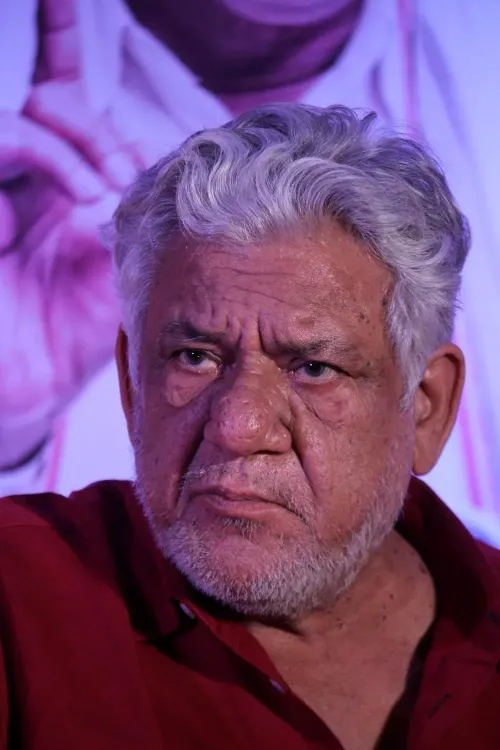
Late actor Om Puri once candidly recalled how a deep-seated struggle with the English language nearly overshadowed his formative years at the National School of Drama (NSD) in New Delhi — and how a pivotal conversation with its legendary director changed the course of his confidence.
The Struggle at NSD
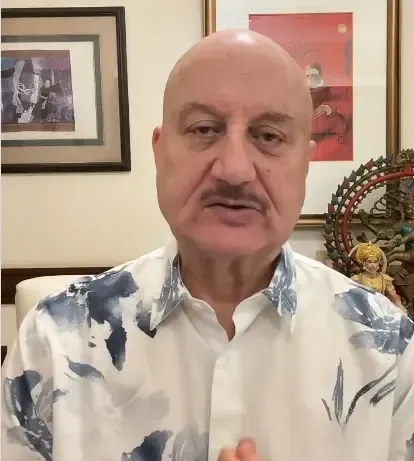
In a candid conversation with actor Anupam Kher on the show 'The Anupam Kher Show – Kucch Bhi Ho Sakta Hai', Om Puri opened up about the inferiority complex he developed at NSD. Having studied in Punjabi medium, he found himself at a disadvantage when instruction shifted to English. 'I was having a lot of difficulty with English in the National School of Drama because I studied in Punjabi medium, and here we were taught in English medium. There were some from the convent whose English was very good. So I suffered from complex,' he shared.
Ebrahim Alkazi's Turning Point
Ebrahim Alkazi, who served as director of the National School of Drama from 1962 to 1977 and is widely regarded as one of India's foremost theatre visionaries, reportedly came to know of Om Puri's difficulty through others. When Om Puri finally confessed his inability to communicate fluently in English, Alkazi's response was disarmingly practical: speak in Hindi if it brings comfort, but read newspapers daily and make the effort to converse with friends in English. 'Even if they laugh, don't worry,' Alkazi reportedly told him — advice that proved transformative.
Classmates Who Shaped His Path
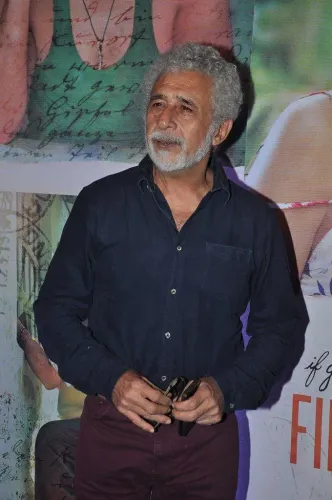
Om Puri's years at NSD were also marked by enduring friendships. His classmate Naseeruddin Shah encouraged him to enrol at the Film and Television Institute of India (FTII) in Pune, a decision that would sharpen his craft further and set both actors on trajectories that would define Indian parallel cinema.
A Career Spanning Languages and Continents
Om Puri made his screen debut with the 1976 Marathi film 'Ghashiram Kotwal', adapted from Vijay Tendulkar's celebrated play of the same name. Over a career spanning decades, he worked across ten languages — including English, Punjabi, Kannada, Telugu, Malayalam, Bengali, Gujarati, Urdu, and Marathi — a range that belied the linguistic anxiety of his student years.
Legacy on Screen
Among his most celebrated works are 'Aakrosh' (1980), 'Arohan' (1982), 'Ardh Satya' (1983), 'Jaane Bhi Do Yaaro' (1983), 'Chachi 420' (1997), 'Hera Pheri' (2000), and 'Chup Chup Ke' (2006). The man who once feared the English language went on to hold his own in Hollywood and British productions, completing one of Indian cinema's most quietly remarkable arcs.
Point of View
Only to be rescued by a director's pragmatic compassion rather than formal remediation, says something pointed about how elite arts institutions handle students from non-English backgrounds. Alkazi's advice — speak Hindi, read papers, brave the laughter — was essentially permission to be imperfect in public, which is, ironically, the core skill of acting. The story also underscores how much of India's parallel cinema generation was shaped not just by curriculum but by the specific human relationships within NSD's walls.
NationPress
16 Sept 2026
Frequently Asked Questions
Why did Om Puri struggle with English at the National School of Drama?
Om Puri struggled with English at NSD because he had studied in Punjabi medium, while instruction at the institution was conducted in English. He admitted to feeling a deep inferiority complex when comparing himself to classmates from convent schools with stronger English backgrounds.
What advice did Ebrahim Alkazi give Om Puri about English?
Ebrahim Alkazi, NSD's director from 1962 to 1977, advised Om Puri to speak in Hindi if it made him more comfortable, but to read newspapers regularly and converse with friends in English to improve. He reportedly told him: 'Even if they laugh, don't worry.'
Who encouraged Om Puri to join FTII in Pune?
Om Puri's NSD classmate Naseeruddin Shah encouraged him to enrol at the Film and Television Institute of India (FTII) in Pune, a move that further shaped both actors' careers in Indian parallel cinema.
What was Om Puri's acting debut?
Om Puri made his screen debut with the 1976 Marathi film 'Ghashiram Kotwal', which was based on Vijay Tendulkar's acclaimed Marathi play of the same name.
How many languages did Om Puri work in during his career?
Om Puri worked in at least ten languages over the course of his career, including English, Punjabi, Kannada, Telugu, Malayalam, Bengali, Gujarati, Urdu, and Marathi — a remarkable range for an actor who once struggled with English as a student.