ONGC drills second geothermal well in Ladakh's Puga Valley, 1 MW plant next
Synopsis
ONGC has drilled its second geothermal well in Ladakh's Puga Valley — faster and cheaper than the first — clearing the path for India's maiden 1 MW pilot geothermal plant. If it succeeds, Puga could become the launchpad for commercial geothermal power in a country that has chased the goal for decades without a breakthrough.
Key Takeaways
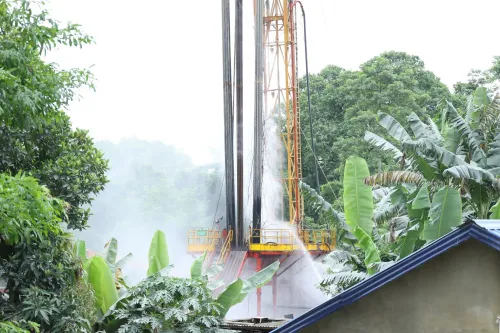
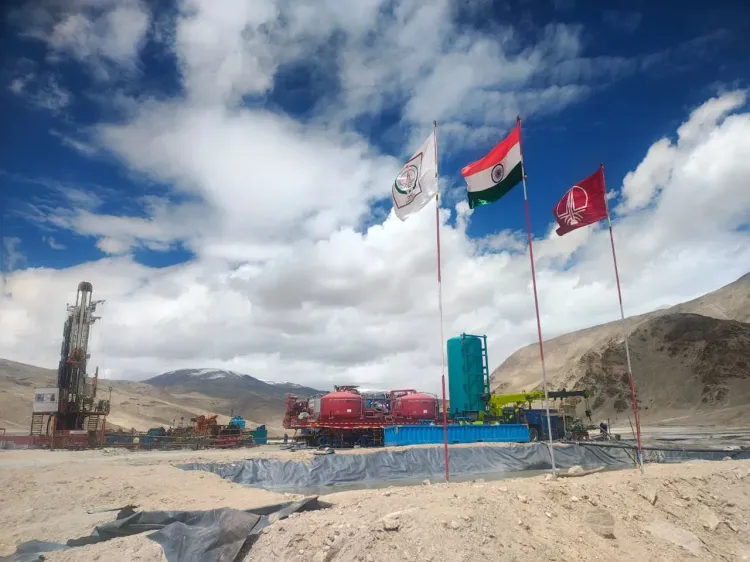
ONGC Energy Centre completed drilling its second geothermal well in Puga Valley, Ladakh on 12 July .
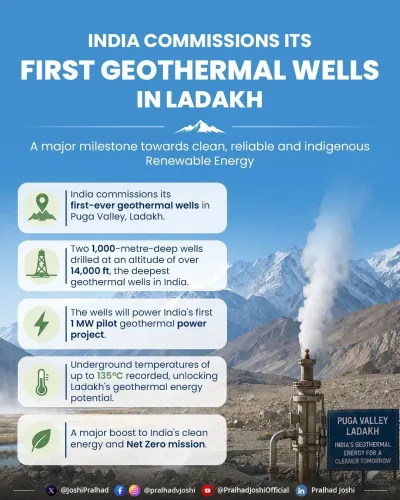
The well reached 1,000 metres depth at over 14,000 feet altitude, completed in approximately one month — faster and cheaper than the first well.
The first Puga well produced steam above the boiling point of water, confirming the field's resource potential.
The second well will support India's first 1 MWe pilot geothermal power plant , with longer-term baseload supply for Ladakh envisaged.
India's non-fossil fuel capacity has grown from 81 GW (2014) to 288 GW , against a 500 GW target by 2030 .
Oil and Natural Gas Corporation (ONGC) has completed drilling its second geothermal well in Puga Valley, Ladakh, marking a critical advance toward commissioning India's first pilot geothermal power plant. The milestone, announced on 12 July, brings the country closer to unlocking a round-the-clock, low-carbon energy source in one of its most resource-rich geothermal zones.
Key Developments
The well was drilled by ONGC Energy Centre, the corporation's research and development arm, to a depth of 1,000 metres at an altitude exceeding 14,000 feet — completed in approximately one month. According to an ONGC statement, both the timeline and cost improved upon the corporation's first geothermal drilling campaign in the same valley, signalling growing operational efficiency in extreme-altitude conditions.
The first well at Puga had already demonstrated the field's viability by producing steam at temperatures above the boiling point of water. The second well is designed to support the development of a 1-megawatt electric (MWe) pilot geothermal power plant — India's first of its kind — and is expected to lay the groundwork for commercial-scale exploitation of geothermal energy nationally.
Why Puga Valley Matters
The Puga geothermal field in eastern Ladakh has long been identified as India's most promising geothermal resource. Exploratory work has been carried out intermittently over the decades, but commercial geothermal power generation has yet to achieve a decisive breakthrough, held back by the technical and economic challenges of operating at high altitude and in remote terrain.
Geothermal energy draws heat from beneath the earth's surface to generate electricity and provide heating. Notably, unlike solar and wind power — which are weather-dependent — geothermal offers baseload electricity around the clock, making it particularly valuable for a region like Ladakh that faces extreme winters and grid isolation.
What the Government Said
ONGC's statement described the second well as capable of supporting not just the pilot plant but also the longer-term development of geothermal resources to provide reliable baseload power for Ladakh. The next phase of the project includes setting up the 1 MWe pilot plant, with deeper integration of generation, storage, and transmission systems envisaged for subsequent stages.
India's Broader Clean Energy Push
This development comes as India accelerates toward its target of 500 GW of non-fossil fuel energy capacity by 2030. The country's non-fossil fuel capacity has grown from 81 GW in 2014 to 288 GW at present — a rise of over 256%. Solar capacity has surged from 2.8 GW to 155 GW, while wind capacity has grown from 21 GW to 56.4 GW.
Geothermal, though a small contributor today, is increasingly seen as a strategic complement to variable renewables. If the Puga pilot succeeds, it could catalyse policy and investment interest in India's other identified geothermal zones. The next phase will demand tighter coordination across generation, storage, and grid infrastructure to absorb new capacity reliably.
Point of View
But the distance between a 1 MW pilot and commercial geothermal power remains vast — and India has been at the exploratory stage for decades. The real test is whether the pilot plant produces dispatchable electricity at a cost that justifies scaling, especially against rapidly falling solar and battery storage prices. Geothermal's value proposition — firm, weather-independent baseload — is real, but it will need a credible cost trajectory before it attracts private capital. Puga's success or failure will define whether India's geothermal ambition moves beyond a government research project.
NationPress
11 Oct 2026
Frequently Asked Questions
What has ONGC achieved with its second geothermal well in Ladakh?
ONGC has completed drilling its second geothermal well in Puga Valley, Ladakh, to a depth of 1,000 metres at over 14,000 feet altitude. The well was drilled in approximately one month, improving on the cost and timeline of the first campaign, and will support development of India's first 1 MW pilot geothermal power plant.
Where is India's most promising geothermal resource located?
The Puga geothermal field in eastern Ladakh is considered India's most promising geothermal resource. The field has shown strong potential, with the first ONGC well producing steam at temperatures above the boiling point of water.
What is the next phase of ONGC's geothermal project in Ladakh?
The next phase involves setting up a 1-megawatt electric (MWe) pilot geothermal power plant at Puga Valley. Longer-term plans include developing geothermal resources to provide reliable baseload electricity for Ladakh, with deeper integration of generation, storage, and transmission systems.
Why is geothermal energy significant for Ladakh?
Geothermal energy provides round-the-clock, low-carbon baseload power — unlike solar and wind, which depend on weather conditions. For Ladakh, a remote high-altitude region with extreme winters and limited grid connectivity, a reliable local power source holds strategic importance.
How does this fit into India's broader renewable energy targets?
India is targeting 500 GW of non-fossil fuel capacity by 2030. Non-fossil fuel capacity has already grown from 81 GW in 2014 to 288 GW, with solar rising from 2.8 GW to 155 GW and wind from 21 GW to 56.4 GW. Geothermal is seen as a strategic complement to variable renewables in the next phase of the energy transition.