Puri Witnesses ONGC-bp Deal to Boost Western Offshore Output
Synopsis
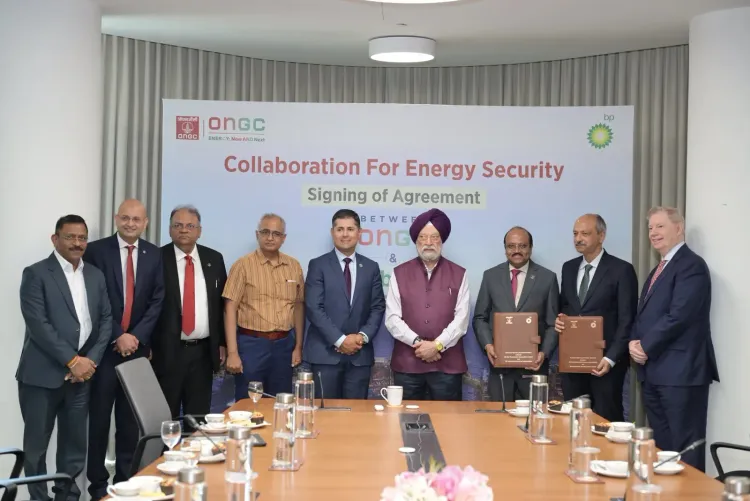
Union Petroleum Minister Hardeep Singh Puri on 25 June 2026 witnessed ONGC and bp sign a Technical Services Contract expanding their collaboration from Mumbai High to the broader Western Offshore Basin, aiming to deploy advanced technology to lift domestic hydrocarbon output and reduce India's crude import dependence.
Key Takeaways
ONGC and bp signed a Technical Services Contract on 25 June 2026 for fields across the Western Offshore Basin , witnessed by Union Petroleum Minister Hardeep Singh Puri .
The deal expands an earlier Technical Services Contract signed for Mumbai High in February 2025 , extending the collaboration to a wider set of mature offshore assets.
In the first year of the Mumbai High contract, the two companies moderated production decline and delivered growth through well optimisation and enhanced reservoir surveillance.
The new contract will deploy advanced technologies, global technical expertise, and best-in-class operating practices across India's mature hydrocarbon assets.
The initiative is framed as part of India's broader goal of reducing crude import bills and advancing energy self-sufficiency under PM Narendra Modi .
Quarterly production data from the Western Offshore Basin fields will be the key near-term metric to watch.
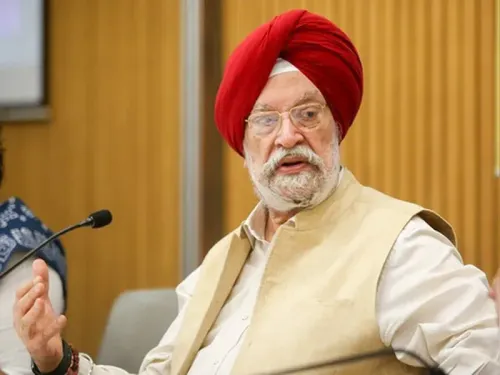
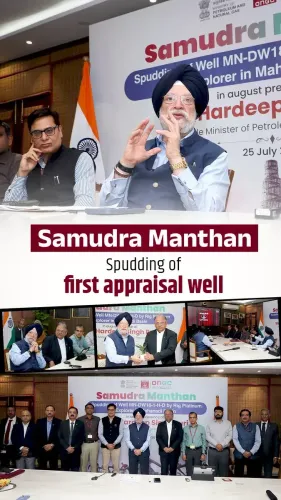
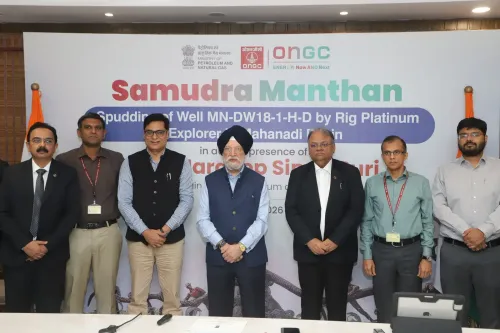
Union Petroleum Minister Hardeep Singh Puri on Thursday, 25 June 2026, witnessed the signing of a Technical Services Contract between India's Maharatna public sector energy company ONGC and global energy major bp, aimed at enhancing hydrocarbon production from fields in the Western Offshore Basin.
Context
The agreement marks a significant expansion of the ongoing ONGC-bp collaboration, extending it from Mumbai High — India's most storied offshore oilfield — to a broader set of fields across the Western Offshore Basin, one of India's most consequential hydrocarbon provinces. Minister Puri described the deal as one that 'will facilitate a wider deployment of advanced technologies, global technical expertise and best-in-class operating practices across some of India's most important mature hydrocarbon assets.'
The contract builds on an earlier Technical Services Contract signed by the two companies for Mumbai High in February 2025, which was the first formal framework for this partnership. According to the minister's post, during the first year of that collaboration, the two companies 'successfully moderated production decline and delivered growth through optimization of existing wells, enhanced surveillance and focused reservoir, well and facility-management initiatives.'
Policy Backdrop
India's Western Offshore Basin contains several mature producing fields that have faced natural production decline over decades. Arresting that decline and squeezing additional output from existing reservoirs has been a consistent priority for successive Indian governments, given the country's heavy dependence on crude oil imports.
Successive administrations have pursued technology-transfer and technical services arrangements with international energy majors as a cost-effective alternative to fresh exploration in frontier acreage. The ONGC-bp framework fits squarely within this policy lineage, leveraging bp's global reservoir-management and enhanced-recovery expertise alongside ONGC's operational footprint and subsurface data. Minister Puri linked the initiative explicitly to the goal of 'reducing our import bills and achieving energy self-sufficiency under the leadership of PM Sh Narendra Modi.'
Stakeholders and Impact
ONGC, as India's largest upstream oil and gas producer, stands to benefit most directly: even modest improvements in recovery rates across mature Western Offshore fields can translate into meaningful incremental output at the national level. For bp, the expanded contract deepens its footprint in Indian upstream operations at a time when global majors are actively seeking growth opportunities in emerging-market basins.
Downstream, any sustained increase in domestic crude production reduces the volume India must source from international markets, with direct implications for the country's current-account deficit and retail fuel pricing dynamics. The deal is therefore of interest not only to oil and gas public sector units but also to India's broader fiscal and energy-security planning apparatus, including the Ministry of Petroleum and Natural Gas and PMO India, both of which were tagged in the minister's post.
What's Next
Attention will now turn to quarterly production data from the Western Offshore Basin fields covered under the new contract, which will serve as the earliest measurable indicator of the agreement's impact. Analysts and policymakers will watch whether the production-decline moderation reported at Mumbai High in the first year of the earlier contract can be replicated — and potentially exceeded — across the wider asset base.
The government's stated ambition of energy self-sufficiency means that further technical services or enhanced-recovery agreements with international majors, in the Western Offshore Basin or in other sedimentary basins, remain a distinct possibility. The ONGC-bp model, if it continues to demonstrate measurable output gains, could serve as a template for similar arrangements across India's aging upstream portfolio.
Point of View
Incremental approach by the Indian government to sweat existing upstream assets rather than rely solely on new exploration cycles, which carry longer lead times and higher capital risk. By publicly associating himself with the signing, Minister Puri is reinforcing the Petroleum Ministry's narrative of tangible progress on energy self-sufficiency — a politically salient goal ahead of any national policy review. The explicit reference to first-year results at Mumbai High is notable: it suggests the government is confident enough in early operational data to use it as a proof-of-concept for scaling the model. If the Western Offshore expansion delivers comparable results, it could accelerate similar technical-services tie-ups across other mature Indian basins, reshaping the role of international majors in India's upstream sector.
NationPress
24 Sept 2026
Frequently Asked Questions
What is the ONGC-bp Technical Services Contract signed in June 2026?
It is an agreement signed on 25 June 2026 under which global energy major bp will provide technical services to ONGC to enhance hydrocarbon production from fields across India's Western Offshore Basin, expanding a collaboration that began with Mumbai High in February 2025.
What is the Western Offshore Basin?
The Western Offshore Basin is a key hydrocarbon province off India's west coast that contains several mature producing oilfields, including the iconic Mumbai High, operated primarily by ONGC.
What were the results of the earlier ONGC-bp Mumbai High contract?
According to Minister Hardeep Singh Puri, during the first year of the February 2025 Mumbai High contract, ONGC and bp moderated production decline and delivered growth through well optimisation, enhanced surveillance, and focused reservoir and facility-management initiatives.
How does the ONGC-bp deal help India's energy security?
By deploying advanced technology and global expertise on mature domestic fields, the deal aims to increase India's domestic crude output, which would reduce the volume of oil India needs to import and lower the country's crude import bill.
Who witnessed the signing of the ONGC-bp contract?
Union Petroleum Minister Hardeep Singh Puri witnessed the signing of the Technical Services Contract between ONGC and bp on 25 June 2026.