Operation Amistad: India's Venezuela earthquake relief wins widespread praise
Synopsis
India's Operation Amistad field hospital in earthquake-hit Venezuela is earning rare public praise — locals from La Guaira described the care as 'excellent' even as the death toll from the 24 June twin quakes climbed to 2,295. The mission is also one of India's most visible humanitarian deployments in Latin America, with the MEA amplifying testimonials directly on social media.
Key Takeaways
Operation Amistad , India's humanitarian mission to Venezuela , is receiving widespread public praise for professionalism and quality of medical care.
Twin earthquakes of magnitudes 7.2 and 7.5 struck Venezuela on 24 June , killing 2,295 people and injuring 11,267 , according to Venezuelan National Assembly President Jorge Rodriguez .
Indian humanitarian assistance — including a Field Hospital Unit , medicines, and medical equipment — arrived in Venezuela on 28 June .
A resident from La Guaira state described treatment at the Indian field hospital as 'excellent', with a patient undergoing surgery for a double fibula fracture sustained in the quake.
External Affairs Minister S.
Jaishankar expressed confidence the Indian Army medical contingent would bolster ongoing relief operations.
The MEA shared bilingual posts on X amplifying public testimonials, signalling active public diplomacy alongside the relief effort.
India's humanitarian relief mission, Operation Amistad, is drawing widespread acclaim across Venezuela for the professionalism and quality of medical care being delivered by the Indian team, weeks after twin earthquakes of magnitudes 7.2 and 7.5 struck the country on 24 June, killing over 2,000 people.
Public Response on the Ground
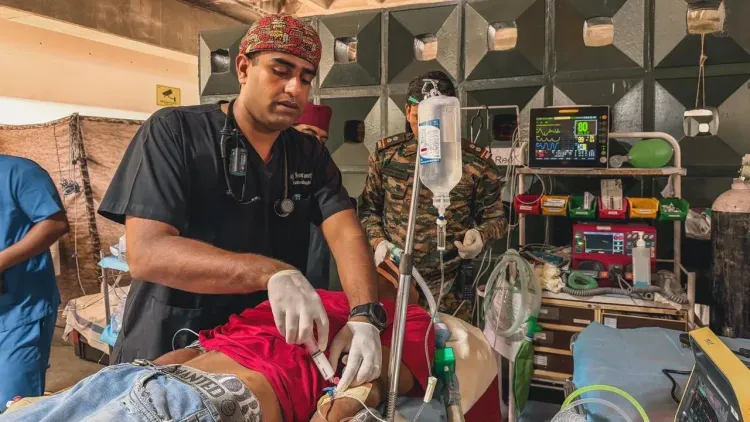
Venezuelans receiving treatment at the Indian Army field hospital have described the care as exceptional. A resident from La Guaira state, accompanying a patient with a double fibula fracture sustained during the earthquake, told reporters: 'We just arrived and have received immediate care. The whole service until now has been excellent.' The patient, she confirmed, was scheduled for surgery the same evening.
The Ministry of External Affairs (MEA) shared photographs and videos on social media showing patients receiving treatment at the field hospital and recounting their experiences — an unusual public diplomacy move that underscores the significance New Delhi places on the mission's visibility.
What Operation Amistad Involves
India launched Operation Amistad in direct response to the 24 June twin earthquakes, which Venezuelan National Assembly President Jorge Rodriguez confirmed have now claimed 2,295 lives and left 11,267 injured. Indian humanitarian assistance — comprising a Field Hospital Unit, relief supplies, medicines, and medical equipment — reached Venezuela on 28 June.
External Affairs Minister S. Jaishankar expressed confidence, upon announcing the deployment, that the Indian Army medical contingent and its supplies would meaningfully bolster ongoing post-earthquake relief operations in the country.
Diplomatic Signalling
The Indian Embassy in Venezuela posted a bilingual message on X, noting that #OperationAmistad had 'received widespread acclaim from the public for its professionalism and quality of service.' The use of both Spanish and English in the post signals a deliberate effort to engage Venezuelan civil society directly, not merely communicate through government channels.
This comes amid India's broader push to deepen its humanitarian footprint in Latin America — a region where its diplomatic presence has historically been limited relative to its global aid ambitions.
Scale of the Disaster
The 24 June earthquakes rank among the deadliest natural disasters to hit Venezuela in recent memory. With the death toll now confirmed at 2,295 and injuries exceeding 11,000, the relief burden on Venezuelan authorities remains immense. India's field hospital represents one of the more substantial bilateral medical deployments in the region since the disaster struck.
As recovery operations continue, the Indian medical contingent is expected to remain operational in Venezuela, with the MEA monitoring the mission's progress and coordinating further assistance as needed.
Point of View
A country outside its traditional sphere of influence, and then amplify civilian testimonials in Spanish on social media, reflects a maturing public diplomacy playbook. What mainstream coverage underplays is the strategic subtext: India is building goodwill in Latin America precisely where its diplomatic footprint has been thin. The real measure of the mission's success will not be the praise it receives this week, but whether it translates into durable bilateral ties — something past Indian humanitarian deployments have struggled to convert.
NationPress
1 Oct 2026
Frequently Asked Questions
What is Operation Amistad?
Operation Amistad is India's humanitarian relief mission to Venezuela, launched in response to twin earthquakes of magnitudes 7.2 and 7.5 that struck the country on 24 June. The mission includes an Indian Army field hospital unit, relief supplies, medicines, and medical equipment, which reached Venezuela on 28 June.
How deadly were the Venezuela earthquakes of 24 June?
The twin earthquakes killed 2,295 people and injured 11,267, according to Venezuelan National Assembly President Jorge Rodriguez. The disaster is among the deadliest natural events to hit Venezuela in recent memory.
Why is Operation Amistad receiving praise in Venezuela?
Venezuelans receiving treatment at the Indian Army field hospital have described the medical care as excellent. A resident from La Guaira state, whose family member was treated for a double fibula fracture sustained during the earthquake, said the service from arrival to treatment had been outstanding.
Who announced India's humanitarian deployment to Venezuela?
External Affairs Minister S. Jaishankar announced the deployment, expressing confidence that the Field Hospital Unit and accompanying medical supplies would strengthen ongoing post-earthquake relief efforts in Venezuela.
What is the significance of Operation Amistad for India's foreign policy?
The mission represents one of India's most visible humanitarian deployments in Latin America, a region where its diplomatic presence has historically been limited. The MEA's active social media amplification of civilian testimonials in both Spanish and English signals a deliberate public diplomacy push alongside the relief effort.