Operation Sindoor anniversary: India's anti-terror resolve 'strong as ever', says MoS Kirti Vardhan Singh at UN
Synopsis
A year after India launched Operation Sindoor in response to the Pahalgam massacre of 26 tourists, Minister of State Kirti Vardhan Singh took India's counter-terror message to the United Nations — where the Security Council had already condemned the attack. The commemoration is as much a diplomatic statement as a tribute: India is signalling that its decisive military response set a new benchmark for how it handles state-sponsored terrorism.
Key Takeaways
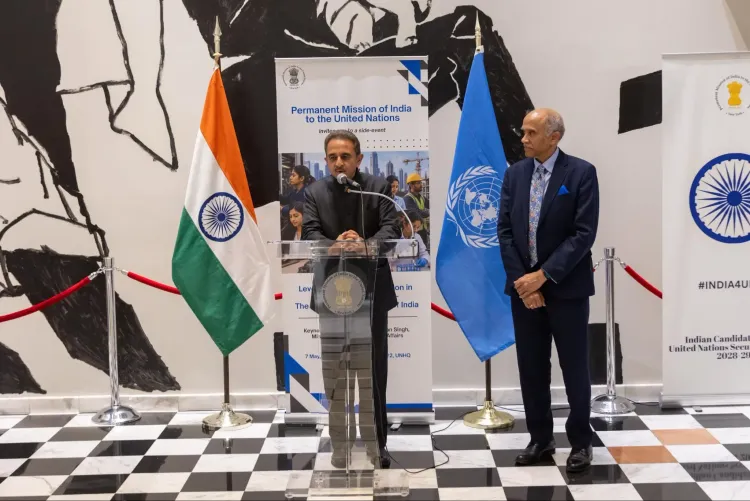
MoS Kirti Vardhan Singh led a commemoration of Operation Sindoor at the United Nations on 8 May 2026 , marking its first anniversary.
Operation Sindoor was launched on 7 May 2025 after Pakistan-based terrorists killed 26 Indian tourists in Pahalgam .
The Resistance Front (affiliated with UN-sanctioned Lashkar-e-Taiba ) and Jaish-e-Mohammed were targeted during the four-day operation.
Pakistan's DGMO Major General Kashif Abdullah requested a ceasefire after India destroyed several Pakistani air force and missile bases .
The UN Security Council condemned the Pahalgam massacre, calling terrorism "criminal and unjustifiable" regardless of motivation.
India's Minister of State for External Affairs Kirti Vardhan Singh on Thursday, 8 May 2026, led a commemoration at the United Nations marking the first anniversary of Operation Sindoor, reaffirming that India's resolve to fight terrorism remained "as strong as ever." The event, held at India's UN Mission, paid tribute to the bravery and professionalism of India's armed forces in the landmark cross-border counter-terror operation.
Background: What Triggered Operation Sindoor
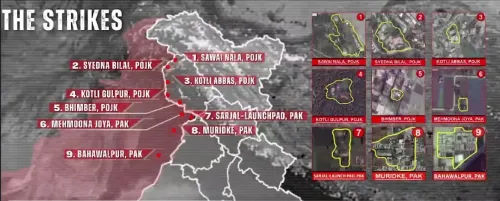
On 7 May 2025, India launched Operation Sindoor in direct response to a devastating terrorist attack in Pahalgam, where Pakistan-based terrorists crossed into India and killed 26 Indian tourists. The Resistance Front, a group affiliated with Lashkar-e-Taiba — a terrorist outfit sanctioned by the United Nations — claimed responsibility for the massacre. India's military operation also targeted the Jaish-e-Mohammed terrorist outfit, striking terrorist infrastructure across Pakistan over a four-day operation.
How the Conflict Escalated
The operation escalated into a broader military confrontation when Pakistan's armed forces intervened to defend the terrorist groups and launched attacks against India. India successfully repelled those attacks and moved into a commanding position. It was at this point that Pakistan's Director General of Military Operations (DGMO) Major General Kashif Abdullah contacted his then Indian counterpart, Lieutenant General Rajiv Ghai, requesting a ceasefire. By then, according to officials, several Pakistani air force and missile bases had been destroyed by India.
What the UN Security Council Said
The UN Security Council condemned the Pahalgam massacre in a press statement, declaring that "terrorism in all its forms and manifestations constitutes one of the most serious threats to international peace and security." The Council further stated that terrorism is "criminal and unjustifiable, regardless of their motivation, wherever, whenever and by whoever committed" — language widely seen as an implicit rebuke of Pakistan's role in harbouring the groups responsible.
India's Message at the UN
At Thursday's commemoration, Minister Singh underscored the unparalleled bravery of India's armed forces and reiterated New Delhi's uncompromising stance on cross-border terrorism. The event served not only as a tribute but also as a diplomatic signal — reinforcing India's position on the global stage that state-sponsored terrorism will be met with decisive force. This comes amid continued international scrutiny of Pakistan's record on dismantling terrorist infrastructure within its borders.
As the anniversary of Operation Sindoor is marked at the United Nations, New Delhi's message to the international community remains unambiguous: accountability for terrorism, wherever it is sheltered, is non-negotiable.
Point of View
Not merely a memorial exercise. By anchoring the anniversary in New York, New Delhi is internationalising its counter-terror narrative at the very institution that sanctioned Lashkar-e-Taiba — making it harder for Pakistan's allies to frame the operation as bilateral aggression. What mainstream coverage underplays is the significance of Pakistan's DGMO requesting the ceasefire: it effectively conceded military initiative to India, a shift in the subcontinent's deterrence calculus that will shape strategic posturing for years. The UN Security Council's condemnation of the Pahalgam attack, while diplomatically significant, stops short of naming Pakistan — a gap that India's UN diplomacy is clearly working to close.
NationPress
21 Sept 2026
Frequently Asked Questions
What is Operation Sindoor and why is it being commemorated at the UN?
Operation Sindoor was a four-day Indian military operation launched on 7 May 2025 targeting terrorist infrastructure in Pakistan, in retaliation for the Pahalgam attack that killed 26 Indian tourists. Its first anniversary was commemorated at the United Nations on 8 May 2026 by India's Minister of State for External Affairs Kirti Vardhan Singh, reaffirming India's commitment to fighting terrorism on the global stage.
Who carried out the Pahalgam attack that triggered Operation Sindoor?
The Resistance Front, a group affiliated with the UN-sanctioned terrorist outfit Lashkar-e-Taiba, claimed responsibility for the Pahalgam attack. India also targeted Jaish-e-Mohammed during Operation Sindoor.
How did Pakistan respond during Operation Sindoor?
Pakistan's armed forces intervened to defend the terrorist groups and launched attacks against India. India repelled those attacks, after which Pakistan's DGMO Major General Kashif Abdullah requested a ceasefire from his then Indian counterpart Lieutenant General Rajiv Ghai.
What did the UN Security Council say about the Pahalgam attack?
The UN Security Council condemned the Pahalgam massacre, stating that terrorism in all its forms is one of the most serious threats to international peace and security, and that it is criminal and unjustifiable regardless of motivation, location, or perpetrator.
What was the outcome of Operation Sindoor?
India destroyed several Pakistani air force and missile bases during the four-day operation and repelled Pakistani military counterattacks, putting India in a commanding position before a ceasefire was requested by Pakistan's DGMO.