Christians in Pakistan Face Untouchability, Mob Violence: Damning Report
Synopsis
A new report reveals Pakistan's Christians face untouchability, blasphemy law abuse, forced conversions of girls as young as 12, and extrajudicial killings — with 307 blasphemy accusations and 26 extra-judicial deaths since the 1990s. The US Commission on International Religious Freedom has called for Pakistan to be sanctioned.
Key Takeaways
307 Christians were accused of blasphemy in Pakistan between 1987 and 2024 , with 26 killed extra-judicially between 1994 and 2024 following such allegations.
A Pakistani court in April 2025 upheld the marriage of 13-year-old Christian girl Maria Shahbaz to a 30-year-old Muslim man , despite her father's kidnapping petition.
At least 137 Christian girls aged 12–15 years were forcibly converted and married in Pakistan between January 2021 and December 2024 , per the Centre for Social Justice.
On March 4, 2025 , 21-year-old Christian farmworker Marcus Masih was killed by his Muslim employers in Sargodha, Punjab .
The USCIRF's March 2025 report recommended redesignating Pakistan as a 'Country of Particular Concern' and urged sanctions including asset freezes and visa restrictions on Pakistani officials.
Christians in Pakistan are subjected to caste-based untouchability , referred to by derogatory labels such as Isai, Chuhra, and Chamaar , with discrimination enforced in food, water, education, and employment.
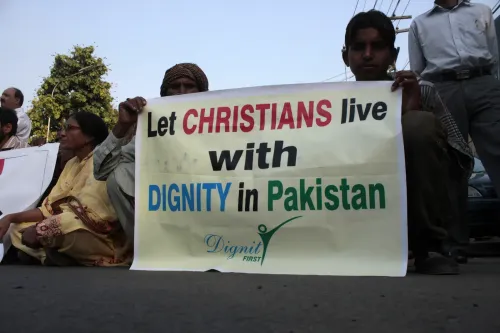
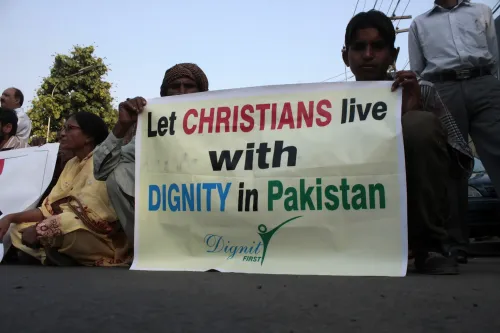
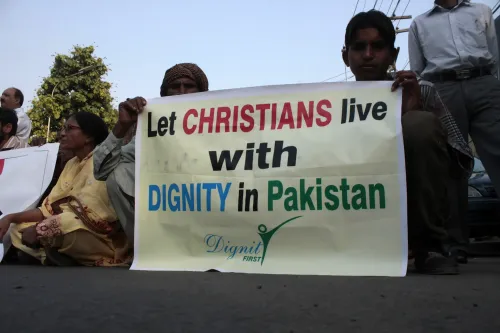
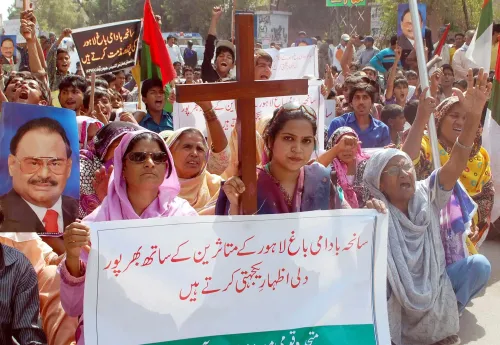
A damning new report has revealed that Christians in Pakistan continue to endure severe social discrimination, untouchability, and systemic oppression, driven by the persistent misuse of blasphemy laws, deep-rooted societal intolerance, and recurring mob violence. The report, published in Sri Lanka Guardian and authored by Sanchita Bhattacharya, a Research Fellow at the Institute for Conflict Management, warns that the Pakistani state's response has remained largely reactive and insufficient, with perpetrators facing little to no accountability.
A Pattern of Violence Against Christians
The report documents a disturbing series of recent incidents that illustrate the daily dangers faced by Pakistan's Christian minority. On April 11, 2025, a 25-year-old Christian woman from Punjab province was allegedly raped by a local contractor and his accomplice inside her own village — a stark reminder of how vulnerable minority women remain in rural Pakistan.
On March 26, police in Lahore, Punjab, attempted to classify the death of a Christian man, Iftikhar Masih, as a suicide, claiming his body was found hanging from a ceiling fan by a scarf. Rights groups have raised serious doubts about the official narrative. Just weeks earlier, on March 4, a 21-year-old Christian farmworker, Marcus Masih, was killed by his Muslim employers in Sargodha, Punjab — one of at least several such killings in recent months.
Blasphemy Laws Used as Weapons Against Minorities
Pakistan's blasphemy laws have long been criticised by international human rights bodies as tools of persecution rather than protection. According to the report, these laws are routinely weaponised for personal disputes, professional rivalry, land grabs, and religious hostility targeting Christians and other minorities.
The numbers are staggering: at least 307 Christians were accused of blasphemy in Pakistan between 1987 and 2024. More alarmingly, 26 Christians were killed extra-judicially between 1994 and 2024 following blasphemy allegations — deaths that occurred without trial, conviction, or any form of judicial process. Under Pakistani law, a person charged with blasphemy can be immediately detained on the basis of a complainant's testimony alone, making false accusations a low-risk, high-reward tool for bad actors.
This systemic abuse connects directly to broader patterns of minority persecution. Notably, the infamous Jaranwala incident of August 2023, in which a Christian neighbourhood was torched by a mob following blasphemy allegations, demonstrated how a single accusation can trigger mass violence with near-total impunity for the perpetrators.
Forced Conversions and Child Marriages: A Hidden Crisis
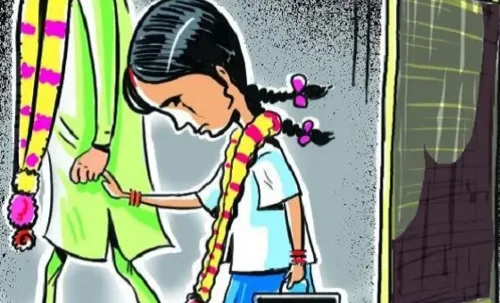
Christian girls in Pakistan face a particularly harrowing threat: abduction, forced conversion to Islam, and coerced marriage. Earlier in April 2025, widespread outrage erupted after a Pakistani court upheld the marriage of 13-year-old Christian girl Maria Shahbaz to a 30-year-old Muslim man. Her father had filed a petition stating she was kidnapped in July 2025 and forcibly converted.
The case is far from isolated. In November 2024, the Centre for Social Justice reported that at least 137 Christian girls were forcibly converted and married in Pakistan between January 2021 and December 2024, with victims typically aged between 12 and 15 years. Despite international condemnation, Pakistani legislative efforts to criminalise forced conversions have repeatedly stalled under pressure from religious hardliners.
Caste-Based Untouchability and Social Exclusion
Beyond physical violence, the report highlights a pervasive culture of social untouchability imposed on Pakistani Christians. They are routinely referred to by derogatory caste labels — Isai, Chuhra, and Chamaar — terms that carry deep stigma rooted in South Asia's caste hierarchy. Bhattacharya notes that practices of 'purity and pollution' are strictly enforced against Christians in matters of food, water, education, and employment.
This social exclusion effectively traps Christian communities in cycles of poverty and marginalisation. Many are confined to menial occupations — sweeping, sanitation, and agricultural labour — with limited access to quality education or upward mobility. The structural discrimination mirrors, in many ways, the treatment historically faced by Dalits in South Asia, yet receives far less international attention.
US Commission Calls for Pakistan to Be Designated a Country of Particular Concern
The international community has taken note. Based on conditions in 2025, the US Commission on International Religious Freedom (USCIRF), in its annual report released in March 2025, recommended that the US Department of State redesignate Pakistan — along with 12 other nations — as a 'Country of Particular Concern' (CPC) under the International Religious Freedom Act of 1998 (IRFA).
USCIRF further urged the US government to impose targeted sanctions on Pakistani officials and agencies responsible for severe violations of religious freedom, including asset freezes and visa restrictions. Pakistan has held CPC status in previous years, but the designation has historically had limited practical impact on Islamabad's domestic policies toward minorities.
As global scrutiny intensifies and documented cases of persecution mount, the critical question remains whether international pressure will translate into meaningful reform — or whether Pakistan's Christian community will continue to bear the weight of a system designed to marginalise them. With the USCIRF report now formally on the US State Department's desk, the coming months will test whether diplomatic consequences follow documented evidence.
Point of View
State-tolerated system of persecution that combines legal weaponisation through blasphemy laws, social untouchability rooted in caste, and physical violence that goes unpunished. What makes this particularly damning is the pattern: courts upholding child marriages, police classifying suspicious deaths as suicides, and mobs burning neighbourhoods with impunity. While Pakistan presents itself as a modern Islamic republic on the world stage, the USCIRF's repeated calls for CPC designation expose a yawning gap between its international posture and domestic reality. India and the broader international community must amplify these documented facts — not as geopolitical point-scoring, but as a moral imperative for the protection of religious minorities across South Asia.
NationPress
18 Sept 2026
Frequently Asked Questions
What discrimination do Christians face in Pakistan in 2025?
Christians in Pakistan face severe social discrimination including caste-based untouchability, derogatory labelling, exclusion from education and employment, blasphemy law abuse, forced conversions, and mob violence. A 2025 report by the Institute for Conflict Management documents multiple recent murders, rapes, and forced marriages targeting the Christian community.
How many Christians have been accused of blasphemy in Pakistan?
At least 307 Christians were accused of blasphemy in Pakistan between 1987 and 2024, according to the report published in Sri Lanka Guardian. Additionally, 26 Christians were killed extra-judicially between 1994 and 2024 following blasphemy allegations, without any trial or conviction.
What is the Maria Shahbaz case in Pakistan?
Maria Shahbaz is a 13-year-old Christian girl whose forced marriage to a 30-year-old Muslim man was upheld by a Pakistani court in April 2025. Her father filed a petition stating she was kidnapped in July 2025 and forcibly converted to Islam, sparking widespread outrage among Christian communities.
What has the USCIRF said about Pakistan's treatment of religious minorities?
The US Commission on International Religious Freedom (USCIRF), in its March 2025 annual report, recommended that the US State Department redesignate Pakistan as a 'Country of Particular Concern' under the International Religious Freedom Act. USCIRF also urged sanctions including asset freezes and visa restrictions against Pakistani officials responsible for religious freedom violations.
How are blasphemy laws misused against Christians in Pakistan?
Pakistan's blasphemy laws allow immediate detention of the accused based solely on a complainant's testimony, making them easy to weaponise. They are reportedly used for personal disputes, land grabs, professional rivalry, and religious hostility — with Christians and other minorities disproportionately targeted.