Pakistan crypto regulator calls for separate Sharia review of digital assets
Synopsis
Pakistan's crypto regulator is pushing back — carefully — against a sweeping fatwa that declared cryptocurrencies un-Islamic. PVARA Chairman Bilal bin Saqib wants each digital asset class assessed on its own Sharia merits, setting up a high-stakes dialogue between Islamic scholars and fintech regulators that could define how Muslim-majority nations govern digital finance.
Key Takeaways
PVARA Chairman Bilal bin Saqib met scholar Mufti Taqi Usmani and called for individual Sharia assessments of different digital asset classes.
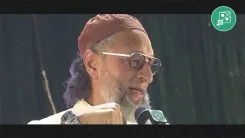
A fatwa by Mufti Taqi Usmani and scholars of Jamia Darul Uloom Karachi's Darul Ifta declared cryptocurrencies do not qualify as 'maal' (wealth) under Sharia.
The fatwa extended beyond speculation to everyday commerce, ruling that crypto-funded purchases of goods and digital services are not lawfully valid.
Pakistan's Virtual Assets Act was passed in March 2025 , making PVARA a permanent federal regulator with licensing powers.
Scholars acknowledged regulators can distinguish between unbacked cryptocurrencies , stablecoins , and tokenised securities under Sharia.
An agreement with World Liberty Financial , linked to the family of US President Donald Trump , reportedly gave quasi-official status to a foreign stablecoin ecosystem in Pakistan.
Bilal bin Saqib, Chairman of the Pakistan Virtual Assets Regulatory Authority (PVARA), has called for individual Sharia assessments of different digital asset classes, following a meeting with prominent Islamic scholar Mufti Taqi Usmani, whose recent fatwa broadly rejected cryptocurrency transactions. The development signals a growing tension between Pakistan's expanding crypto regulatory framework and traditional Islamic finance jurisprudence.
What the PVARA Chairman Said
Saqib described his meeting with Usmani as a 'constructive discussion' focused on the Sharia status of digital assets. He argued that blockchains, stablecoins, tokenised real-world assets, and other digital instruments represent distinct technologies with varied use cases and 'merit careful technical assessment alongside rigorous Shariah examination, rather than being viewed through a single lens.' He also called for sustained dialogue among religious scholars, regulators, and industry experts as Pakistan develops its approach to emerging financial technology.
The Fatwa That Triggered the Debate
The exchange followed a fatwa issued the previous week by Mufti Taqi Usmani and other scholars of Jamia Darul Uloom Karachi's Darul Ifta, which declared that cryptocurrencies do not qualify as 'maal' — or wealth — under Sharia, describing them instead as fictitious numerical entries. The ruling went further than merely targeting speculative crypto trading. When asked whether purchases of goods and services — such as a book or an online course — made with cryptocurrency are valid, the scholars ruled they do not constitute a lawful transfer of ownership. Buyers were directed to return physical goods and delete purchased digital content, significantly broadening the fatwa's practical implications.
Where Regulators and Scholars Agree
Despite the apparent conflict, both Saqib and Usmani reportedly agreed on the need to protect Pakistanis from 'fraud, exploitation, and financial harm.' Notably, scholars have indicated that regulators have room to distinguish between unbacked cryptocurrencies, fiat-backed stablecoins, and tokenised securities — a distinction that could form the basis for a more nuanced Sharia framework tailored to different asset types.
Pakistan's Evolving Crypto Landscape
Pakistan's parliament passed the Virtual Assets Act in March 2025, formally establishing PVARA as a permanent federal regulator with authority to license exchanges, custodians, and token issuers. The State Bank of Pakistan had historically maintained a cautious stance on cryptocurrency. However, according to reports, an agreement with World Liberty Financial — a crypto business linked to the family of US President Donald Trump — reportedly extended quasi-official legitimacy to a foreign-controlled stablecoin ecosystem, adding a geopolitical dimension to the domestic regulatory debate.
What Comes Next
The PVARA's push for asset-by-asset Sharia scrutiny could set a precedent for how Muslim-majority nations reconcile Islamic finance principles with the rapidly evolving digital asset sector. Whether Pakistan's religious establishment and crypto regulators can arrive at a workable consensus will likely shape the country's position as a regional hub for virtual asset activity.
Point of View
Including book purchases and online courses, makes this far harder to contain than a simple ban on speculation. The World Liberty Financial angle is underreported: if a Trump-linked stablecoin ecosystem already has quasi-official status in Pakistan, the Sharia debate is no longer purely theological — it is geopolitical.
NationPress
12 Oct 2026
Frequently Asked Questions
What did Pakistan's crypto regulator say about Sharia and digital assets?
PVARA Chairman Bilal bin Saqib called for separate, individual Sharia assessments for different types of digital assets — including blockchains, stablecoins, and tokenised real-world assets — rather than a blanket ruling. He made the statement after meeting Islamic scholar Mufti Taqi Usmani, whose recent fatwa broadly rejected cryptocurrency transactions.
What did the fatwa by Mufti Taqi Usmani say about cryptocurrency?
The fatwa, issued by Mufti Taqi Usmani and scholars of Jamia Darul Uloom Karachi's Darul Ifta, declared that cryptocurrencies do not qualify as 'maal' (wealth) under Sharia and are merely fictitious numerical entries. It also ruled that purchases of goods and services made with cryptocurrency — including physical books and online courses — do not constitute a lawful transfer of ownership.
What is PVARA and what powers does it have?
The Pakistan Virtual Assets Regulatory Authority (PVARA) is a permanent federal regulator established under the Virtual Assets Act passed by Pakistan's parliament in March 2025. It has the authority to license crypto exchanges, custodians, and token issuers.
Do Islamic scholars allow any distinction between types of crypto assets?
According to reports, scholars have indicated that regulators have room to distinguish between unbacked cryptocurrencies, fiat-backed stablecoins, and tokenised securities. This distinction could form the basis for a more nuanced Sharia-compliant framework for digital assets in Pakistan.
How does the World Liberty Financial deal affect Pakistan's crypto stance?
According to reports, an agreement between Pakistan and World Liberty Financial — a crypto business linked to the family of US President Donald Trump — reportedly extended quasi-official legitimacy to a foreign-controlled stablecoin ecosystem, even as the State Bank of Pakistan had historically taken a cautious stance on cryptocurrency.