Pakistan's Climate Crisis: Alarming Heat-Related Deaths Forecasted by 2050
Synopsis
A new report reveals that by 2050, Pakistan could see 51 additional deaths per 100,000 people due to climate change, highlighting the urgent need for adaptation strategies in the face of rising temperatures.
Key Takeaways
Projected increase of 51 deaths per 100,000 people in Pakistan by 2050.
Over 100,000 additional deaths globally, with one-third in Pakistani cities.
Major cities like Faisalabad could see a loss of 9,400 lives annually.
Lack of access to adaptation financing exacerbates the crisis.
Government initiatives are criticized for being inadequate.
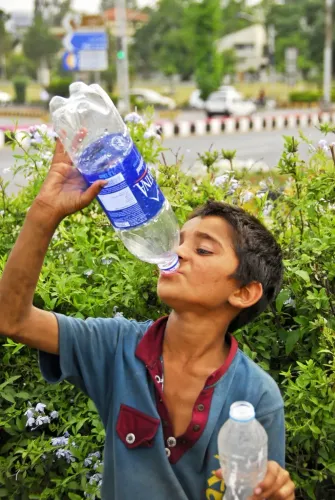
Islamabad, March 26 (NationPress) - By the year 2050, Pakistan is anticipated to see a significant rise in mortality rates, with an estimated increase of 51 deaths per 100,000 individuals as a result of escalating global temperatures driven by fossil fuel emissions. Low and middle-income nations are expected to account for approximately 90% of premature deaths linked to climate change, as reported by local media.
A recent analysis conducted by the Climate Impact Lab at the University of Chicago presents the first detailed projections of how rising temperatures could affect mortality rates, aiming to assist in adaptation planning. This study utilized highly localized data from various regions worldwide.
The findings suggest that lower-income countries may face a staggering number of casualties, with around 391,000 deaths per year compared to 39,000 deaths in wealthier nations, despite having similar population sizes. This stark contrast highlights the devastating impact of heatwaves on the Global South, as reported by the Pakistani daily Dawn.
Both Pakistan and Burkina Faso are expected to endure the harshest effects of climate change, with Pakistani cities predicted to be among the most affected.
While affluent cities such as Phoenix and Madrid are projected to experience annual fatalities of 600 and 525 respectively, Faisalabad, Pakistan, is expected to suffer an additional loss of 9,400 lives each year due to rising temperatures, according to the study.
Eight major cities in Pakistan, including Faisalabad, Multan, Gujranwala, Lahore, Peshawar, Hyderabad, Rawalpindi, and Islamabad, rank among the top 15 urban areas in low and middle-income countries likely to witness an uptick in mortality rates by 2050 compared to averages from 2001-2010, as reported by Dawn.
This projection indicates that heat-related fatalities in Pakistan may surpass current rates associated with tuberculosis, chronic obstructive pulmonary disease (COPD), and stroke.
According to the study, when examining 301 cities worldwide anticipated to see an increase in temperature-related deaths by 2050, over 100,000 additional lives could be lost annually, with approximately one-third of those fatalities occurring in Pakistani cities.
Reports indicate that these deaths are likely to happen due to the lack of adaptation financing available to Pakistani cities in order to deal with rising temperatures.
Mariam Saleh Khan, a climate scientist from the Islamabad-based think tank Weather and Climate Services, noted that several scientific studies predict that the humid heat in certain regions of Pakistan could exceed human survivability limits, adversely affecting productivity and overall health.
“Given that Pakistan is one of the fastest urbanizing nations in South Asia, the current projections from the Climate Impact Lab should be viewed as conservative estimates,” she stated, highlighting Pakistan's insufficient preparations for the impending crisis.
“Following the heatwaves of 2022, the government did initiate efforts such as developing a few heat action plans at local and provincial levels, but these measures lack robust scientific foundations; they are essentially basic heat advisories,” she criticized, expressing concerns about Pakistan's National Adaptation Plan 2023.
Point of View
It's crucial to underscore the gravity of the climate crisis facing Pakistan. The projections presented in this study highlight a dire situation that demands immediate action. With a significant portion of the population at risk, it is imperative for both government and civil society to prioritize adaptation measures to mitigate the impending disaster.
NationPress
1 Oct 2026
Frequently Asked Questions
What is the projected increase in mortality for Pakistan by 2050?
Pakistan is projected to experience a net increase of 51 deaths per 100,000 people by 2050 due to rising global temperatures.
How many additional lives are expected to be lost annually in Pakistani cities?
The study indicates that over 100,000 additional lives could be lost annually worldwide, with approximately one-third of those fatalities occurring in Pakistani cities.
What factors contribute to the rising mortality rates in Pakistan?
The rise in mortality rates is attributed to climate change, specifically due to heatwaves exacerbated by fossil fuel emissions and a lack of adaptation financing.
Which Pakistani cities are most affected by climate change?
Cities such as Faisalabad, Multan, Gujranwala, Lahore, Peshawar, Hyderabad, Rawalpindi, and Islamabad are among the top urban centers likely to experience increased mortality rates.
What actions have been taken by the government to address this issue?
The government has initiated some heat action plans; however, these measures are criticized for lacking robust scientific foundations.