Pakistan floods, drought and heat expose deep institutional failures: Report
Synopsis
A new report warns that Pakistan's overlapping climate crises — floods, drought, heatwaves and water stress — are not natural inevitabilities but the product of fragmented governance and chronic underpreparedness. The argument landed with fresh force on Sunday, as rain-triggered deaths in Khyber Pakhtunkhwa added to a mounting toll that experts say will only grow without structural reform.
Key Takeaways
A report warns that Pakistan's floods, droughts and rising temperatures repeatedly expose institutional failures in disaster preparedness and governance.
Policymakers gathered at the Breathe Pakistan climate conference in Islamabad even as critics say the country remains stuck in reactive disaster management.
The UNDP and World Bank have flagged rising climate exposure due to glacial melt, temperature rise and erratic monsoons, with major inter-provincial coordination gaps.
At least 7 people were killed and 33 injured in rain, wind and lightning incidents across Khyber Pakhtunkhwa on Sunday , per the PDMA .
The Pakistan Meteorological Department has forecast further rainfall in upper Khyber Pakhtunkhwa , PoGB and PoK , while the rest of the country faces hot and dry conditions.
Pakistan's recurring floods, rising temperatures, worsening drought conditions and mounting water stress have repeatedly laid bare the institutional failures that leave vulnerable communities trapped in cycles of destruction and recovery, according to a recent report. The findings gained fresh urgency as policymakers convened at the Breathe Pakistan climate conference in Islamabad, even as critics argued the country remains locked in reactive disaster management rather than long-term climate preparedness.
Scale of Climate Vulnerability
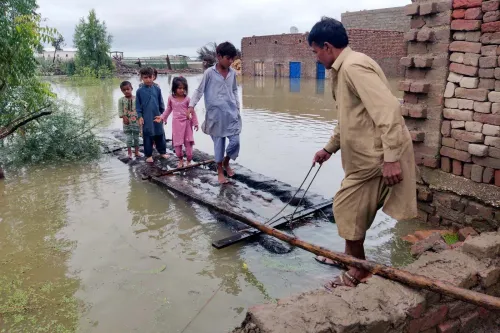
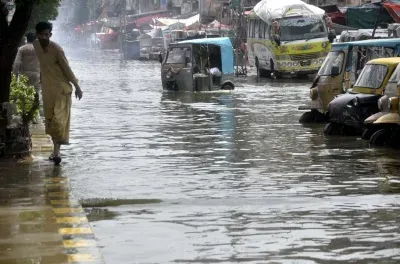
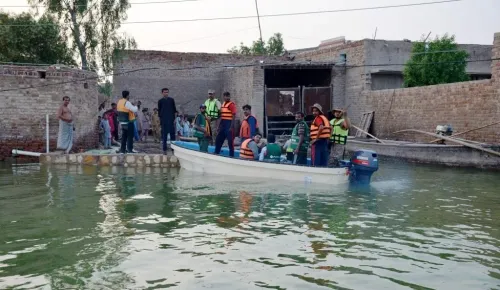
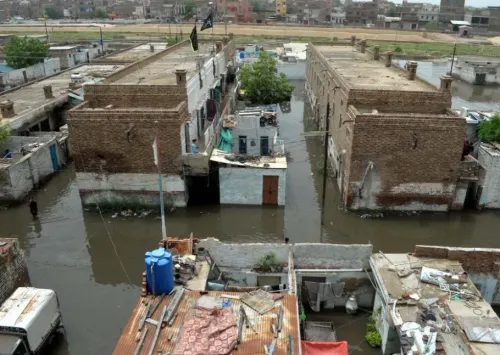
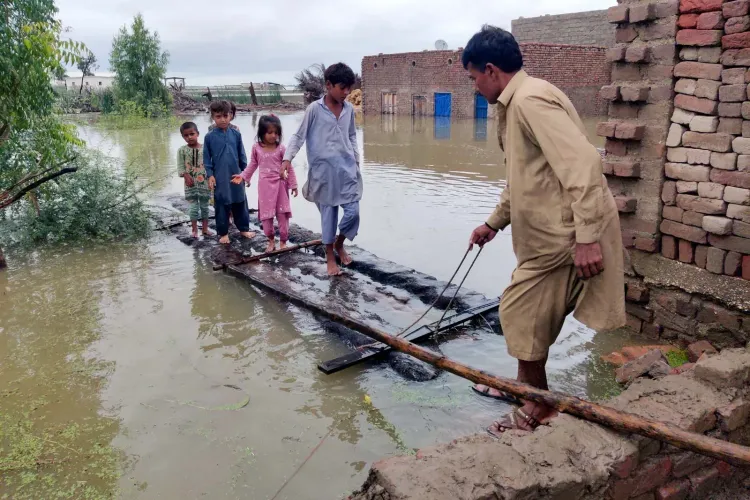
Pakistan's exposure to climate extremes came into sharp global focus during floods that devastated large parts of the country in recent years. Entire villages in Sindh, Balochistan and Punjab were submerged, millions of residents displaced, and critical infrastructure — roads, crops, schools and hospitals — severely damaged as authorities struggled to mount an adequate response.
International bodies including the United Nations Development Programme (UNDP) and the World Bank have repeatedly warned that Pakistan's exposure to climate disasters is intensifying due to rising temperatures, glacial melt and erratic monsoon patterns. Climate adaptation planning, however, varies sharply across provinces, with major gaps in coordination and implementation, the report noted.
Governance Gaps at the Heart of the Crisis
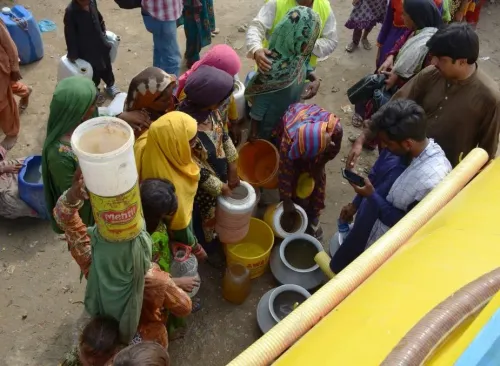
Pakistan's climate crisis is unfolding alongside persistent governance weaknesses that repeatedly undermine preparedness and response. Environmental experts and policy analysts have frequently pointed to fragmented coordination between federal, provincial and local authorities as a central obstacle.
'Pakistan's climate emergency is no longer defined by isolated disasters. Floods, heatwaves, droughts, water shortages and pollution are now converging simultaneously, placing enormous pressure on communities, infrastructure and the economy. The country's environmental vulnerabilities have been intensified by years of weak planning, fragmented governance and delayed implementation,' the report stated.
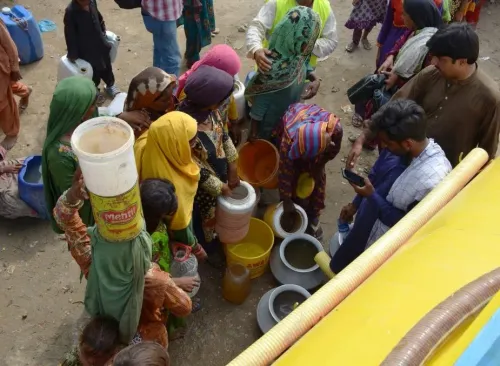
It further noted: 'Each new disaster exposes familiar failures — inadequate preparedness, overstretched institutions and vulnerable populations left struggling to recover. As temperatures rise and weather patterns grow increasingly unpredictable, the gap between climate warnings and effective action continues to widen. For millions across Pakistan, the consequences are already visible in destroyed homes, failing crops, unsafe water and increasingly unbearable summers.'
Fresh Casualties in Khyber Pakhtunkhwa
Against this backdrop, the Provincial Disaster Management Authority (PDMA) on Sunday reported that at least seven people were killed and 33 others injured in incidents triggered by strong winds, lightning and heavy rainfall across Khyber Pakhtunkhwa province over the preceding 24 hours. The deceased — reported from Bannu, Shangla and Mansehra — included four men, one woman and two children, according to the PDMA's damage assessment report.
Walls and roofs of houses collapsed under the force of strong winds and heavy rain, the authority said. The latest fatalities follow an earlier incident this month in which at least two people were killed and 31 others injured in rain and wind-related incidents in the same province.
More Rain Forecast, Much of Country Stays Hot and Dry
The Pakistan Meteorological Department has forecast additional rainfall in upper Khyber Pakhtunkhwa and several parts of Pakistan-occupied Gilgit-Baltistan (PoGB) and Pakistan Occupied Kashmir (PoK). The rest of the country is expected to remain hot and dry — a split that itself illustrates the uneven and extreme nature of Pakistan's evolving climate reality.
With climate warnings growing louder and institutional responses continuing to lag, analysts say the question is no longer whether Pakistan faces a climate emergency, but whether its governance structures can be reformed quickly enough to prevent the next disaster from becoming the next catastrophe.
Point of View
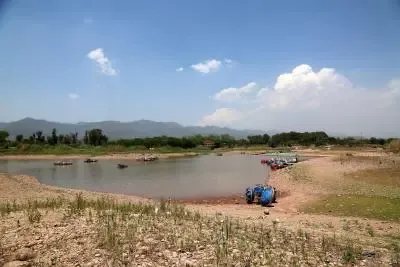
Yet it risks becoming a familiar refrain. The Breathe Pakistan conference is the latest in a series of high-profile gatherings that have produced warnings without binding commitments. What is striking is the simultaneity of the crises: floods in the north, drought in the south, and heatwaves across the plains — all at once. That convergence exposes a structural truth that reactive disaster funds and post-event relief cannot address. Until federal-provincial coordination is institutionalised and climate adaptation budgets are ring-fenced, each new PDMA casualty count will simply confirm what the report already says.
NationPress
15 Sept 2026
Frequently Asked Questions
What does the report say about Pakistan's climate crisis?
The report concludes that Pakistan's recurring floods, droughts, rising temperatures and water stress are being worsened by institutional failures — including fragmented governance, weak planning and delayed implementation — that leave communities trapped in cycles of destruction and recovery. It warns that climate extremes and governance gaps are now converging simultaneously.
How many people were killed in Khyber Pakhtunkhwa's recent rains?
At least seven people were killed and 33 others injured in incidents caused by strong winds, lightning and heavy rainfall across Khyber Pakhtunkhwa in the 24 hours leading up to Sunday, according to the Provincial Disaster Management Authority (PDMA). The deceased included four men, one woman and two children from Bannu, Shangla and Mansehra.
What is the Breathe Pakistan climate conference?
Breathe Pakistan is a climate conference held in Islamabad that brought together policymakers to address the country's escalating environmental crisis. Critics, however, contend that despite repeated warnings from climate experts and international organisations, Pakistan remains locked in reactive disaster management rather than long-term preparedness.
What have the UNDP and World Bank said about Pakistan's climate exposure?
Both the United Nations Development Programme (UNDP) and the World Bank have repeatedly stated that Pakistan's exposure to climate disasters is increasing due to rising temperatures, glacial melt and erratic monsoon patterns. They have also flagged major gaps in coordination and implementation of climate adaptation plans across Pakistan's provinces.
What weather is forecast for Pakistan in the coming days?
The Pakistan Meteorological Department has forecast further rainfall in upper Khyber Pakhtunkhwa and parts of Pakistan-occupied Gilgit-Baltistan (PoGB) and Pakistan Occupied Kashmir (PoK). The rest of the country is expected to remain hot and dry.