Pakistan's climate crisis: Glaciers, smog, water scarcity collide with governance failure
Synopsis
Pakistan is not just facing climate change — it is facing climate convergence. Glaciers, groundwater, monsoons, and food supply are all deteriorating simultaneously, while governance failures like the still-incomplete K4 water project and the 2023 flood that wiped out 90% of crops show the state is not keeping pace. With the 2026 monsoon forecast to be 26% worse than last year, the window to act is narrowing fast.
Key Takeaways
Pakistan faces simultaneous climate threats: glacial melt in the north, rising seas in the south, smog in Punjab , and water scarcity in Balochistan and Karachi .
Quetta's groundwater has dropped from 50 metres to at least 150 metres below the surface since 2000, declining 2–5 metres annually, according to IUCN data.
A 2-degree global temperature rise could push Quetta summer temperatures to 41–46°C within 10–15 years .
The 2023 floods destroyed 90% of Pakistan's crops; the 2026 monsoon is forecast to be 26% more severe than the previous year, per the NDMA .
Karachi's K4 water project, due in 2019 , remains incomplete, leaving the city without a reliable alternative water source.
Pakistan is confronting a cascading ecological emergency — melting glaciers in the north, rising seas in the south, choking smog across Punjab, and chronic water scarcity in Balochistan and Karachi — as the country's environmental stresses collide with rapid population growth, poor governance, and crumbling infrastructure, according to a report published in The Express Tribune magazine. The findings raise urgent questions about whether Pakistani authorities and civil society can recognise the scale of the danger before a crisis tips into collapse.
A National Security and Survival Challenge
Climate activist Zain Haq, quoted in the Express Tribune report, described the situation as 'an unfolding national security, public health, and survival challenge.' He noted that the consequences 'threaten the most basic foundations of human life: food, water, shelter, energy, and breathable air.' Haq also pointed out that while Pakistan's contribution to global emissions remains relatively small, 'vulnerability does not absolve responsibility.'
Pakistan is ranked among the most climate-vulnerable nations on the planet, and each of its major cities faces a distinct threat profile. Notably, the country has experienced some of the most extreme weather events globally in recent years, yet institutional preparedness remains critically weak.
Groundwater Depletion and Rising Temperatures
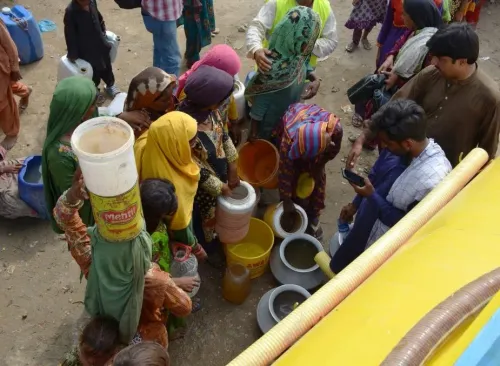
In Quetta, the situation is particularly acute. According to data from the International Union for Conservation of Nature (IUCN), groundwater that sat just 50 metres below the surface around Quetta at the turn of the century now requires drilling to at least 150 metres. The water table is reportedly declining by 2 to 5 metres every year — an existential threat to a population that continues to grow.
Rising temperatures compound the crisis. The global average temperature increase currently stands at 1.5 degrees Celsius, but for cities like Quetta and Lahore, a 2-degree global average rise could translate into a 5-degree local increase. According to the report, this could push summer temperatures in Quetta to between 41 and 46 degrees Celsius within the next 10 to 15 years.
Karachi's Water and Food Crisis
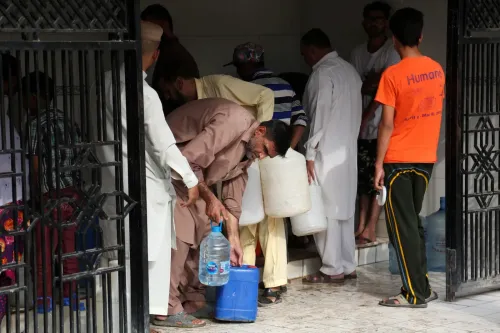
Karachi, unlike parts of Punjab, lacks underground water reserves entirely, leaving it dependent on surface water infrastructure. The government has pointed to the K4 project — designed to pipe water from Keenjhar Lake to the city — as a solution, but the project, originally scheduled for completion by 2019, remains unfinished.
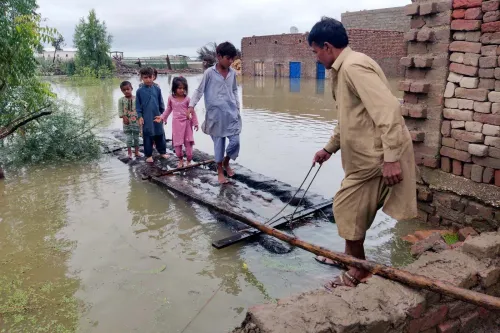
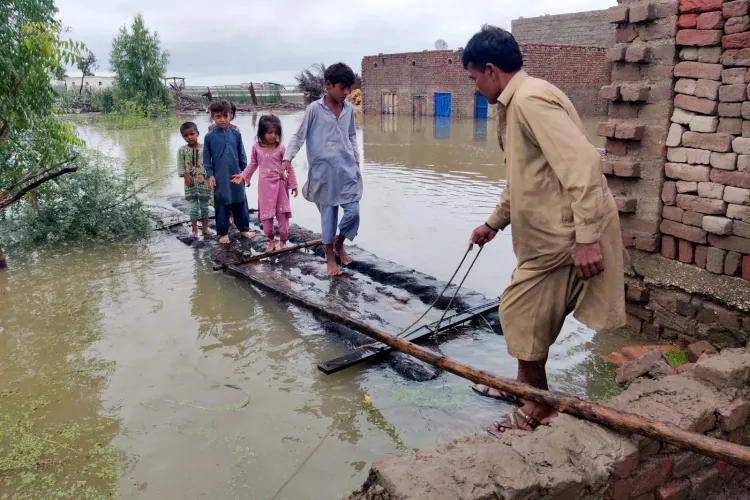
Food security presents an equally alarming risk. During the 2023 floods, Pakistan reportedly lost 90% of its crops, worsening inflation across the country. Looking ahead, the National Disaster Management Agency (NDMA) has warned that the 2026 monsoon is projected to be 26% more severe than the previous year. The Express Tribune report cautioned that 'with an increasingly unstable and unpredictable climate and weather patterns, food production could be seriously disrupted.'
Structural Vulnerabilities and What Comes Next
Analysts argue that Pakistan's climate vulnerability is inseparable from its governance deficit. Outdated infrastructure, delayed public projects such as K4, and a lack of coordinated disaster preparedness have left millions exposed. The convergence of population pressure — Pakistan's population is among the fastest-growing in South Asia — with ecological breakdown creates a compound risk that no single intervention can resolve.
This comes amid a broader global pattern where climate impacts are disproportionately borne by low-emission, high-vulnerability nations. As the 2026 monsoon season approaches, Pakistan's ability to absorb another round of extreme weather without structural reform will be closely watched by international observers and aid agencies alike.
Point of View
And what mainstream coverage often misses, is that Pakistan's climate crisis is not primarily an environmental story — it is a governance failure story wearing an environmental mask. The K4 project, delayed by over six years, is a microcosm of a state that announces solutions and then fails to deliver them. Quetta's groundwater collapse has been documented for years by the IUCN; the data was always there. The 2023 flood crop losses were catastrophic and foreseeable. Pakistan's emissions are negligible globally, but its institutional capacity to absorb climate shocks is equally negligible — and that combination is what makes the coming decade genuinely dangerous.
NationPress
23 Oct 2026
Frequently Asked Questions
What are the main climate threats facing Pakistan in 2026?
Pakistan faces a convergence of climate threats: glacial melt in the north, rising sea levels in the south, severe smog in Punjab, and acute water scarcity in Balochistan and Karachi. These pressures are compounded by rapid population growth, poor governance, and outdated infrastructure, according to a report in The Express Tribune.
How severe is Quetta's groundwater crisis?
According to IUCN data, Quetta's groundwater level has dropped from 50 metres below the surface at the turn of the century to at least 150 metres today. The water table is declining by 2 to 5 metres every year, posing an existential threat to the city's growing population.
What is the K4 project and why has it not been completed?
The K4 project is a government initiative to supply water to Karachi from Keenjhar Lake. It was originally scheduled for completion by 2019 but remains unfinished. Karachi has no underground water reserves, making the project critical to the city's water security.
How did the 2023 floods affect Pakistan's food supply?
The 2023 floods destroyed an estimated 90% of Pakistan's crops, worsening inflation nationwide. The National Disaster Management Agency has projected that the 2026 monsoon will be 26% more severe than the previous year, raising fears of further food production disruption.
How much could temperatures rise in Pakistani cities like Quetta?
A 2-degree rise in global average temperatures could translate into a 5-degree local increase for cities like Quetta and Lahore. This could push Quetta's summer temperatures to between 41 and 46 degrees Celsius within the next 10 to 15 years, according to the Express Tribune report.