Pakistan's water crisis: Governance failures, not India, to blame
Synopsis
A European Times report cuts through Pakistan's blame-shifting on its water crisis: the culprit isn't India or climate change, but five decades of policy paralysis, 1.5 million unregulated tube wells, zero new reservoirs, and governments that acknowledged the problem but never acted. Quetta residents going six months without tap water are the human face of that institutional failure.
Key Takeaways
Pakistan's groundwater crisis is driven by governance failures and policy paralysis , not physical water scarcity, according to a European Times report.
Pakistan has not built a single major reservoir in over 50 years , leaving it with no new water storage capacity.
More than 1.5 million tube wells are enabling uncontrolled groundwater extraction, worsened by subsidised electricity and power theft.
Following India placing the Indus Waters Treaty in abeyance after the Pahalgam terror attack , Pakistani lawmakers have blamed New Delhi for the water shortfall — a claim the report rejects.
In Quetta, Balochistan , residents in multiple neighbourhoods went without tap water for six months as of July 2026, despite paying WASA bills.
The report states Pakistan's government is aware of the problem but has consistently failed to act on needed reforms.
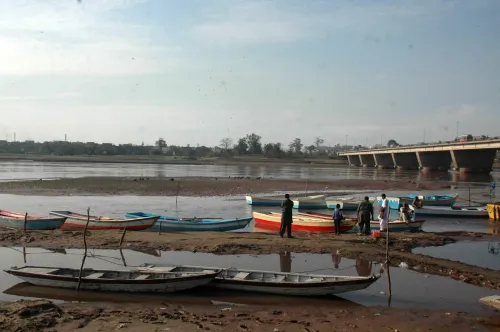
Pakistan's deepening groundwater crisis is rooted in governance failures and policy paralysis rather than physical water scarcity, according to a report in the European Times. Despite possessing a vast network of major rivers and substantial groundwater reserves, the country has failed to translate those resources into reliable water access for its citizens, with experts pointing to decades of institutional neglect and policy distortions.
Root Causes of the Crisis
The report identifies a cluster of structural failures — unequal canal distribution, inefficient irrigation, uncontrolled groundwater extraction, poor investment, and institutional breakdown — as the true drivers of Pakistan's water emergency. Fragmented responsibilities across government departments have created wide regulatory gaps, eroding accountability and leaving water governance in a state of chronic dysfunction.
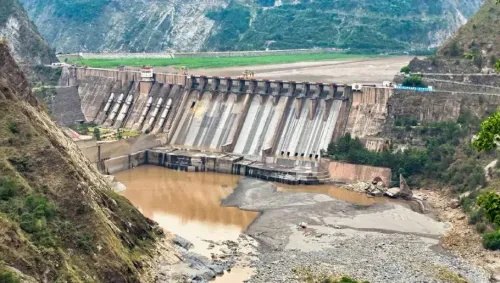
Over 1.5 million tube wells have enabled unchecked groundwater pumping across the country. Subsidised electricity and widespread power theft have compounded the problem, incentivising extraction without consequence. Critically, Pakistan has not constructed a single major reservoir in the past five decades, leaving it with virtually no new storage capacity to buffer against seasonal variability.
Blaming India: A Convenient Deflection
Following India's decision to place the Indus Waters Treaty (IWT) in abeyance after the Pahalgam terror attack in Jammu and Kashmir last year — a step New Delhi has conditioned on Pakistan credibly and irrevocably ending its support for cross-border terrorism — Pakistani lawmakers have sought to hold New Delhi responsible for the country's water shortfall. Critics argue this narrative obscures the domestic origins of the crisis.
The European Times report was unequivocal: 'No governments in Pakistan have ever attempted to address these problems, leaving the country with low agricultural water productivity, dilapidated and outdated canal system, severe groundwater depletion, and weak enforcement. India cannot be blamed for those failures.'
Quetta: A City on the Brink
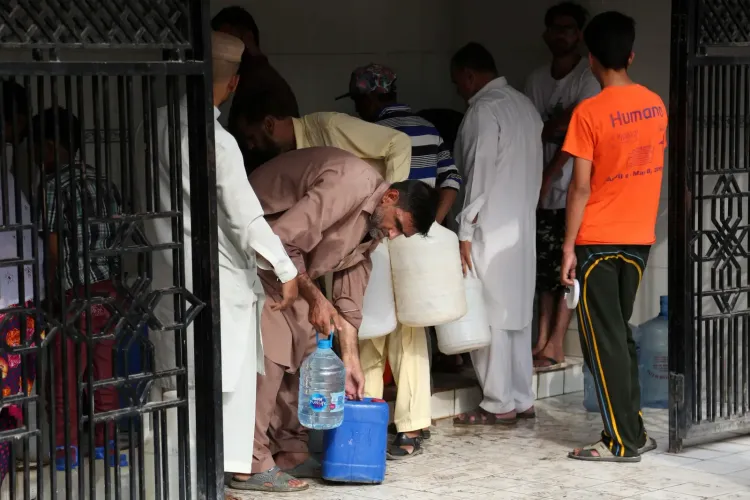
The human cost of these failures has been on stark display in Quetta, the capital and largest city of Balochistan province. As of July 2026, groundwater levels in the city had dropped to dangerously low levels, with official supplies from the Water and Sanitation Agency (WASA) either completely halted or severely restricted across large residential areas.
Neighbourhoods including Sariab, Sirki Road, Samungli Road, Jinnah Town, Qambarani Road, Satellite Town, Sabzal Road, and Khayaban-e-Agha have all been affected, according to reports from Pakistan-based daily The Express Tribune. Elderly residents, women, and children have been forced to travel long distances on foot to fetch water. Many households reported receiving no tap water for six consecutive months, despite paying their WASA bills regularly and lodging repeated complaints with officials.
Policy Awareness Without Action
What makes the situation particularly troubling, the European Times report notes, is that Pakistan's government is not uninformed. Officials have at various points acknowledged the severity of the problem and the need for reform — yet substantive action has not followed. The gap between stated intent and implementation has persisted across successive governments, reflecting what analysts describe as a structural failure of political will.
With Pakistan's water crisis now visible at both the policy level and on the streets of its cities, the question is no longer whether reforms are needed but whether any administration will muster the institutional capacity to deliver them.
Point of View
1.5 million unregulated tube wells, and institutional fragmentation is a political manoeuvre, not an analysis. The IWT abeyance is a legitimate bilateral flashpoint, but it did not cause Quetta residents to go six months without tap water. What mainstream coverage of the India-Pakistan water dispute often misses is this domestic dimension: Pakistan's water governance has been in quiet collapse for decades, and the geopolitical noise provides exactly the cover its policymakers need to avoid accountability. The harder question — whether any government in Islamabad can actually deliver water reform, given the fragmented federal-provincial architecture and the entrenched subsidy structure — remains unanswered and largely unasked.
NationPress
18 Sept 2026
Frequently Asked Questions
What is the real cause of Pakistan's water crisis?
According to a European Times report, Pakistan's water crisis is caused by governance failures and policy paralysis — including unequal canal distribution, uncontrolled groundwater extraction, and the absence of any new major reservoir built in over 50 years — rather than physical water scarcity. Fragmented institutional responsibilities have further deepened the problem.
Why has India been blamed for Pakistan's water shortage?
After India placed the Indus Waters Treaty in abeyance following the Pahalgam terror attack in Jammu and Kashmir, Pakistani lawmakers cited this as a cause of the country's water crisis. However, analysts and the European Times report argue this deflects from longstanding domestic failures, stating plainly that 'India cannot be blamed for those failures.'
How severe is the water crisis in Quetta?
As of July 2026, Quetta — the capital of Balochistan — was experiencing critically low groundwater levels, with WASA supplies halted or severely restricted across multiple residential areas. Many households had gone without tap water for six consecutive months despite paying their bills and filing repeated complaints.
What structural failures drive Pakistan's groundwater depletion?
Over 1.5 million tube wells enable uncontrolled pumping, while subsidised electricity and power theft remove any cost-based deterrent to over-extraction. Pakistan has not built a major reservoir in five decades, leaving it with no new storage buffer. Weak enforcement and fragmented regulatory oversight across government departments have compounded the problem.
Has Pakistan's government acknowledged the water crisis?
Yes. According to the European Times, Pakistan's government has at various points recognised the severity of the problem and the need for reform, but has consistently failed to follow through with concrete action. This gap between acknowledgement and implementation has persisted across multiple administrations.