IANS Year Ender 2025: How Did Pakistan Attempt to Resurrect Native Terror in India and Fail?
Synopsis
In an intriguing twist, Pakistan's attempts to reignite homegrown terrorism in India reveal a complex web of failed strategies and dangerous plots. The dismantling of the Faridabad module gives insight into the ongoing battle against terrorism, showcasing a desperate need for national security vigilance.
Key Takeaways
Indian Mujahideen's decline marked a shift in terrorism dynamics in India.
Pakistan's attempt to create homegrown terror groups reflects its ongoing support for terrorism.
Pahalgam attack revealed the TRF's actual Pakistani origins.
Faridabad module was dismantled just before executing deadly plans.
Intelligence efforts remain crucial in combating emerging terror threats.
New Delhi, Dec 27 (NationPress) The decline of the lethal Indian Mujahideen, a group supported by Pakistan and consisting solely of Indian members, signaled the conclusion of indigenous terrorism in India.
The intention was to portray to the global community that terrorism in India is an internal dilemma, not one instigated or funded by Pakistan. Following the disbandment of the Indian Mujahideen in 2014, most reported terror events have been confined to Jammu and Kashmir, with Pakistani operatives being involved in the majority.
In recent years, Pakistan has faced significant international scrutiny. With its economy in tatters, the country could not risk further examination by the Financial Action Task Force (FATF). To counter this, it established The Resistance Front (TRF) in Jammu and Kashmir, branding it as a homegrown terrorist organization.
The attack in Pahalgam, initially claimed by the TRF, revealed the deception, as all involved terrorists were identified as Pakistani nationals.
After the Pahalgam incident and subsequent operations by the Indian Armed Forces, including Operation Sindoor, the TRF, which acts as a proxy for Lashkar-e-Taiba, fell silent. Subsequently, Pakistan was eager to generate a local terror group. It decided to activate the Faridabad module, which had been developing since the abrogation of Article 370.
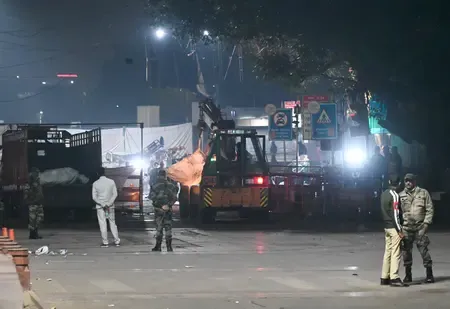
This module was dismantled in November 2025, leading investigators on a perilous path. Shortly after, a member of this module executed a bombing near the Red Fort in Delhi, resulting in 13 fatalities.
The assailant was identified as Dr. Umar Mohammad from Pulwama. During the investigation, authorities seized 2,900 kilograms of ammonium nitrate. The inquiry also revealed that this module primarily consisted of doctors linked to Al-Falah University in Faridabad, motivated by the Jaish-e-Mohammad (JeM) and comprised of highly radicalized individuals. They had intentions to orchestrate explosions in various locations throughout Delhi and its surroundings.
It was discovered that the members were recruited by Mufti Irfan Ahmed from Jammu and Kashmir, who maintained close ties with JeM and ISI operatives.
Irfan successfully obscured his connections to Pakistan, presenting the module as purely homegrown, devoid of ISI involvement. The Jammu and Kashmir Police became aware of this group when pro-JeM posters surfaced. This led to the identification of Irfan and the dismantling of the Faridabad module, exposing a tactical shift from Pakistan, which has struggled to send its operatives through the Line of Control (LoC).
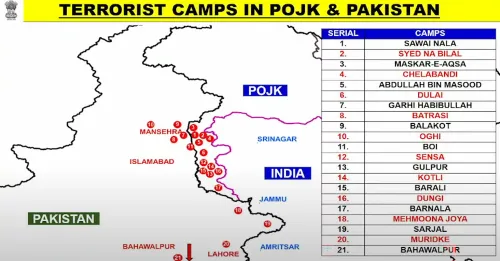
Pakistan aimed to establish a homegrown module capable of striking other areas of the country to divert security forces' attention from Jammu and Kashmir, facilitating infiltrations from numerous launch pads established in Pakistan-occupied Kashmir (PoK).
Furthermore, ISI sought a module reminiscent of the Indian Mujahideen, intending for this homegrown group to stress security mechanisms by executing blasts while allowing Pakistan to maintain plausible deniability.
Officials indicate that ISI did not consistently communicate with the module's handlers, opting to keep Pakistan's involvement discreet and create the impression that this module was a purely local initiative. The intention was to convey that the people of Jammu and Kashmir opposed the abrogation of Article 370.
Intelligence agencies have also reported that ISI is in the process of establishing several more such modules across the nation, with the goal of executing explosions at regular intervals akin to the methods used by the Indian Mujahideen, while ensuring the trail does not lead back to Pakistan.
Pakistan, finding it increasingly difficult to infiltrate terrorists, sought to buy time by distracting security agencies, allowing its terror organizations to regroup and create diversions at the border for future infiltrations.
Fortunately, the module was captured just in time. Authorities assert that had the group successfully executed its plans, the consequences would have been unimaginable.
The agencies concluded that the Faridabad module dismantled in November 2025 was also intended to serve as a prototype for additional homegrown modules to emerge across the country.
Point of View
It's clear that India's security landscape is under constant threat from external forces attempting to manipulate internal dissent. The recent developments showcase the critical need for vigilance and proactive measures to safeguard our nation from these insidious plots.
NationPress
19 Sept 2026
Frequently Asked Questions
What was the Indian Mujahideen?
The Indian Mujahideen was a terrorist organization that operated in India, primarily composed of Indian nationals and believed to be supported by Pakistan.
What is The Resistance Front (TRF)?
The Resistance Front (TRF) is a group claimed by Pakistan to be a homegrown terror organization in Jammu and Kashmir, although it has been linked to Pakistani operatives.
What happened during the Pahalgam attack?
The Pahalgam attack, initially attributed to the TRF, involved Pakistani terrorists, exposing the organization's facade as a local entity.
What was the Faridabad module?
The Faridabad module was a terror group formed in response to Pakistan's need for a homegrown terrorist organization after the disbandment of the Indian Mujahideen.
What were the implications of the Faridabad module's activities?
The activities of the Faridabad module posed significant security risks to India, including planned bombings in urban areas, which were thwarted by law enforcement.