Chirag Paswan at NIFTEM-K: Youth must be job creators, not seekers
Synopsis
At NIFTEM-K's convocation, Union Minister Chirag Paswan reframed food processing as India's next big employment frontier — urging graduates to build startups, not seek jobs. With a push to extend value chains to farms and a call to protect 'Brand India' through quality, the speech signals a government intent to transform agri-food from a neglected sector into a strategic national asset.
Key Takeaways
Union Minister Chirag Paswan addressed the NIFTEM-K Convocation on 9 October 2026 in New Delhi .
He urged graduates to become job creators, innovators, and solution providers rather than job seekers.
Paswan called India's food processing sector a major driver of employment, farmer income, value addition, and export growth .
He stressed zero compromise on quality, warning that poor standards hurt 'Brand India' globally.
The minister pitched India's agricultural diversity and consumer base as the foundation for becoming a 'Global Food Basket' .
MoFPI Secretary Avinash Joshi and NIFTEM-K Director Dr Harinder Singh Oberoi also addressed the convocation, emphasising skilled human resources and institutional research.
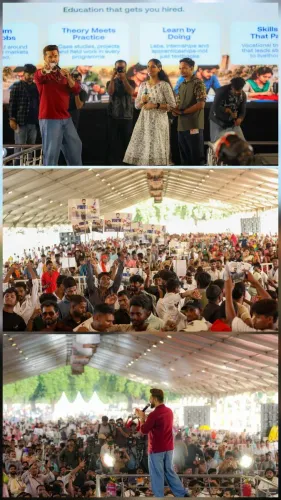
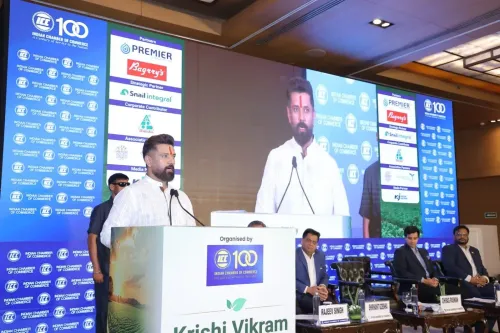
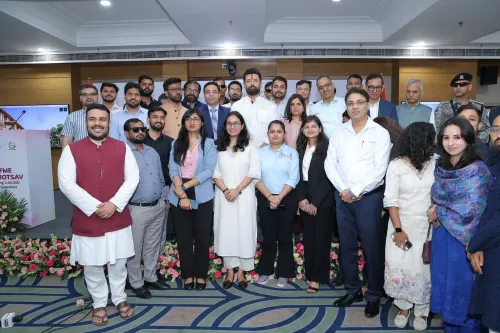
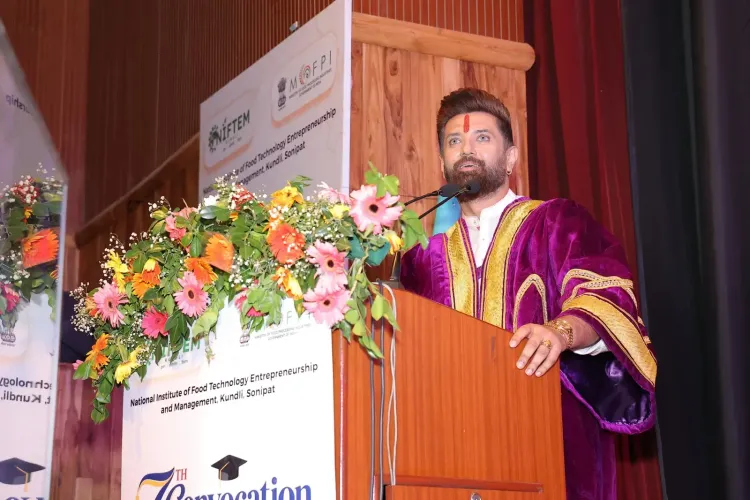
Union Minister Chirag Paswan on Friday, 9 October 2026, called on young graduates to position themselves as job creators, innovators, and solution providers rather than job seekers, highlighting India's food processing sector as a powerful engine for employment, entrepreneurship, and farmer welfare. He made the remarks at the Convocation of the National Institute of Food Technology Entrepreneurship and Management, Kundli (NIFTEM-K), in New Delhi.
Key Developments at NIFTEM-K Convocation
Paswan told graduating students that the food processing sector, despite recent progress, still holds enormous untapped potential. He outlined how the sector can simultaneously address food quality, value addition, farmer incomes, job creation, and reduction of food wastage — making it one of the most multi-dimensional growth corridors in the Indian economy.
The minister urged students to leverage technology, innovation, and entrepreneurship to tackle emerging challenges, assuring them that the government would back new ideas aimed at strengthening the sector.
Brand India and the Quality Imperative
Paswan made a pointed appeal for uncompromising quality standards in the food sector. He stressed that the quality of an Indian product does not merely reflect on a single company — it shapes the global standing of 'Brand India' in international markets. This framing positions food processing not just as a domestic employment strategy, but as a tool of India's soft power and export competitiveness.
India as a Global Food Basket
The minister argued that India's vast agricultural base, diverse produce, and large consumer market give the country a credible pathway to emerge as a 'Global Food Basket'. He underlined the need to bring food value chains, processing facilities, and technology closer to farms and rural areas, so that the gains from food processing reach producers at the grassroots — not just urban aggregators and exporters.
What Officials and the Institute Said
Avinash Joshi, Secretary of the Ministry of Food Processing Industries, highlighted the wider role of food processing in reducing waste, enhancing nutrition and value addition, and creating livelihood opportunities. He emphasised the importance of building skilled human resources and encouraging researchers to pursue scalable innovations.
NIFTEM-K Director Dr Harinder Singh Oberoi noted that the institute has made significant strides in academics, research, infrastructure, and industry partnerships, signalling its growing role as an incubator for agri-food talent in India.
Why This Matters
India's food processing sector remains significantly underdeveloped relative to the scale of its agricultural output — a gap that translates into enormous post-harvest losses and unrealised farmer income. Paswan's remarks come amid a broader government push to channel youth aspirations toward high-impact sectors. This is the Nth in a series of ministerial addresses at agricultural and agri-tech institutions that have sought to reframe food processing as a strategic national priority rather than a subsidiary industry. The forward-looking question is whether institutional support and policy incentives will follow the rhetoric.
Point of View
Incubation funding, or regulatory simplification for food-tech startups repeats a familiar ministerial pattern. The 'Brand India quality' appeal is also overdue: Indian food exports have faced repeated quality rejections in the EU and the US, suggesting the problem is systemic rather than motivational. The government's credibility on this front will be judged less by what ministers say at convocations and more by whether the Food Safety and Standards Authority of India (FSSAI) and export promotion councils actually tighten enforcement.
NationPress
9 Oct 2026
Frequently Asked Questions
What did Chirag Paswan say at the NIFTEM-K convocation?
Union Minister Chirag Paswan urged graduating students at NIFTEM-K on 9 October 2026 to become job creators, innovators, and solution providers — not job seekers. He highlighted the food processing sector's potential to generate employment, strengthen farmer incomes, and enhance India's global standing.
What is NIFTEM-K and why is it significant?
NIFTEM-K, the National Institute of Food Technology Entrepreneurship and Management in Kundli, is a premier institution under the Ministry of Food Processing Industries focused on agri-food technology, research, and entrepreneurship. Its director noted significant recent progress in academics, research, infrastructure, and industry partnerships.
What did Paswan mean by India becoming a 'Global Food Basket'?
Paswan argued that India's vast agricultural base, diverse produce, and large domestic consumer market give it the foundation to emerge as a globally significant food supplier and exporter. He called for extending processing facilities and value chains closer to farms and rural areas to ensure farmers benefit directly.
Why did Paswan emphasise food quality at the convocation?
The minister stressed that quality in India's food sector affects not just individual companies but the broader reputation of 'Brand India' in global markets. He called for no compromise on quality standards, framing it as essential to sustaining and growing India's international market presence.
Who else spoke at the NIFTEM-K convocation?
Avinash Joshi, Secretary of the Ministry of Food Processing Industries, spoke about the sector's role in reducing food wastage, enhancing nutrition, and creating livelihoods. NIFTEM-K Director Dr Harinder Singh Oberoi highlighted the institute's academic and research progress and its growing industry partnerships.