U.S. Defense Department Cancels 93 Elite Fellowships to Align Military Education with Core Values
Synopsis
In a significant policy shift, the U.S. Department of Defense is discontinuing 93 Senior Service College fellowships at top-tier universities, aiming to align military education with core American values and enhance warfighter capabilities. This move could reshape the landscape of military education in the coming years.
Key Takeaways
93 Senior Service College fellowships cancelled.
Impact on 22 elite universities , including Harvard and MIT .
Shift aimed at promoting critical thinking and aligning with American values .
Implementation begins in the 2026–2027 academic year .
New partner institutions will be considered based on defined criteria.
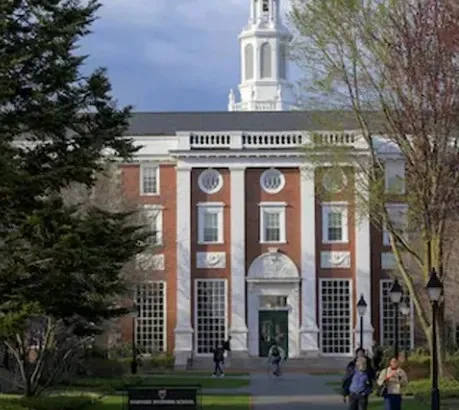
Washington, Feb 28 (NationPress) In an effort to send a clear political and financial message to prestigious academic institutions, the US Department of Defense has decided to eliminate 93 Senior Service College fellowships across 22 universities, including Harvard University and other Ivy League schools. This decision is framed as a necessary step to realign military education with “American values” and the “warrior ethos”.
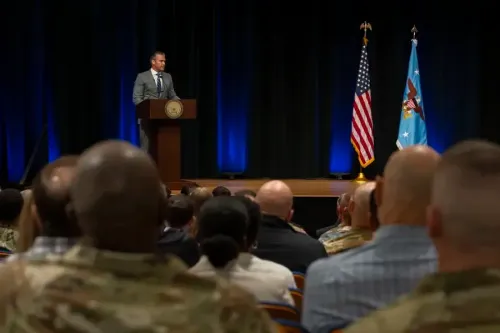
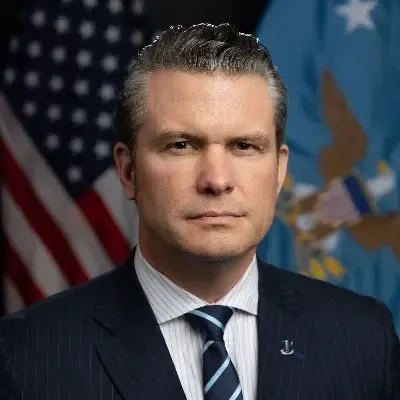
In a memorandum dated February 27, titled “Aligning Senior Service College Opportunities with American Values”, Secretary of War Pete Hegseth stated, “Our Professional Military Education (PME) institutions are vital for restoring and maintaining the warrior ethos within the DoD. It is crucial that our educational system for warfighters develops strategic senior leaders capable of critical thinking, free from bias and influence.”
The memo initiates a strategic shift in senior officer education, effective from the 2026–2027 academic year. It abolishes specific Senior Service College fellowship programs and mandates the creation of a new list of elite institutions that will offer comparable programs to those that have been discontinued.
According to the Secretary, “We will cease funding institutions that do not enhance our leaders' warfighting capabilities or that contradict the very principles they are sworn to uphold.”
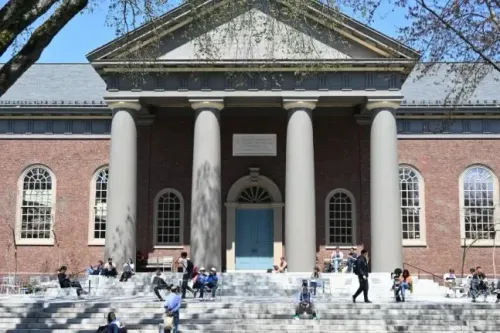
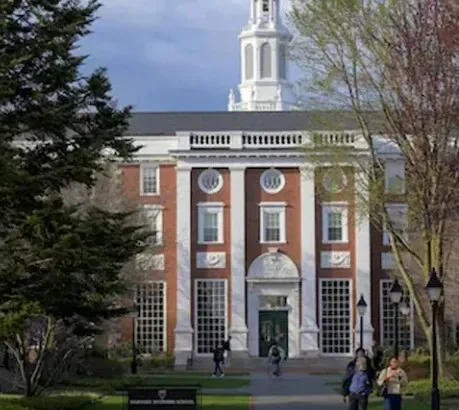
The fellowships being rescinded include positions at prestigious institutions such as Harvard University, Massachusetts Institute of Technology, Tufts University, Georgetown University, Columbia University, Yale University, and Princeton University, among others.
Think tanks in Washington, including the Center for Strategic and International Studies, the Brookings Institution, the Atlantic Council, and the Council on Foreign Relations, will also be impacted. In total, 93 SSC fellowships across 22 institutions are being phased out.
Chief Pentagon Spokesman Sean Parnell remarked, “These actions are part of the Department's broader ‘Rapid Force-Wide Review of Military Standards’, reinforcing the Secretary’s commitment to high standards, educational excellence, and the cultivation of military leaders capable of winning the Nation's wars.”
The memo emphasizes that the changes “will guarantee our leaders receive a more rigorous and pertinent education, equipping them to navigate the complexities of modern warfare and fulfilling the original mandate of SSCs: to prepare senior officers to be critical thinkers capable of planning and integrating multi-domain Joint operations at echelon and to serve (and think) at the strategic level.”
This policy will affect all Department of Defense personnel starting with the 2026–2027 academic year. Those currently enrolled in the 2025–2026 academic year will be allowed to complete their studies. The Under Secretary of Defense for Personnel and Readiness will manage the implementation.
This decision builds upon a prior memorandum issued on February 6, titled “Rebuilding the Warrior Ethos in Professional Military Education”. In this document, the Secretary asserted that “America’s top universities no longer fulfill their promise to promote critical thinking from diverse perspectives. Frequently, our warfighters are instructed on what to think rather than how to think.”
Specifically addressing Harvard, he noted, “Harvard’s partisan faculty exhibits negative bias towards military operations and discourages alternative viewpoints, thereby restricting critical thinking.” He added that starting in the 2026–2027 academic year, he is “terminating all graduate-level Professional Military Education, fellowships, and certificate programs between Harvard University and the Department of Defense for active-duty Service members.”
The memorandum also proposes potential new partner institutions, which include military colleges such as The Citadel and the University of North Georgia, alongside civilian universities like Liberty University, George Mason University, the University of Michigan, the University of North Carolina, and Hillsdale College.
These institutions are deemed to meet criteria such as “intellectual freedom, minimal connections with adversaries, limited public opposition to the Department, and Graduate-level National Security, International Affairs, and/or Public Policy Programs.”
Point of View
It's crucial to highlight that the recent decision by the U.S. Department of Defense to cancel 93 Senior Service College fellowships reflects a strategic realignment in military education. This move seeks to ensure that military leaders are trained in environments conducive to critical thinking and aligned with American values.
NationPress
3 Oct 2026
Frequently Asked Questions
What prompted the cancellation of the fellowships?
The U.S. Department of Defense aims to realign military education with American values and enhance critical thinking among military leaders.
Which universities are affected by this decision?
The fellowships are being cancelled at 22 institutions, including Harvard, MIT, and Yale.
When will these changes take effect?
The new policy will be implemented starting in the 2026–2027 academic year.
Can current students complete their degrees?
Yes, those enrolled in the 2025–2026 academic year may finish their studies.
What are the new criteria for selecting partner institutions?
New partner institutions will be chosen based on intellectual freedom, minimal adversarial relations, and relevant graduate-level programs.