US State Department Introduces Comprehensive Reforms for Diplomats
Synopsis
The US State Department has launched significant reforms to its diplomat selection and training processes, aiming to better prepare the Foreign Service for modern global challenges. These changes will enhance skills in negotiation and public speaking while promoting a merit-based approach to leadership.
Key Takeaways
Major reforms announced by the US State Department to enhance diplomat selection and training.
New assessments focus on critical skills and policy knowledge.
Training includes public speaking, negotiation, and leadership.
Reforms aim to promote talent more quickly through a merit-based system .
The Foreign Service plays a crucial role in managing US international relations.
Washington, April 2 (NationPress) The US State Department has unveiled significant reforms regarding the selection and training processes for its diplomats. These modifications are designed to equip the Foreign Service with the necessary tools to tackle the complexities of the 21st century.
This reform initiative impacts both the recruitment and training phases. It emphasizes the importance of essential skills and policy understanding.
Prospective candidates will now undergo assessments on American history, concepts of foreign policy, and logical reasoning. The department has stated that it has eliminated questions aimed at evaluating alignment with political ideologies.
The Foreign Service Officer Test has undergone a redesign. The oral examination will now concentrate on substantive knowledge of US foreign policy concepts, diplomatic history, and negotiation proficiencies.
Furthermore, a written examination has been reinstated, replacing the Qualification Evaluation Panel. Officials noted that the capacity to think critically and articulate clearly remains a vital skill for Foreign Service Officers.
Training for newly recruited officers is also being revamped. The A-100 onboarding program will now provide a rigorous and comprehensive basic training experience.
New officers will learn public speaking, negotiation, and leadership skills. They will attend lectures covering economic strategy, commercial diplomacy, and grand strategy.
The curriculum will feature readings from esteemed American leaders and thinkers, including George Washington, John Quincy Adams, and James Monroe, alongside selections from the Federalist Papers and works by George Kennan, Angelo Codevilla, and Samuel Huntington.
The department has decided to eliminate exercises that were intended to teach communication skills and 'team resilience.' This includes a cited 90-minute activity that involved throwing objects into a bucket while blindfolded. Additionally, the lecture content on 'bureaucratic tedium' has been minimized.
The reforms also aim to accelerate the promotion of talent within the department. It has been stated that barriers to leadership and management positions will be reduced by placing a stronger emphasis on merit during the selection process. This change is expected to enable high-performing individuals to ascend into leadership roles more quickly.
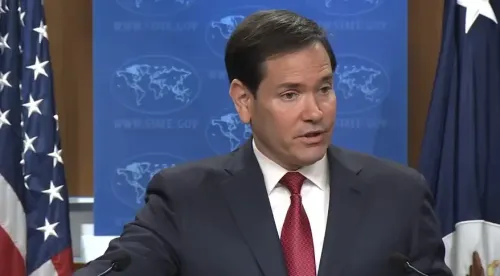
Deputy Spokesperson Tommy Pigott remarked that these changes symbolize a new direction.
“The Trump administration is modernizing the Foreign Service to ensure America’s diplomats are equipped to advocate for our national interests in a rapidly evolving global landscape,” Pigott stated.
“In this updated program, Foreign Service Officers will receive training in essential skills such as public speaking and negotiation, while delving into international relations theories covering topics from commercial diplomacy to grand strategy,” he added.
The State Department has commenced the application process for new candidates. Registration for the examination is currently open, with tests scheduled between May 15 and May 22.
“The State Department encourages patriotic Americans from all regions to consider serving their country by applying to join the Foreign Service,” Pigott concluded.
The Foreign Service acts as the primary diplomatic branch of the United States, with its officers representing US interests abroad and fostering relationships with other nations.
This service has undergone numerous updates over the decades, with the latest reforms emerging in response to increasing global competition and the growing complexity of foreign policy challenges.
Point of View
I recognize the importance of these reforms in enhancing the capabilities of US diplomats. The emphasis on core competencies and merit-based promotions reflects a forward-thinking approach necessary for navigating the intricacies of modern diplomacy.
NationPress
10 Oct 2026
Frequently Asked Questions
What are the main changes to the Foreign Service Officer Test?
The Foreign Service Officer Test has been redesigned to focus on substantive knowledge of US foreign policy concepts, diplomatic history, and negotiation skills, while removing ideologically biased questions.
How will the training for new recruits be different?
The A-100 onboarding program is now more rigorous, providing comprehensive training in public speaking, negotiation, and leadership, along with relevant lectures on economic strategy and grand strategy.
What is the goal of these reforms?
The reforms aim to prepare the Foreign Service for 21st-century challenges by enhancing essential skills and promoting a merit-based system for faster advancement into leadership roles.
When can new candidates apply for the Foreign Service?
The State Department has opened applications for new candidates, with registration for the examination currently available. Exams will be conducted from May 15 to May 22.
How does the Foreign Service operate?
The Foreign Service is the primary diplomatic arm of the United States, representing US interests abroad and managing international relationships.