Pitroda Advocates for Free Education and Healthcare as National Priorities
Synopsis
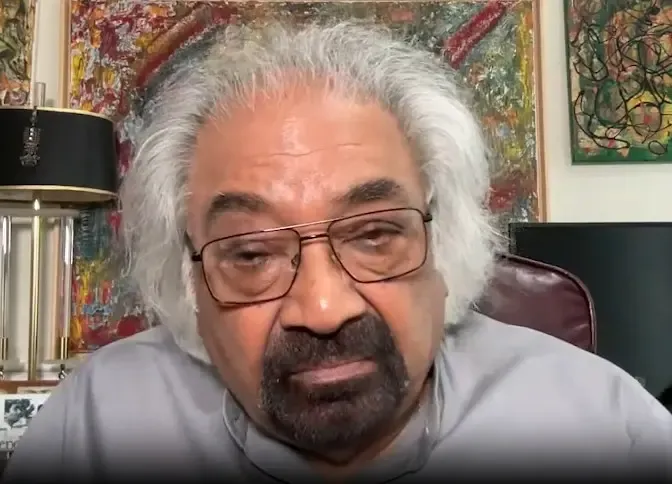
In a recent interview, Satyanarayan Pitroda, the Indian Overseas Congress leader, called for free education and healthcare for all, criticizing the commercialization of these essential services. He highlighted the need for a unified national vision, urging leaders to embrace responsibility for the welfare of every citizen.
Key Takeaways
Universal education and healthcare should be accessible to all.
Political will is essential for systemic change.
Commercialization of education and health services must be addressed.
Diplomatic efforts must focus on peace, not alliances.
Humanitarian perspectives should guide policy decisions.
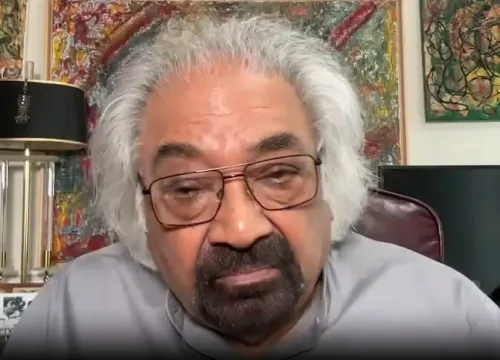
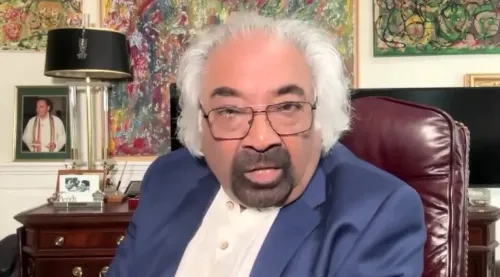
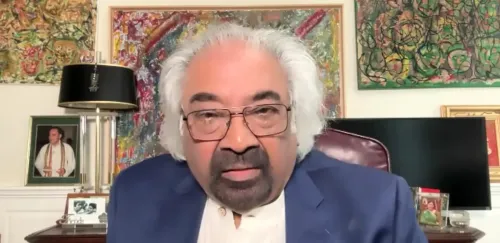
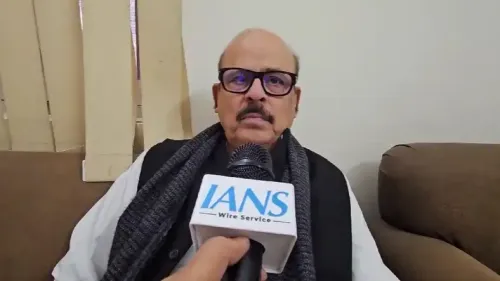
Washington, April 2 (NationPress) Satyanarayan Pitroda, the head of the Indian Overseas Congress, known as 'Sam', emphasized the necessity for universal access to education and healthcare during a recent interview with IANS. He expressed concerns that both sectors have become commercialized and called on leaders, including Lok Sabha's opposition chief Rahul Gandhi, to embrace a vision for a more equitable India.
Here are key excerpts from the discussion:
IANS: There's ongoing discourse in India regarding reservations for Muslims within the Other Backward Classes (OBC) category. What is your perspective?
Pitroda: It's essential to recognize that everyone at the bottom tier needs assistance. As someone from an OBC background, I didn't realize the implications in my youth. I received a Master's in Physics in India at a fraction of today's costs. Education has become prohibitively expensive now.
I believe that education and healthcare should be nearly free for all citizens. We've turned these necessities into a lucrative industry following a Western model. We require a system that guarantees free health and education for everyone.
IANS: The Delhi government under Arvind Kejriwal attempted such initiatives.
Pitroda: This isn't merely a state issue; it demands political will on a national scale. You can't implement comprehensive reforms in isolated pockets. A unified national vision is essential to ensure every child receives nearly free education.
Consider the plight of children in India whose families pay exorbitant fees, often reaching Rs 10,000 to Rs 20,000 monthly. It's unreasonable. I firmly assert that health and education should not be privatized to the extent we see today. While private options are valid, the state must uphold its responsibilities. Currently, we are neglecting our national duties.
IANS: What are your views on India's stance regarding the West Asia conflict?
Pitroda: We have not positioned ourselves with moral integrity; instead, we've aligned with a wealthy aggressor. My stance is not aligned with any specific party but rather with what is just.
IANS: Recently, countries like Pakistan, Saudi Arabia, and Turkey have sought to mediate between the USA and Iran. What do you think of Pakistan's involvement?
Pitroda: Everyone has the right to pursue peace; the more, the better. Each nation should explore avenues for reconciliation.
IANS: Should India play a mediating role similar to Pakistan's?
Pitroda: This isn't about India versus Pakistan. Each country has its responsibilities. We must transcend communal divisions and promote unity rather than hate.
IANS: With Pakistan's Foreign Minister recently in China, advocating for peace, should India align with Pakistan and China rather than the USA and Israel?
Pitroda: It's not about choosing sides; it's about championing what is right. We must prioritize peace urgently, as innocent lives are at stake across all sides. Our duty extends to protecting all children, regardless of nationality.
IANS: There's speculation that if Rahul Gandhi were Prime Minister, he could have influenced the US to cease hostilities. What are your thoughts?
Pitroda: Rahul Gandhi embodies a vision for India, a custodian of the principles handed down by our founding leaders—truth, democracy, diversity, and respect for all. His approach would not pit one nation against another but would stand for universal values.
IANS: Would Rahul Gandhi's foreign policy differ significantly from the current one?
Pitroda: It would prioritize India's and the global community's interests over short-term gains, grounded in moral integrity and a long-term vision.
IANS: In West Bengal and Assam, the BJP has called for the expulsion of Bangladeshi and Rohingya migrants. Is this justified, or does it violate human rights?
Pitroda: I lack sufficient knowledge to comment definitively. My perspective is humanitarian, focusing on what benefits everyone. This requires a commitment to high moral standards, which often entails sacrifice.
Point of View
It is crucial to recognize the significant implications of Pitroda's statements on free education and healthcare. His call for a national vision reflects a deeper concern for equitable access to essential services, urging political leaders to prioritize the welfare of all citizens beyond party lines.
NationPress
20 Sept 2026
Frequently Asked Questions
What is Satyanarayan Pitroda's stance on education?
Pitroda advocates for free education for all citizens, criticizing its commercialization and high costs.
Did Pitroda support reservations for Muslims?
He emphasized the need for assistance at the bottom tier, suggesting broad support for marginalized communities.
What does Pitroda believe about India's foreign policy?
He calls for a foreign policy rooted in moral integrity and a focus on peace, rather than aligning with specific nations.
How does Pitroda view the role of political leaders?
He stresses the importance of political will at a national level to enact reforms in education and healthcare.
What was said regarding the conflict in West Asia?
Pitroda highlights the need for India to take a moral stand and not align with aggressors, focusing on peace.