Sam Pitroda calls CJP, student movement parts of India's bigger political puzzle
Synopsis
Indian Overseas Congress chief Sam Pitroda has framed the CJP and student protests not as standalone events but as symptoms of four simultaneous crises: alleged democratic backsliding, electoral distrust, economic inequality and a growth dividend that he argues is reaching only a ‘handful of people.’ His ‘Indian monsoon’ framing raises the political stakes well beyond campus grievances.
Key Takeaways
Sam Pitroda described the CJP and the student movement as ‘pieces of a bigger puzzle,’ not isolated events, on 15 October 2026 .
He alleged attacks on democratic institutions, media freedom and civil society, and cited fear of Enforcement Directorate (ED) action as a reason citizens self-censor.
Pitroda raised doubts about EVM integrity, voter lists and ballot handling, though the Election Commission of India has consistently rejected such claims.
He traced the CJP movement to student anger over paper leaks, poor school infrastructure, coaching-centre dominance and unemployment .
While acknowledging 7 per cent GDP growth, Pitroda questioned wealth distribution, saying jobs have not been created in proportion and inequality is rising.
He compared the student mobilisation to the Arab Spring , calling it India’s ‘Indian monsoon.’
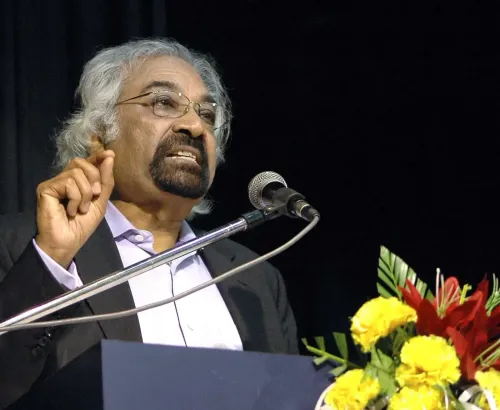
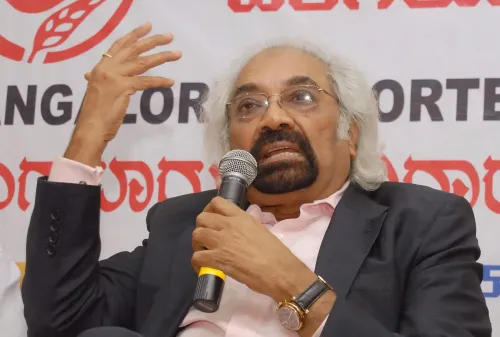
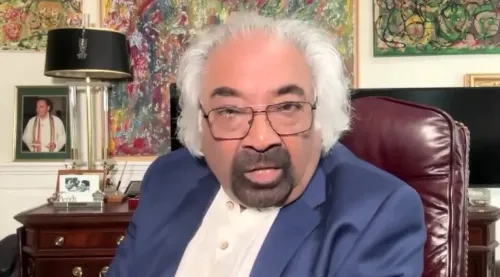
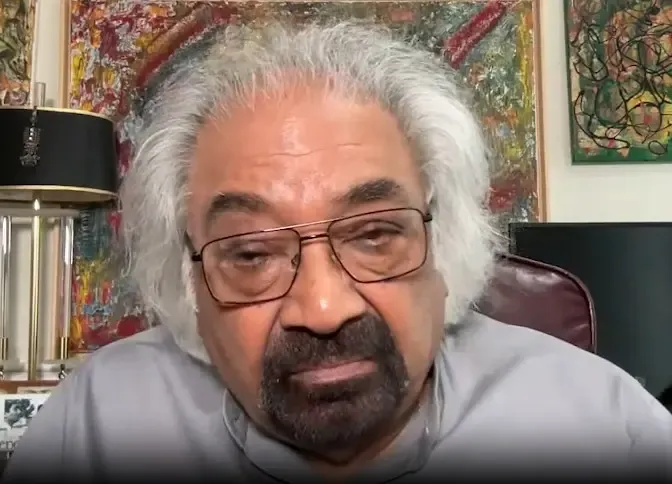
Indian Overseas Congress chief Satyanarayan Pitroda, widely known as Sam Pitroda, on Thursday, 15 October 2026, argued that the Cockroach Janata Party (CJP) and the student movement sweeping parts of India were not isolated phenomena but interconnected pieces of a far larger political and social reckoning unfolding simultaneously across the country. Speaking in New Delhi, Pitroda framed the developments as rooted in debates over governance, institutional integrity and perceived inequality.
The Bigger Puzzle: Pitroda's Framework
Pitroda was unequivocal about his reading of the political moment. “Before we talk about the CJP, we need to understand what is going on in the nation. The CJP and the student movement are just pieces of a bigger puzzle. They are not the only pieces. To me, there are multiple things going on at the same time, bringing a lot of things together,” he said.
He outlined four broad concerns he believes are converging: an alleged assault on democratic institutions, doubts over electoral fairness, the economic marginalisation of large sections of society, and questions about who actually benefits from India’s growth story.
Allegations of Democratic Backsliding
Pitroda's first major concern centred on what he described as an erosion of democratic norms. “When you begin to capture institutions, undermine civil society, control the media and bring in an authoritarian mindset, where everything is decided by the Prime Minister’s Office, the Prime Minister or what they call the double-engine government, democracy gets attacked in many different ways,” he said.
He claimed that citizens were growing reluctant to voice dissent, fearing consequences including investigations by the Enforcement Directorate (ED) or legal proceedings. These are allegations that the ruling establishment has repeatedly denied, and critics of the Congress have countered that such rhetoric is politically motivated.
Electoral Trust Deficit and the CJP Movement
On electoral integrity, Pitroda raised doubts about voter registration, vote counting, Electronic Voting Machines (EVMs), voter lists and the handling of ballot boxes. “I don’t trust this anymore,” he said, though he acknowledged that people hold differing views on these allegations. Concerns over EVM integrity have been a recurring flashpoint in Indian politics, consistently dismissed by the Election Commission of India (ECI) as unfounded.
He traced the origins of the CJP movement to students who felt personally demeaned by the ‘cockroach’ epithet and subsequently channelled wider grievances — including paper leaks, poor educational infrastructure, rising tuition fees, the expanding influence of coaching centres and youth unemployment — into organised protest. “These issues affect the next generation and really galvanised young people. The end result was that they were fearless, they had courage and they could really speak up,” he said.
Addressing reports of abusive language during protests, Pitroda said he did not approve of such conduct but viewed it as an expression of deep-seated anger among participants who had previously felt voiceless.
Marginalisation, Inequality and the Growth Question
Pitroda also highlighted what he described as a growing sense of alienation among minorities, Other Backward Classes (OBCs), Dalits and tribal communities, who he said feel their concerns are being systematically ignored. He linked this to stagnant wages, rising inflation and declining purchasing power.
While conceding that the Indian economy was expanding at roughly 7 per cent, he questioned the distribution of that growth. “Who is getting the benefit? A handful of people? In the process, we have not created jobs. Wealth distribution is unequal,” he said.
He also raised concerns about public service delivery — mid-day meal programmes and school infrastructure, in particular — as evidence of governance gaps he says lie at the heart of the broader unrest.
The 'Indian Monsoon' Analogy
Drawing on an article he had authored, Pitroda compared the CJP-linked student mobilisation to the Arab Spring, dubbing the Indian variant the ‘Indian monsoon’ and crediting young people for spearheading a broader civic awakening. He argued that the movement had given marginalised communities the confidence to believe their voices could matter.
Whether the CJP movement sustains its momentum — and whether the Congress can translate the sentiment it is championing into electoral ground — will be closely watched in the months ahead.
Point of View
Student unrest, EVM scepticism and inequality into a single narrative, the Congress is attempting to build a meta-opposition story ahead of electoral cycles. Yet the credibility of each thread is contested — EVM concerns have been repeatedly adjudicated and dismissed, and the Congress has its own record on institutional autonomy. The ‘Indian monsoon’ analogy is evocative, but the Arab Spring comparison carries obvious risks: that movement produced instability as often as reform. The deeper question mainstream coverage tends to skip is whether the Congress can convert ambient anti-incumbency into organisational presence on the ground — sentiment without structure rarely wins elections.
NationPress
15 Oct 2026
Frequently Asked Questions
What did Sam Pitroda say about the CJP and student movement?
Sam Pitroda said the Cockroach Janata Party (CJP) and the student movement are not standalone events but interconnected parts of a larger political and social picture involving concerns over democracy, electoral fairness, inequality and governance. He made the remarks in New Delhi on 15 October 2026.
What is the CJP movement that Pitroda referred to?
According to Pitroda, the CJP movement emerged when a group of students came together after feeling hurt by being labelled ‘cockroaches.’ Their protest gained momentum around grievances including paper leaks, poor educational infrastructure, rising tuition fees, coaching-centre influence and youth unemployment.
What concerns did Pitroda raise about Indian democracy and elections?
Pitroda alleged that institutions were being captured, civil society undermined and media controlled, creating what he described as an authoritarian mindset. He also raised doubts about EVM integrity, voter registration and ballot handling, though the Election Commission of India has consistently rejected such allegations as unfounded.
How did Pitroda describe India’s economic situation?
While acknowledging GDP growth of around 7 per cent, Pitroda argued that the benefits were reaching only a handful of people, with jobs not being created in proportion and wealth distribution remaining highly unequal. He also cited stagnant wages, rising inflation and declining purchasing power as compounding factors.
What is Pitroda’s ‘Indian monsoon’ reference?
In an article he authored, Pitroda compared the CJP-linked student mobilisation to the Arab Spring, calling the Indian equivalent the ‘Indian monsoon’ and crediting young people for driving a wider civic awakening that has reportedly emboldened marginalised communities to raise their voices.