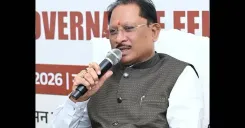
PIB backs Press Council norms amid CEC Gyanesh Kumar protest row
Synopsis
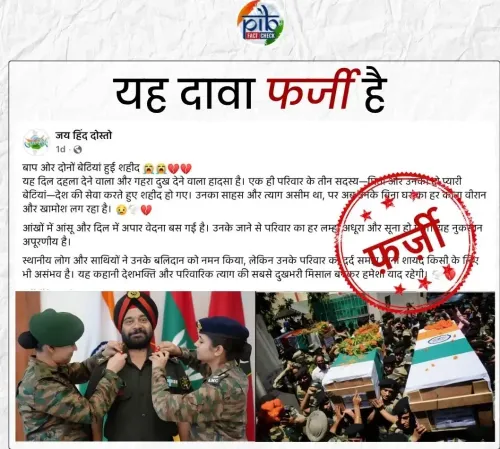
With protests targeting Chief Election Commissioner Gyanesh Kumar over the SIR electoral rolls row already underway, the PIB chose Thursday to publicly cite Press Council of India conduct norms — calling out misinformation while Delhi Police's IFSO unit filed over four FIRs against social media handles. Critics will note that a government bureau invoking press norms mid-controversy is itself a newsworthy act.
Key Takeaways
The Press Information Bureau (PIB) on 15 October 2026 endorsed Press Council of India's Norms of Journalistic Conduct 2022 , urging responsible reporting.
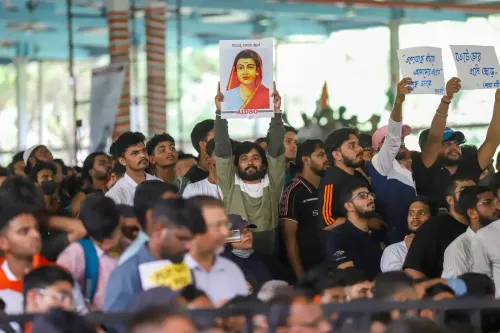
The move came amid protests demanding the resignation of Chief Election Commissioner Gyanesh Kumar over the Special Intensive Revision (SIR) of electoral rolls.
PIB's X post stated: 'Responsible journalism begins with distinguishing facts from conjecture, speculation, and opinion.' Delhi Police's IFSO unit has registered more than four FIRs against social media handles allegedly spreading false narratives.
Under Section 13(b) of the Press Council Act, 1978 , the PCI is mandated to set a code of conduct for journalists and news organisations.
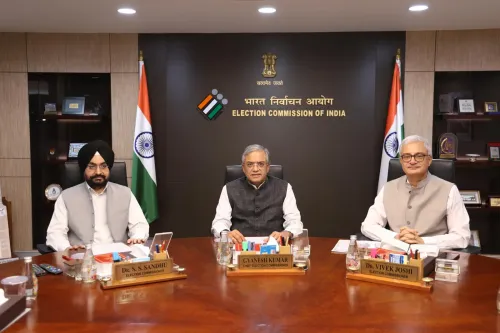
The Press Information Bureau (PIB) on Thursday, 15 October 2026, publicly endorsed the Press Council of India's (PCI) Norms of Journalistic Conduct 2022, calling on journalists to report responsibly amid what it described as the alleged spread of misinformation surrounding protests demanding the resignation of Chief Election Commissioner (CEC) Gyanesh Kumar over the Special Intensive Revision (SIR) of electoral rolls controversy.
What the PIB Said
In a post on X, the PIB stated: 'Responsible journalism begins with distinguishing facts from conjecture, speculation, and opinion.' It stressed that journalists must uphold accuracy, exercise editorial responsibility, and ensure that satire and commentary do not cross into defamation — obligations enshrined in the PCI's 2022 conduct norms.
The PIB further urged journalists not to present conjecture, speculation, or opinion as established fact, and to clearly demarcate the two. It also noted that 'cartoons and caricatures intended as good-natured humour fall into a separate category and may be treated more liberally,' while cautioning that satire must not be used to disguise defamatory statements.
On the use of charged language, the PIB added that 'words such as "incompetent" or "impotent" must be judged in the context of political commentary to determine whether they are offensive.'
The Press Council's Mandate
The Press Council of India has, over the years, consistently advised the press to exercise restraint and caution. In a note on its website, the Council stated: 'An attempt should be made to create an environment in which, through self-regulation, the Press ensures an optimum balance between the exercise of its freedom and its responsibility. That is the basic objective Press Council seeks to promote and enshrine.'
Under Section 13(b) of the Press Council Act, 1978, the Council is mandated to build a code of conduct for newspapers, news agencies, and journalists to achieve high standards of reporting. Based on its own adjudications and pronouncements over the years, the PCI has evolved a set of principles that journalists are expected to apply with 'due discernment and adaptation' in discharging their professional duties.
Background: The SIR Controversy and Delhi Police Action
The PIB's statement comes amid an ongoing controversy over the Special Intensive Revision (SIR) of electoral rolls, which has triggered protests calling for CEC Gyanesh Kumar's resignation. The dispute has spilled onto social media, with authorities flagging what they allege are coordinated false narratives.
Separately, Delhi Police's Intelligence Fusion and Strategic Operations (IFSO) unit has registered more than four FIRs against social media handles allegedly spreading false narratives and attempting to disturb the national atmosphere, according to reports.
Why This Matters
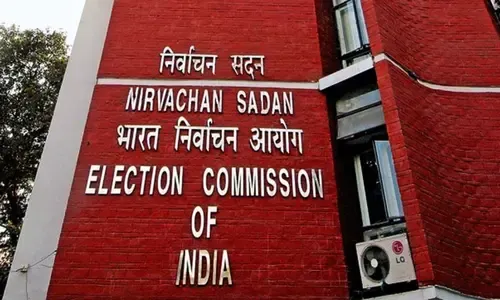
This is the latest instance of a government body invoking PCI norms in the context of a politically charged controversy — a pattern that critics argue can blur the line between regulatory guidance and pressure on the press. Notably, the PIB's intervention comes at a moment when the Election Commission of India (ECI) itself is under scrutiny, giving the advisory a pointed political context that observers are unlikely to miss. The press freedom debate in India, already a contested space, gains fresh dimensions when government communication arms weigh in on journalistic standards mid-controversy.
Point of View
In itself, unusual — but timing and context matter. The PIB's advisory arrives precisely when the Election Commission is facing public pressure over the SIR controversy, which means the guidance risks being read as an attempt to shape coverage rather than elevate it. Press freedom advocates will rightly ask whether the same urgency around 'responsible reporting' applies to official communication. The four-plus Delhi Police FIRs against social media handles add a coercive dimension that the PIB's measured language does not address. The credibility of any such advisory depends on whether it is applied evenly — to all actors, not just critics of the moment.
NationPress
15 Oct 2026
Frequently Asked Questions
Why did the PIB issue an advisory on journalistic conduct on 15 October 2026?
The PIB issued the advisory amid protests demanding the resignation of Chief Election Commissioner Gyanesh Kumar over the Special Intensive Revision (SIR) of electoral rolls controversy. It cited alleged misinformation spreading on social media as the immediate context for invoking Press Council of India norms.
What are the Press Council of India's Norms of Journalistic Conduct 2022?
These are a codified set of professional standards that journalists, newspapers, and news agencies in India are expected to follow. They cover accuracy, editorial responsibility, the distinction between fact and opinion, and the limits of satire — evolved by the PCI through its adjudications under the Press Council Act, 1978.
What action has Delhi Police taken against social media misinformation in this case?
Delhi Police's Intelligence Fusion and Strategic Operations (IFSO) unit has registered more than four FIRs against social media handles allegedly spreading false narratives and attempting to disturb the national atmosphere, according to reports.
Who is Chief Election Commissioner Gyanesh Kumar and why is he facing protests?
Gyanesh Kumar is the Chief Election Commissioner of India. He is currently facing protests over the Special Intensive Revision (SIR) of electoral rolls, a controversy that has fuelled demands for his resignation from certain quarters.
Does the PIB have the authority to regulate journalism in India?
No. The PIB is a government communications body, not a regulatory authority over the press. Regulation of journalistic conduct is the mandate of the Press Council of India under the Press Council Act, 1978 — an independent statutory body. The PIB's advisory carries persuasive, not binding, force.